Sanctions for Nobel: a civilian death sentence at the will of the USA
Krytyka Polityczna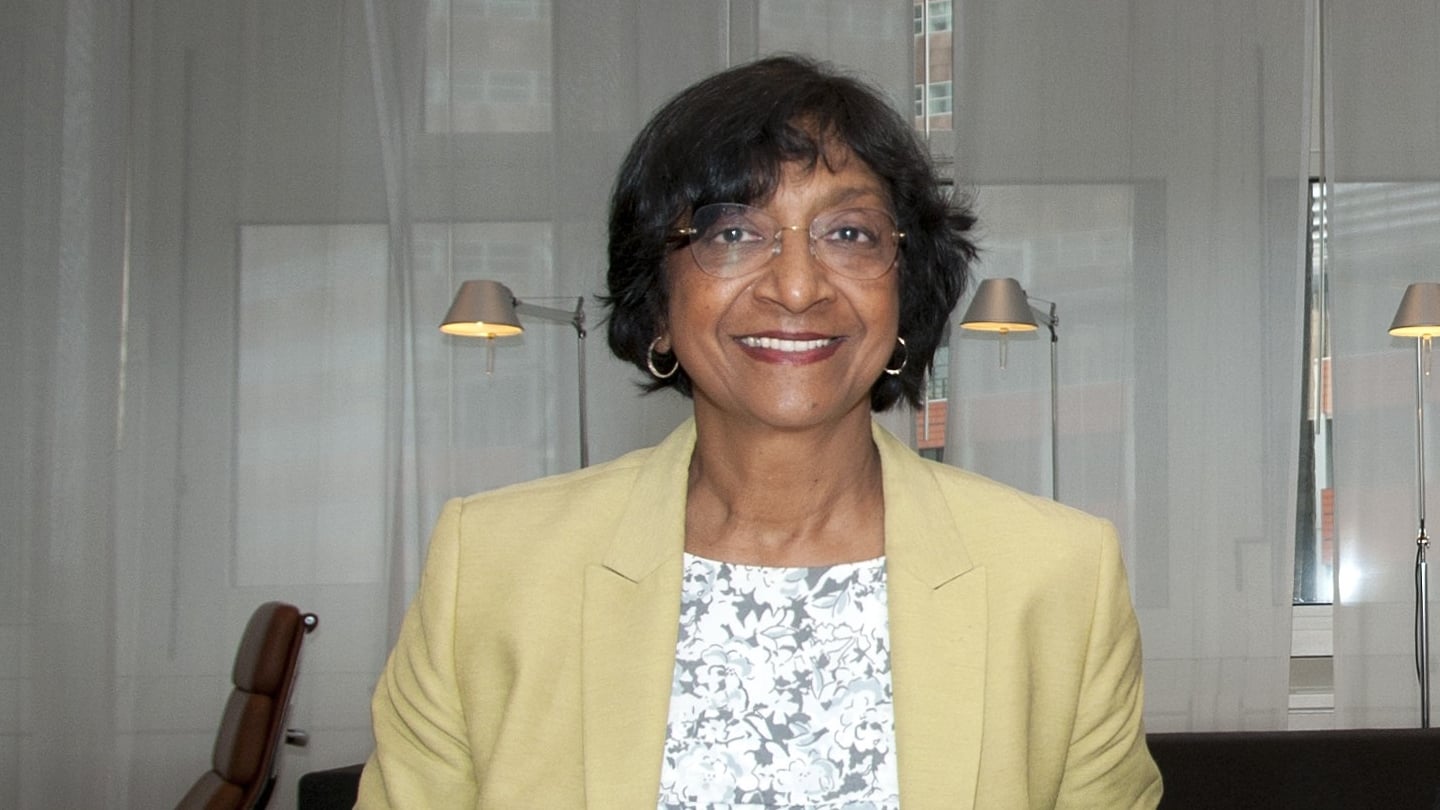
The financial blockade that the USA imposed 16 years ago on WikiLeaks founder Julian Assange now falls on the judges of the International Criminal Court and this year's Nobel Peace Prize laureate. The post Sanctions for the Nobel: a civil death sentence at the will of the USA first appeared on Krytyka Polityczna.
One day your payment card stops working. It doesn't work at the store terminal or in the apps it's linked to. If you don't have cash in your pocket, you can't even buy a bottle of water because the ATM also doesn't work.
The bank tersely explains that it cannot provide you with the usual services. The hotel where you have a reservation has just canceled it, but you might not find out because your email also stopped working – both your private and work email.
This is roughly what a day in the life of Nicolas Guillou looked like, a French judge of the International Criminal Court subject to American sanctions in August 2025. Guillou presided over the Pre-Trial Chamber, which on November 21, 2024, issued arrest warrants for Israeli Prime Minister Benjamin Netanyahu and former Defense Minister Yoav Galant on charges of war crimes and crimes against humanity.
Guillou lost access to his money and accounts on services like Amazon, Airbnb, and PayPal overnight. “I'm 50 years old. It's not easy, but I know how to deal with it. However, if sanctions affected young people, twenty-five-year-olds whose entire lives revolve around the Internet, I think sanctions would mean true civil death for them” – said Guillou.
“President Trump will never allow the International Criminal Court to prosecute Americans. That’s why the United States is imposing sanctions on the court today. We prohibit all transactions with this unlawful court, cutting off its funding sources and preventing it from functioning. Either the International Criminal Court ceases its threats, or we will put an end to its activities.”
These words were spoken by U.S. Secretary of State Marco Rubio just a few hours after former ICC judge Navi Pillay received the Nobel Peace Prize. On October 9, the United States added the International Criminal Court to the SDN list, the list of entities subject to U.S. sanctions maintained by the Office of Foreign Assets Control (OFAC).
All assets of the person or entity listed on the SDN list that are under the control of American institutions are frozen, and U.S. entities are prohibited from conducting any transactions with them. The ban also includes American banks, and in practice, also foreign banks using the dollar or the American financial system.
Although sanctions formally discipline American entities, they have a global reach due to the economic hegemony of the USA, which is based on the dollar, the world's leading reserve currency and a key currency in international trade. Banks and companies worldwide depend on access to dollar transactions and American financial and technological infrastructure.
Moving through the global economy without access to the dollar is like traveling the world without a passport, as Edward Fishman, an expert at the State Department’s Office of Economic and Sanctions Policy and Implementation, put it in his book Chokepoints. These dependencies allow the United States to exert overwhelming political influence over the global economy, which is (supposedly) governed by market forces. “Our currency, your problem” – as an American Treasury Secretary once summarized it in a conversation with foreign ministers.
The International Criminal Court was established by the Rome Statute of 1998 and began operations in 2002. It prosecutes individuals for genocide, crimes against humanity, and war crimes. In 2000, Bill Clinton signed the Statute, symbolically supporting the idea of prosecuting criminals, but the USA never ratified it and does not recognize the Court’s jurisdiction over its citizens. The George W. Bush administration also symbolically withdrew its signature in 2002 and began signing bilateral agreements with individual countries, obligating them not to transfer American citizens to the ICC without U.S. consent.
In subsequent years, the USA selectively cooperated with the ICC, helping to apprehend and transfer rebel commanders from Uganda and the Democratic Republic of Congo to The Hague, providing protection for witnesses involved in ICC proceedings, intervening in Libya regarding detained ICC personnel. After Russia’s invasion of Ukraine, the U.S. Congress introduced regulations enabling the Court to receive assistance in investigations of crimes committed there. In July 2023, Joe Biden agreed to provide the ICC with evidence of Russian crimes in Ukraine, including the kidnapping of Ukrainian children.
In 2020, after authorizing an investigation into alleged crimes in Afghanistan, including those committed by American soldiers and CIA personnel, the first Trump administration imposed sanctions on six ICC judges. Judge Luz Ibáñez described the effects of these sanctions: she lost access to her bank account and credit cards. Western Union, through which she sent money home, cut her off from services. The problems became seemingly trivial things like buying airline tickets, ordering a taxi, or food delivery. “I don’t have a PayPal or Amazon account. But my colleagues do, and now they can’t use them” – she recounted.
In November 2024, the Court issued arrest warrants for Netanyahu, Galant, and one of Hamas’s leaders, the late Mohammed Deif. After taking office for a second term, Trump signed a decree imposing sanctions on the Court’s chief prosecutor, Karim Khan. Khan was added to the SDN list. It’s worth noting that these were not sanctions for any proven crime, but an administrative decision by the U.S. aimed at the prosecutor due to his role in the ICC.
All of Khan’s assets under U.S. control were frozen, and U.S. entities were forbidden from conducting any transactions or providing services to Khan. Microsoft cut off Khan’s access to email, including his work email. Khan’s bank accounts in the UK were frozen, and, out of overzealousness, his ex-wife’s bank account was also frozen.
And this overzealousness demonstrates how far U.S. power extends: Washington does not need to enforce its sanctions directly worldwide because the global economy does it for them.
The government does not need to officially force private companies and banks to block services for their clients – it’s enough to create an atmosphere of uncertainty and vague risks of acting against political will and the mood of the ruling authorities. A stark example is Julian Assange and his WikiLeaks service. When in 2010, the portal founded by Assange began publishing documents inconvenient for Americans, PayPal, Visa, Mastercard, Western Union, and Bank of America practically ceased processing WikiLeaks transactions overnight, cutting off funding. Amazon terminated WikiLeaks hosting services, and EveryDNS withdrew domain management. Swiss company PostFinance froze Assange’s defense fund.
WikiLeaks was not even formally added to the SDN list. Financial institutions claimed that no government had contacted them directly, and the blockades resulted from violations of their own regulations, but considering this a mere coincidence requires a great deal of naivety, to say the least.
“The biggest threat related to sanctions is not the individuals already targeted, but the hundreds of people who will not make the decisions they should because they are afraid” – says ICC judge Nicolas Guillou in a report Criminalizing accountability. America’s legal war against the international justice system.
The report cites further examples of the chilling effect resulting from U.S. influence over private entities worldwide. As a result of U.S. sanctions on Francesca Albanese, UN Special Rapporteur on occupied Palestinian territories, the lawyer not only lost access to her U.S. accounts but was also unable to open bank accounts in Italy, Switzerland, and the Netherlands.
Sanctioned human rights organizations – Al-Haq, Palestinian Center for Human Rights, Al Mezan, and Addameer – lost access to their bank accounts. YouTube removed all four organizations’ accounts, along with over 700 videos documenting human rights violations, including recordings and testimonies that could serve as evidence in international crimes proceedings.
European countries and Canada expressed joint opposition to U.S. sanctions and are considering launching an EU blocking statute that could protect European Court staff from the effects of sanctions. However, little will change until every cash withdrawal from an ATM, every card payment in a store, salary transfer, bill payment, or pizza order anywhere in the European Union depends on the goodwill of American financial institutions – and whether they happen to take offense at the USA.
The post Sanctions for the Nobel: a civil death sentence at the will of the USA first appeared on Krytyka Polityczna.