I can only be who I am allowed to be
Kapitál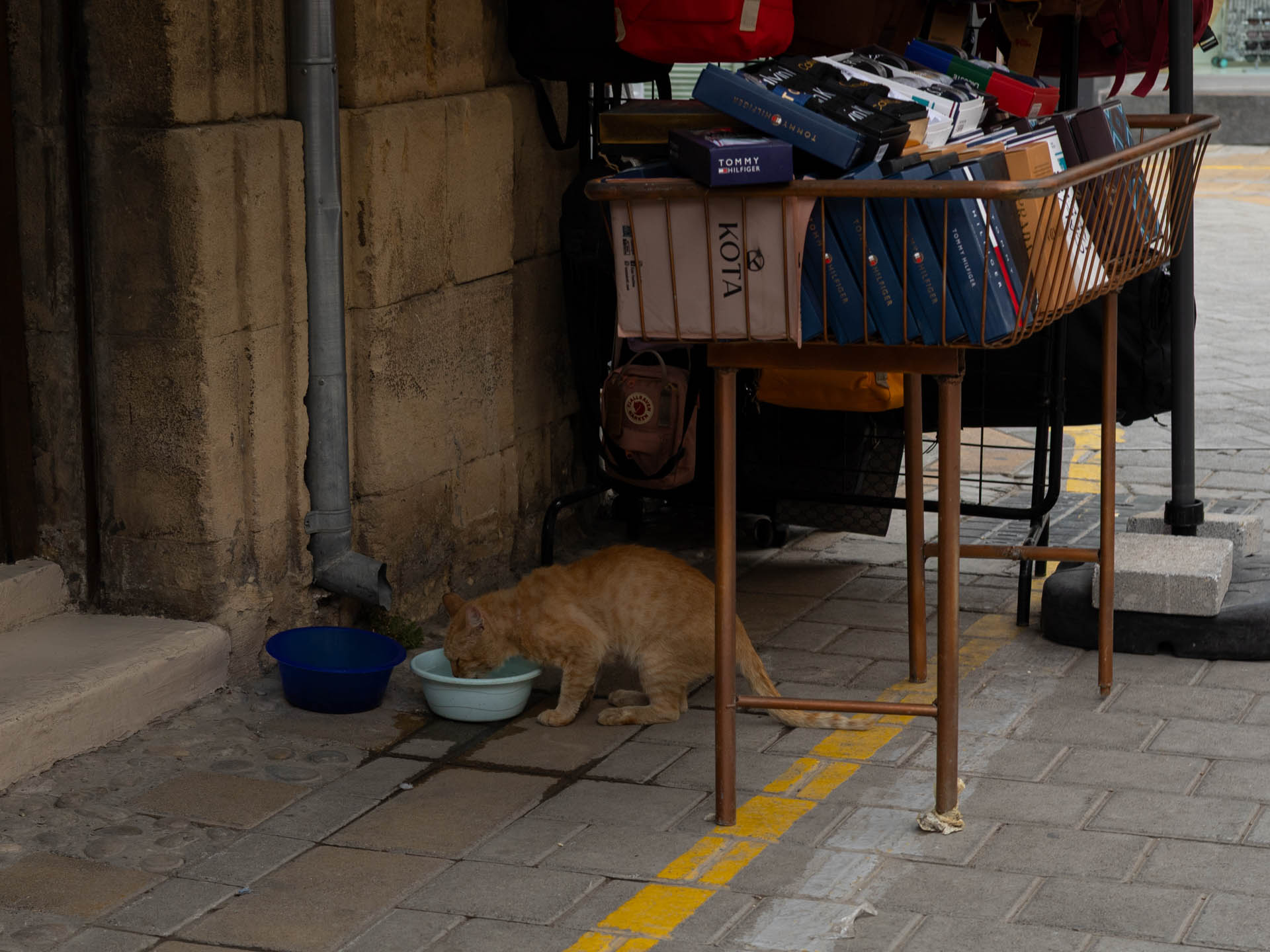
Imagine you are traveling to work in the morning. You are taking public transportation, and such civic amenities are a given in the capital city. You get off earlier because you still have time. Carefree, you wander through familiar streets when suddenly you realize that your wallet has been left at home. No problem. You can manage one day without it. It’s not common for someone to ask you for identification in the middle of the street. And now imagine that such carefree behavior is not the norm. Welcome to Cyprus.
Imagine traveling to work in the morning. You are using public transportation, and in the capital city, such civic amenities are a given. You get off earlier because you still have time. Leisurely strolling through familiar streets, you suddenly realize that your wallet was left at home. No worries. You can manage one day without it. It’s not common for someone to ask you for identification in the middle of the street. And now imagine that such carefree behavior is not the norm. Welcome to Cyprus.
I'm getting off at the bus station in Nicosia, the capital of Cyprus, precisely at the point where the border of the southern part of the old city collides with the spirit of modernity. The historic buildings here have retained their original appearance, but stories of the past are hidden in the shadows of glassed business centers. Showcases are dominated by modern mainstream brands, and restaurant menus mainly attract tourists. The presence of European Union subsidies is simply impossible to overlook.
Cyprus was formerly under British administration. In 1960, after more than eight decades, it gained independence, but Britain still has two military bases on the island to this day. From RAF Akrotiri, Britain has conducted airstrikes in Yemen in recent years and uses the base for reconnaissance flights over the Eastern Mediterranean, including Israel and Gaza. As a result of inciting nationalist tendencies among Cypriots during British colonization, unrest began between communities in 1963. The coup in 1974 against President Makarios, who promoted an independent Cyprus policy, orchestrated by the Greek Junta, deepened the divide between communities. Following the coup, the idea of uniting Cyprus with Greece gained momentum, and Turkey used it as a pretext for the first phase of invasion, gradually occupying 36 percent of the territory. When Turkish troops invaded the island in 1974, Cyprus was militarily divided. This division was subsequently institutionalized a year later. Today, the two largest communities on the island are the Turkish- and Greek-speaking Cypriots.
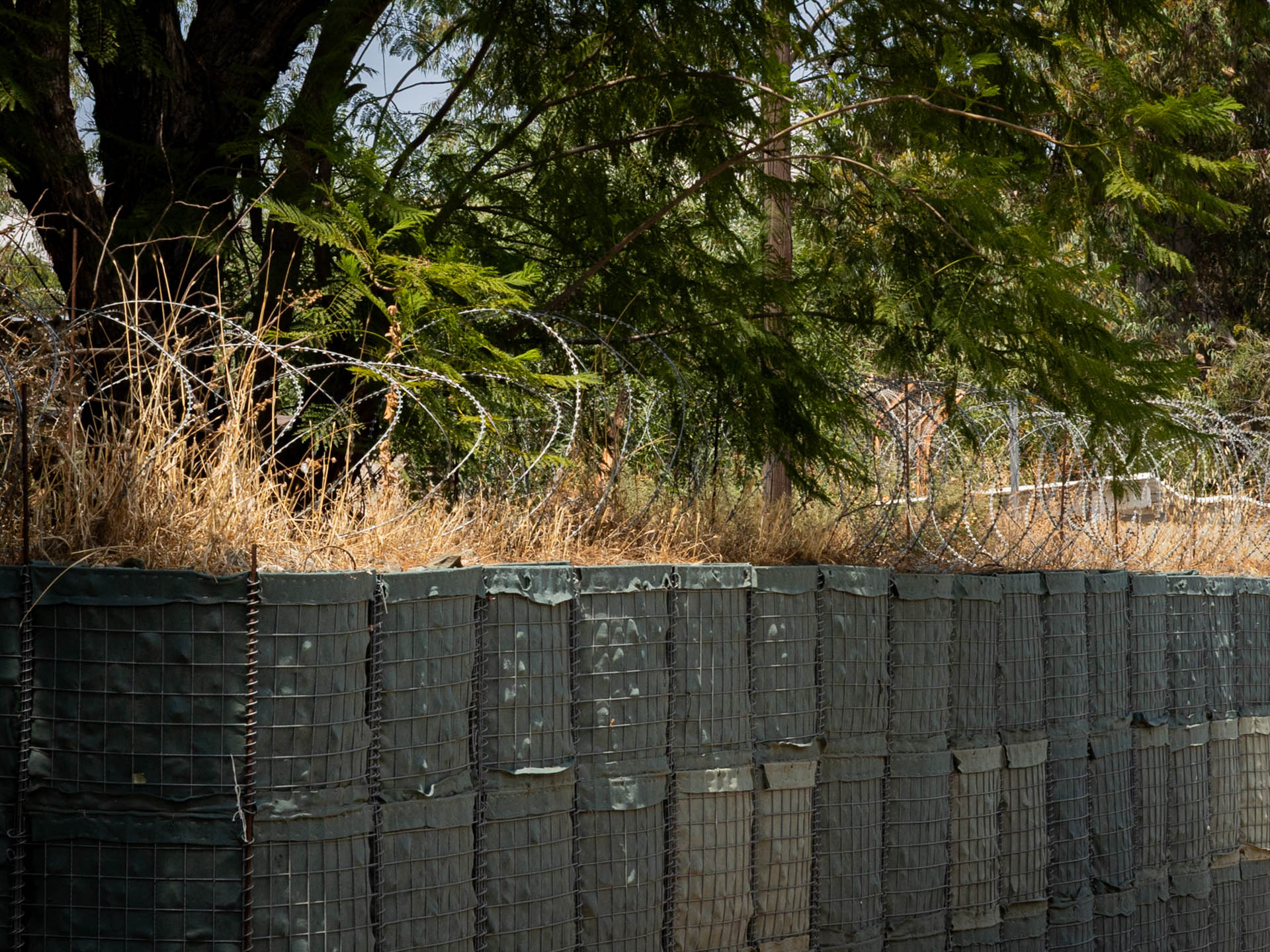
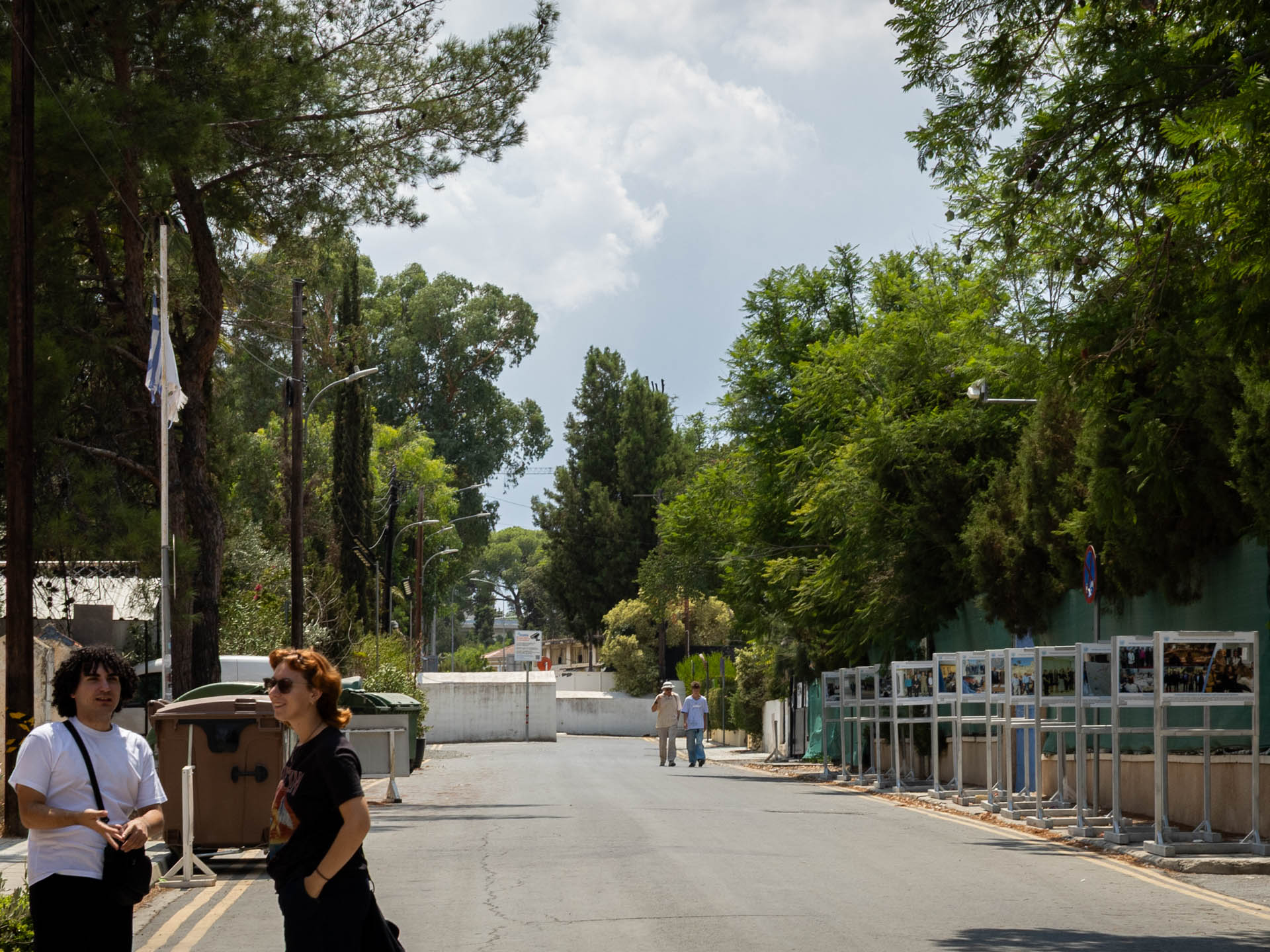
I head to the city center, and in front of me, at the end of a long main street, a barrier appears. Nicosia is currently the only physically divided city in Europe, with three border crossings. These are part of the so-called Green Line, a demilitarized UN zone stretching across the entire island for about 180 kilometers. It divides the island into two parts: the south, the Republic of Cyprus, and the north, the Turkish Republic of Northern Cyprus. While the Republic of Cyprus is a member of the European Union, the northern part has been under Turkish occupation for over 50 years and is not recognized internationally as an independent republic. At the same time, it is in this part that the Turkish-speaking Cypriot Defne grew up. I cross the pedestrian border directly through the city center with her early in the morning.

Defne has extensive experience not only crossing the Green Line but also with the limits that life in a divided city entails. "Suddenly, there's a wall with barbed wire in my way, and I just have to somehow go around it," she says, shaking her head at the absurdity of everyday reality. She attended primary school and part of secondary school at a British school in southern Nicosia, and with her parents, she regularly visited the southern side of the island during childhood. However, she herself says that despite nearly a quarter of the population living in Nicosia, such an open attitude towards "the other side" remains rather rare. In other parts of the island, it's even less common; outside the capital, people often don't even realize the division. If they don't regularly cross the Green Line, they don't actively think about "the other side." "In January, I celebrated my friend's birthday in Limassol. Someone asked me how it was possible that I was from Nicosia when I speak Turkish. They didn't realize that our capital city is divided," she gives a specific example.
According to Defne, people on the island tend to lean towards one side or the other. Usually, they are closer to the part of the island where they were born and grew up. She considers herself fortunate that she was raised in an environment free of fear and prejudice towards "the other side," which she sees as a blessing. She emphasizes the moods and traumas in society, which have been shifting almost unchanged for decades between generations. "Some people don't cross the Green Line at all," she shrugs, also thinking of part of her family.
Her grandparents lived near Paphos in the southwest of the island but were displaced to the north. In their youth, mixed Greek-Turkish Cypriot villages were quite common, but after the division, there was extensive displacement of both communities—Turkey's goal was to create not only geographically separated but also ethnically homogeneous zones. Since then, her grandparents have only crossed south once, in 2003, to obtain documents. It was the first time in nearly thirty years that ordinary residents could cross; previously, crossings had been closed. They never returned to their hometown. "I want to remember that place as I experienced it," her grandmother repeatedly said.
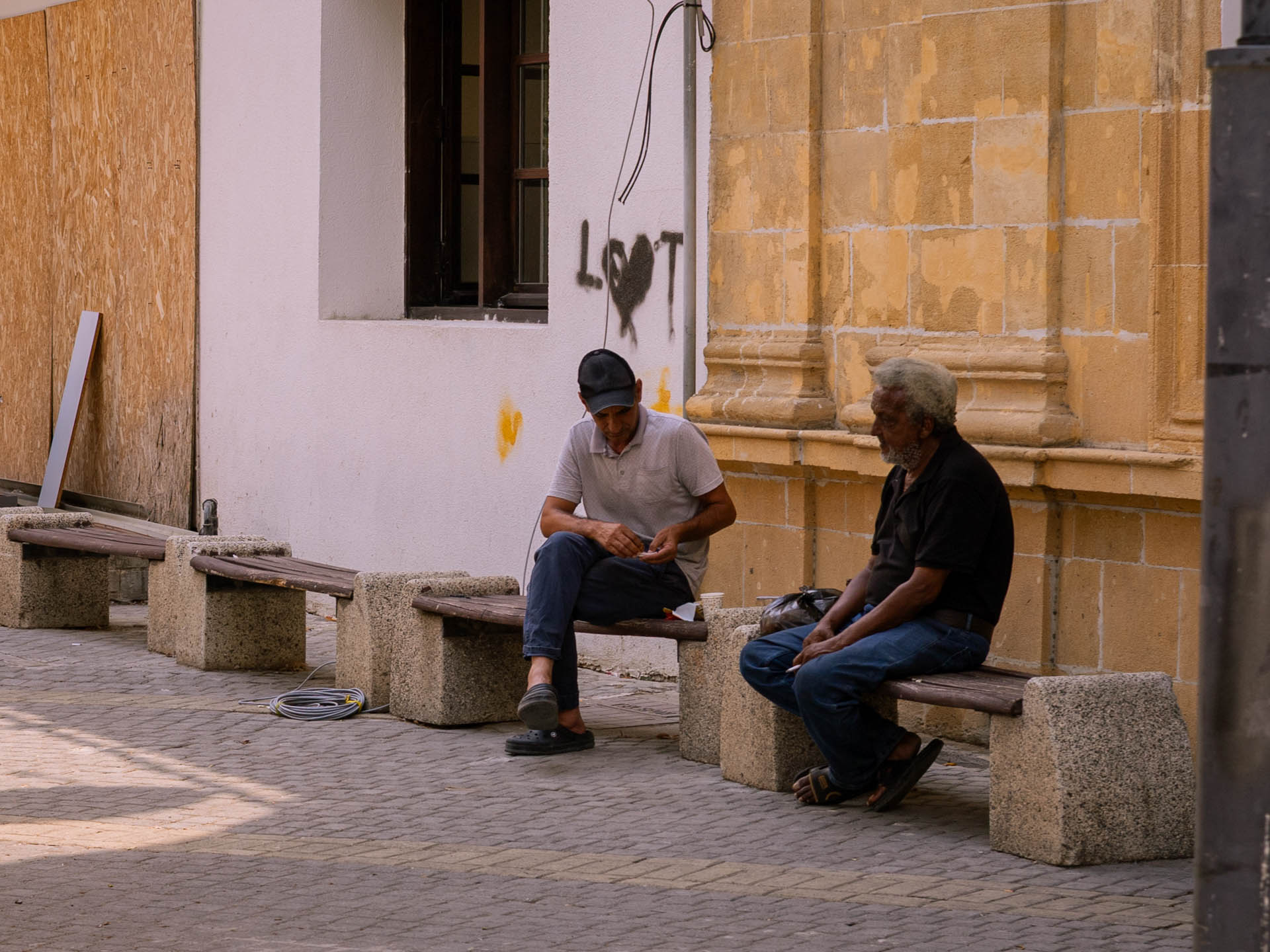
Not only among older people but also within the younger generation, there are those who do not cross the Green Line. Often, this is due to pressure from parents, societal discourse, or propaganda. Schools sing either the Turkish or Greek anthem, and ordinary people don't even know that Cyprus has its own. On notebooks and textbooks of the Cypriot Republic's state schools, the motto "Den Xehno" ("I do not forget") condemning the invasion is displayed. However, Defne lightheartedly adds that history is never taught objectively anywhere.
At the border crossing, my guide doesn't even pause. She looks around casually, and neither she nor anyone nearby finds it strange that a wall suddenly stands in the middle of the city, which cannot be bypassed. While waiting, I ask the young Cypriot woman if she ever forgot her documents on her way to school. She replies that probably not. Such a thing simply doesn't happen in a divided city. If it did, the people working at the border would know her after all these years and would probably let her through anyway.
Most residents can cross the Green Line more or less without restrictions. No visa is needed, only identification. The trip to the northern side should take just a few minutes. But that's not always the case. Although there are several crossings in the city, only one is for cars, and that is simply not enough for the capital. Crossing the Green Line by car can take several hours.
While I only need this document with my European passport to cross, Defne needs two: the ID card of the occupied territory and the Cypriot passport, which she is entitled to because of her citizenship. She emphasizes, however, that just having Cypriot citizenship is a privilege in the north. Although it shouldn't be that way. Since her family lived on the island before the division, she is entitled not only to Cypriot citizenship but also to an internationally recognized document. She shows this document to the Greek-speaking worker at the first window. A few meters away, at the next window, the officials ask for her ID from the north in Turkish. She rarely uses it elsewhere, and it has happened repeatedly that foreigners think it’s not a real document.
With the south behind her and the northern part of Nicosia ahead, she recalls all those moments when she deliberately left home without documents simply because she didn't want to carry them.
Who decides who you can be?
Throughout her life, Defne has pondered her own identity. We meet in a café in the neutral UN zone. It’s not a random location; it was deliberately opened by teachers from both communities to be a place where people from the north and south can connect. It’s cozy and full of people, but along the way, we pass a wall and barbed wire. Defne recalls an incident when a man tried to illegally cross the border right in this area. He was caught, and neither side wanted to accept him. In the demilitarized zone between the barbed wire, he spent several months in a UN logo tent.

Metça and Defne, during their adolescence, fought with who they are, each in their own way. Unlike Defne, who perceives external pressure, Metça first had to convince himself of who he really is. He is a child of a mixed marriage.
After the island's division, Turkey artificially settled many people here via airports and ports on the northern side. Similarly, today, people arrive on the island with false promises of an easy path into the European Union. But since the north is an occupied territory recognized only by Turkey, from an international law perspective, it is an illegal entry. If someone who arrived this way marries someone from Cyprus and they marry on the occupied territory, it is not an internationally recognized marriage. If the couple later decides to start a family on Cyprus, their children are not entitled to Cypriot citizenship.
Metça was born in the north and leaves the island only very rarely. As a descendant of a mixed marriage, he has nowhere much to go. If the Cypriot Republic joined Schengen, it’s uncertain whether and under what conditions he could go to the other side of Nicosia. From a legal perspective, it’s a paradoxical situation that has long remained unresolved. Gaining Cypriot citizenship if one parent is illegally on the island is practically impossible. Children of mixed marriages, including Metça, only have northern Cypriot citizenship, but they are entitled to Turkish citizenship. However, they do not automatically receive it, and due to past traumas, many people do not want it. According to international law, no one can be without citizenship. Since northern Cypriot citizenship is not recognized internationally, where do these children belong then?
“I’ve thought about it for a long time. At some point, I doubted whether I am even Cypriot,” Metça describes his experience. As a child, he was not labeled, had no problem whether people called him Turk or Cypriot. Later, he adopted the identity of a Turkish Cypriot. “But I doubted myself, I am actually neither Turk nor Cypriot,” he admits honestly. “Now I say I am Cypriot. I don’t have political representation or Cypriot citizenship, but that doesn’t mean it’s not my identity,” he shrugs.
He is not from a big city, but for the last few years, he has been living on the northern side of Nicosia. It was here that he started to get more involved in the movement for a united Cyprus, and for several years now, he has been a member of a youth peace organization. Together with his community, he tries to show young people that life in Cyprus can look different. “There are examples outside Cyprus that we can draw inspiration from. We organized events, for example, with Ireland. The context is different, but there are similarities,” he explains enthusiastically.
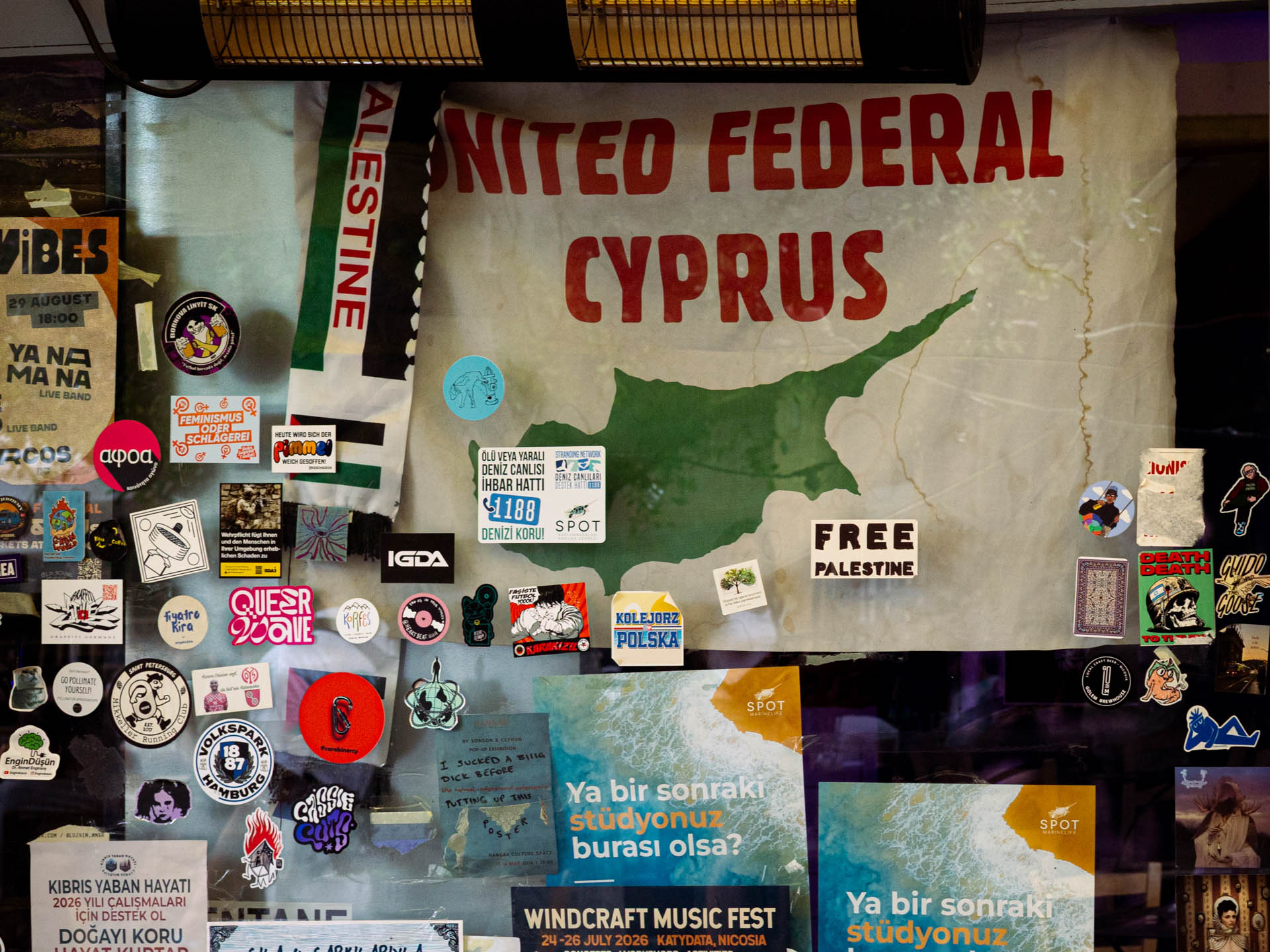
Activism in Cyprus needs such initiatives; primarily, it’s about breaking long-standing social resignation and propaganda. You can’t go from zero to a hundred overnight. If the idea of a unified identity is unpopular on the island, it’s unimaginable that the general public would oppose the occupation and agree on unification. The last major discussion about unification was in 2004. In a referendum then, the populations on both sides decided on the question of a united Cyprus. They expressed approval or disapproval of the so-called Annan Plan, a UN proposal for a federated reunification of the island. While the north agreed, the south was against.
“It’s not one-sided,” clarifies Defne, “even if the north wanted to unite, as long as the south doesn’t want to, nothing will change.” That’s why organizations like United Youth of Cyprus and similar groups operate across communities. Through peer-led workshops and discussions, the idea of unification and activism can gradually be normalized and motivate the younger generation. Defne adds that the desire and interest in unification are present in both communities.
From an outsider’s perspective, it might seem that it’s not enough—that more needs to be done. When Defne is abroad for her studies, she often discusses Cyprus with people from other countries. “Most of the time, they ask whether I’m from the Greek or Turkish side. From that, I can tell they know nothing about the situation,” she rolls her eyes. She works in the same organization as Metça. If someone outside is interested in Cyprus, the reactions are always the same. Why don’t you protest, why aren’t you in the streets? Defne and Metça give the same answer. It simply can’t be done.
Building the determination to fight for unification in Cyprus must start from scratch. Especially since, in the context of life on a small island, public resistance can be dangerous. Everyone knows everyone, and one cannot blend into the crowd. Participating in protests also involves the risk of being banned from entering Turkey. “Healthcare here isn’t that good. I have EU citizenship, but since I pay taxes in the north, I don’t qualify for European insurance,” Defne explains one of the possible negatives. Metça must be even more cautious; without Cypriot citizenship, his ties to Turkey and the possibility of acquiring Turkish citizenship are important.
Despite the significant limitations imposed by their northern Cypriot origins, they have a strong connection to Cyprus. “I used to go to the south just to shop, but now I simply want to go there. There are still many places I haven’t visited,” says Metça. “What we’ve been through is not okay. Having to show my ID twice on the way to school is inhumane,” Defne emphasizes the oppression experienced by people on the island. She has always been aware of how much her parents sacrificed for her. Instead of leaving Cyprus permanently for the opportunities she gained, she chose to take responsibility and wants to use her privilege to help others. Contact with abroad has helped her greatly in this regard.
“Just look anywhere else. We’re not an exceptional case; injustice is everywhere,” she says. According to her, the problem with Cyprus is that Cypriots do not see the bigger picture. She perceives that Cyprus still clings to old injustices and refuses to move forward. “Once you see a little more of the world, you realize suffering is everywhere. And at the same time, there are ways to overcome it.”


The text is part of the PERSPECTIVES project — a new initiative for independent, constructive, and multi-perspective journalism. The project is funded by the European Union. The opinions and statements expressed are those of the author(s) and do not necessarily reflect the views of the European Union or the European Education and Culture Executive Agency (EACEA). The European Union or EACEA assume no responsibility for them.