At America's mercy. What if Trump ordered us to turn off Gmail?
Krytyka Polityczna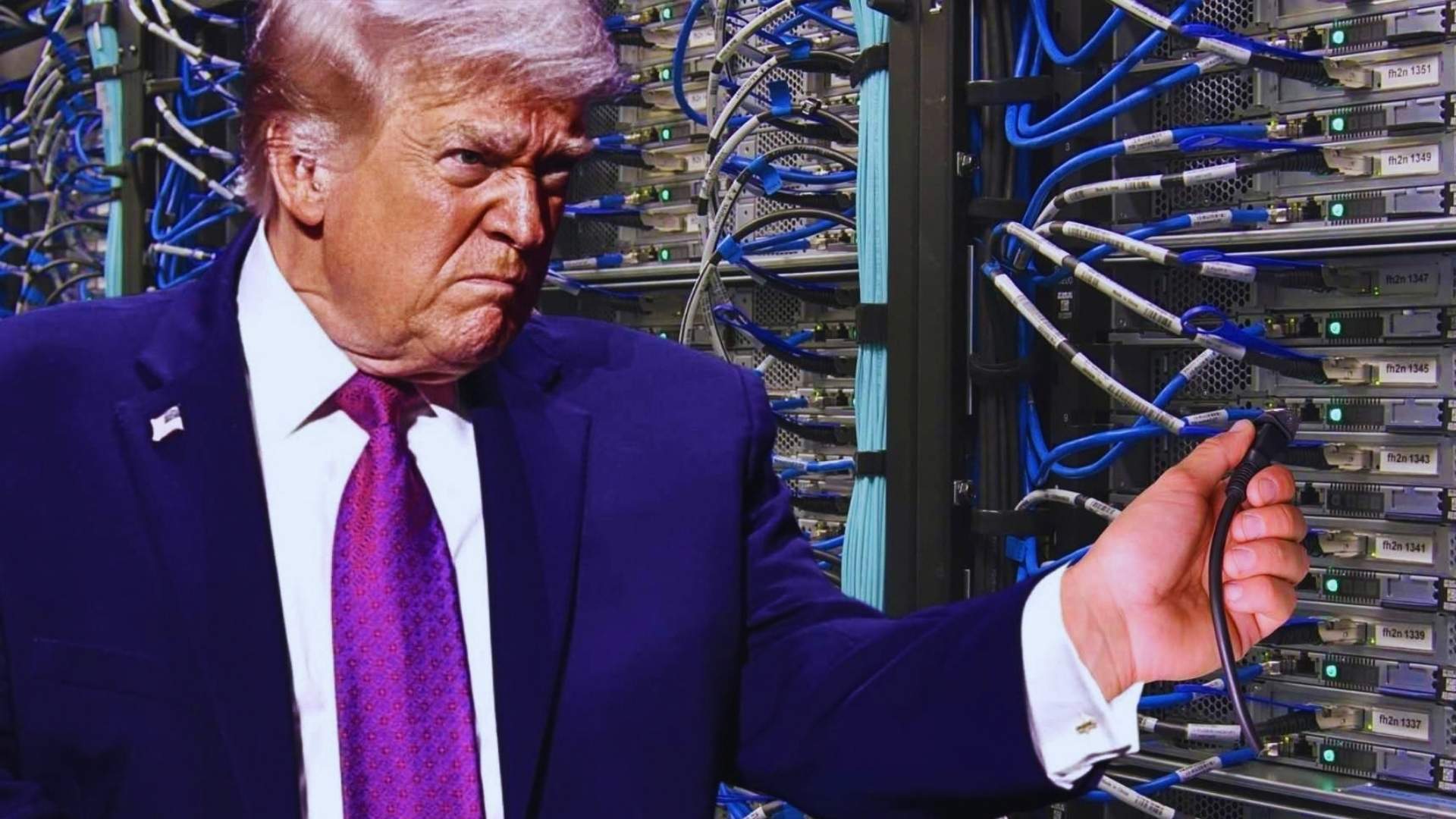
For 20 years, we have been explaining to our European partners that dependence on Russian gas is not just a commercial issue but a matter of security. In the same way, we must think about dependence on American digital technologies. The post At the Mercy of America. What if Trump ordered us to turn off Gmail? first appeared on Krytyka Polityczna.
In early February 2025, Donald Trump signed an executive order imposing sanctions on the International Criminal Court. The reason was the Court's actions against the United States and Israel, and most notably the arrest warrants issued a few months earlier for Israeli Prime Minister Benjamin Netanyahu and former Defense Minister Yoav Galant on suspicion of committing war crimes in the Gaza Strip.
Trump's sanctions included, among others, the ICC prosecutor Karim Khan. According to Associated Press reports, Khan lost access not only to bank accounts but even to his official Microsoft email, which led him to switch to the Swiss Proton.
Interdependence as a weapon
Microsoft denied that it had cut off the prosecutor's email itself and blamed the Court. However, in early 2026, Dutch press reported that the company explicitly suggested to the Court what it should do. Otherwise, the entire organization's email could have been at risk.
From a European perspective, it is concerning that a decision made in Washington could have deprived an official of an international institution in The Hague of access to basic digital infrastructure.
This impression was certainly not diminished by the US Vice President.
Five days after Trump signed the decree, J.D. Vance appeared at a summit dedicated to artificial intelligence in Paris. He quickly moved on to scolding the European Union for its policies towards American tech companies. He said the Trump administration was troubled by reports that some governments are considering “tightening the screws” on American enterprises: “America cannot and will not accept this.” He also mentioned the EU Digital Services Act and GDPR regulations.

Henry Farrell and Abraham Newman describe such an attitude as “dependence as a weapon.” It refers to a situation where a state uses control over key elements of global networks – financial, trade, or digital – to exert pressure on others. Interdependence, which was supposed to bring benefits to all, becomes a tool of political coercion by the strongest “partner.”
A few weeks after Vance’s speech, Farrell and Newman noted a certain paradox. The rapprochement of Silicon Valley with the Trump administration was meant to protect the interests of American companies but also gave Europeans another reason to treat dependence on them as a geopolitical problem. Google, Microsoft, and Meta are increasingly seen not just as private service providers but as political actors closely cooperating with the Trump administration.
No need for any conspiracy between Washington and corporations. It’s enough that key infrastructure is governed by the law of one country, and many others are dependent on it.
This is even more evident in the case of social media platforms. Robert Shrimsley, a columnist for the “Financial Times,” points out the peculiarity of British policy: the UK restricts the takeover of newspapers by investors controlled by foreign states, fearing their influence on public debate. But Elon Musk, an American billionaire closely linked to the Trump government, freely uses his platform X to engage in British politics, promote extreme groups, and stir anti-immigrant sentiments. Shrimsley provocatively asks: would the British authorities treat him as leniently if he were Russian?
Why invade Greenland
Cory Doctorow, a Canadian writer and author of the recently Polish-published Gównowacenia, raises an even sharper point: why invade Greenland when you can cut Denmark off from American digital infrastructure?
Doctorow recalls the story from 2022, when Russian soldiers stole John Deere agricultural machinery worth about five million dollars from a showroom in Melitopol and took some of it to Chechnya. There, it turned out to be useless because it was remotely locked. It was hard not to feel a certain satisfaction at the time. But if a tractor can be disabled in Chechnya, it can also be turned off elsewhere.
For years, the John Deere corporation limited buyers’ access to tools needed for self-diagnosis and repair of their machines. Under pressure from farmers and regulators, it finally launched a paid service to enable this. I draw attention to the word “paid.” In September 2026, Wired magazine described its operation: the cost is from $195 per year per machine. Additionally, some farmers still complain about restrictions in diagnosing more complex faults.
Of course, it’s not just about tractors. An increasing number of devices used by companies, hospitals, or government offices—and by us, ordinary users—are connected to manufacturer servers. This means dependence on updates, licenses, and software provided by them. We buy a physical object that supposedly belongs to us but do not necessarily have full control over how it works or how it will function. Do you have a baby crib with an automatic rocking function? One day, you might find it doesn’t work without an additional subscription.
Even greater dependence exists in cloud data processing. According to a European Parliament report, Amazon Web Services, Microsoft Azure, and Google Cloud together control about 69% of the European cloud infrastructure market. European providers account for about 13%. It’s no surprise that the Parliament explicitly mentions the risk of dependence on foreign companies.
Would simply moving servers to Europe solve the problem? Not necessarily. In June 2025, representatives of Microsoft France appeared before a French Senate committee. One senator asked legal director Anton Carniaux whether he could guarantee under oath that data of French citizens would never be transferred to US authorities without France’s consent. Carniaux replied simply: no.
Discarded rocket stage
In Poland, we should understand this problem particularly well. For 20 years, we have been explaining to European partners that dependence on Russian gas is not just a commercial issue but a matter of security.
We still mainly discuss digital dependence in terms of tenders.
At the European level, things are changing. We can probably thank Trump’s antics and his friends from Silicon Valley for that. In January 2026, the European Parliament adopted a resolution on technological sovereignty. It calls for identifying critical digital dependencies, more careful consideration of these dependencies in public procurement, and developing infrastructure based on open standards. This could help, for example, in situations where changing a supplier becomes technically or financially almost impossible.
A good step, but—respectfully to the European Parliament—we need more than just resolutions or declarations.
Maybe it’s worth taking Doctorow’s suggestion? When Trump announced tariffs on Canadian goods, the author of Gównowacenia suggested that instead of retaliating with tariffs, Europe should abolish laws protecting digital locks imposed by device and software manufacturers. Because these laws are often dictated by the US, which protects its corporations.
Their abolition would open the repair and diagnostics market. Independent workshops could repair equipment without manufacturer approval, and local companies could develop software allowing users to regain control over their devices. The income generated—currently going to owners of closed ecosystems—Doctorow proposes to treat as “discarded rocket stage,” that is, to use it to develop their own tech sector.
Today, this is how we should speak with the US and its corporations. The language of interests—where “European interest” means “the interest of citizens” in opposition to corporate profits.
Of course, simply opening the market wouldn’t immediately create companies capable of benefiting from it. Large investments and public procurement would be necessary. Change costs money. But it would be a change worth the price.
The post At the mercy of America. What if Trump ordered us to turn off Gmail? first appeared on Krytyka Polityczna.