Moldova’s civil society: the fragile flank of a European success story
Voxeurop
As Chișinău negotiates EU accession, a narrow pro-European majority, an unfinished justice reform and a shifting Russian influence campaign are testing the civil society organisations Brussels is counting on to keep the process honest.
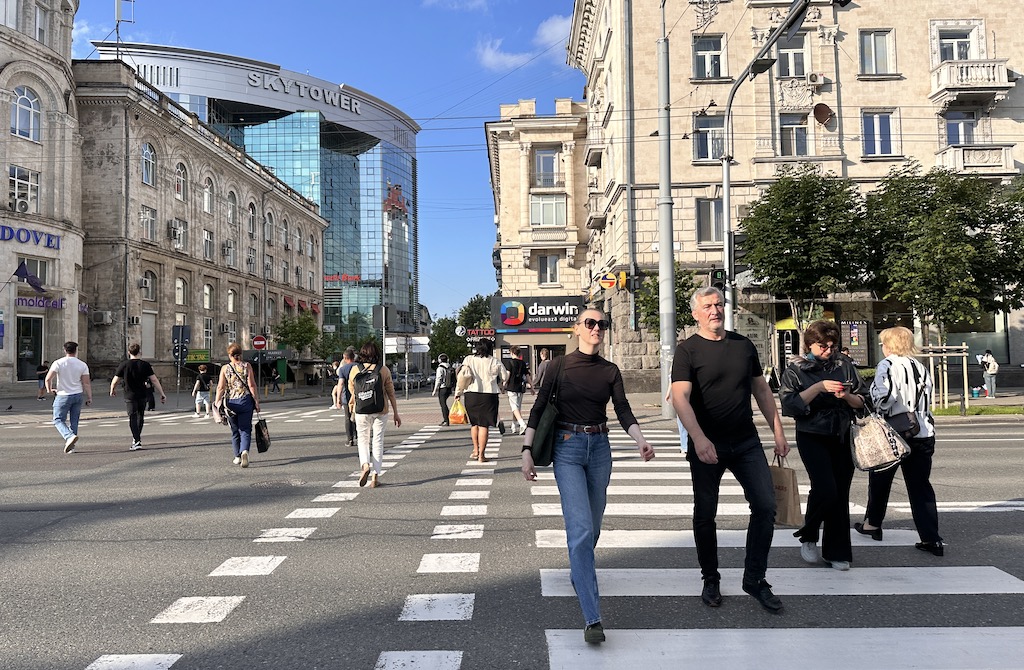
Moldova has never been closer to the European Union – actually, looking at the EU’s blue-and- gold flag hanging from every official building in Chișinău, the country’s capital, besides the national one, along with booming cafés serving lattes and barber shops, one may feel like being in any EU capital. Accession negotiations opened their first cluster in June, the EU’s enlargement commissioner Marta Kos has called it "the best student in the class," and officials speak openly of membership by 2030.
But under the enthusiasm for the perspective of joining the bloc, some of the old habits still linger. Four days after Moldova's 2024 presidential runoff, journalist Victor Moșneag's phone rang with a call that captures how contested that progress still is on the ground.
Moșneag, whom we meet at the investigative newspaper Ziarul de Gardă newsroom, says the caller was someone from a network he’d spent months infiltrating undercover, posing as an activist. "We are very glad that you are with us," the caller said. "I'm telling you thank you on behalf of Ilan Șor. The message is to vote against Maia Sandu, the current president."
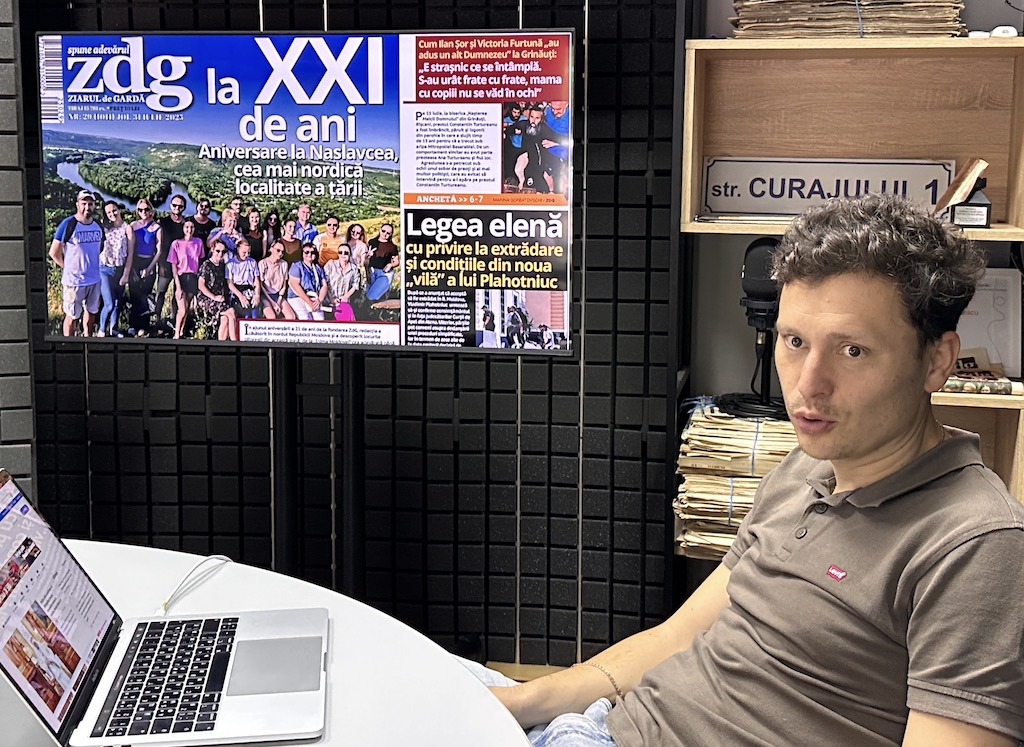
It was the third in a series of undercover investigations Ziarul de Gardă has run since 2022 into vote-buying schemes tied to the fugitive oligarch – schemes that, according to police, eventually drew in some 140,000 people, paid through an application linked to a Russian bank.
The episode sits at the intersection of everything Moldova's civil society organisations describe when asked what stands between the country and EU membership: a governing majority narrower than it looks, a justice system still being rebuilt, and a Russian influence operation that has moved, but not weakened, since 2022.
A majority, but a soft one
Support for EU membership hovers, by most credible polling, between 55% and 65% – a majority, but not a settled one. Adrian Ermurachi, a programme manager at the Institute for European Policies and Reform (IPRE), a Chișinău think tank, points to a discrepancy that, in his view, says more than the topline numbers: polls ahead of the 2025 parliamentary election gave the ruling Party of Action and Solidarity (PAS) 30% to 35% support, yet it won roughly 50% of the vote.
"It's clear that somewhere 20% of people decided, okay, I'll vote for you, because I'm voting for EU, European integration, but it doesn't mean that I really like what you are doing," Ermurachi says, calling that coalition "vulnerable in the long term."
That vulnerability showed within weeks of the first negotiating cluster opening, when Prime Minister Alexandru Munteanu resigned amid a scandal at MoldATSA, the state air traffic controller, where a relative of President Sandu had received a salary that had nearly doubled in six months without a public competition. "A lot of international journalists were showing her as an example of an honest European leader," Oxana Bodnar, a Moldovan journalist, said in a recent Voxeurop/PULSE live event. "But now we have this unprecedented scandal."
Anita Bernacchia, who also covers Moldova, cautions against reading too much into it: "It is very easy to let ourselves go to suppositions... but we shouldn't." Sandu has denied wrongdoing and announced measures to overhaul pay and management at state-owned companies. Still, the timing landed badly, and was compounded, the same month, by the arrest of a senior agriculture ministry official on corruption charges.
More :Moldova races towards EU membership as accession talks launch
Referring to his latest paper, Gian Marco Moisé, researcher at the Lisbon Council for Economic Development and a contributor to OBCT, says that “PAS built its reputation on anti-corruption. Even if, after 2022, attention shifted toward anti-Russian control of the region, the MoldATSA scandal mattered in showing that when PAS remained the one running most institutions and appointing specialists, it incurred similar corruption problems.”
“While Russia’s threat remains a relevant reason for voters to turn to PAS,” he adds, “the weakening of the party’s reputation might be a concern in the long run, especially given that many formerly pro-Russian politicians re-branded as pro-Europeans (i.e. the mayor of the capital)”.
Judges on a trolleybus driver’s salary
The scandal reopened a debate civil society groups have been having for years about how much has actually changed in Moldova's institutions. The Legal Resources Centre of Moldova (LRCM), founded by four lawyers after the 2009 "Twitter revolution" protests, has tracked the justice system's rebuild most closely.
"The judiciary from Moldova became very famous after they annulled the local elections in Chișinău, which was won by an opposition candidate," says executive director Ilie Chirtoacă, citing a decade in which “$20 billion were laundered”, and a bank fraud that siphoned roughly 12% of the country’s GDP – in both cases thanks to complacent judges and courts.
A vetting process modelled partly on Albania and Ukraine has since pushed out roughly a third of the country's judges and prosecutors in under five years, including the Supreme Court's entire previous bench. "We had more than 100 judges leaving the system," Chirtoacă says, as we meet him and his colleagues in the Centre’s premises, in central Chișinău.
The vacancies left behind are harder to fill: "more than 100" unfilled posts, in courts already carrying "1,000 cases per judge" – a shortfall he attributes partly to pay. "A judge's salary in Moldova is more or less equal to that of a trolleybus driver" – around €900.
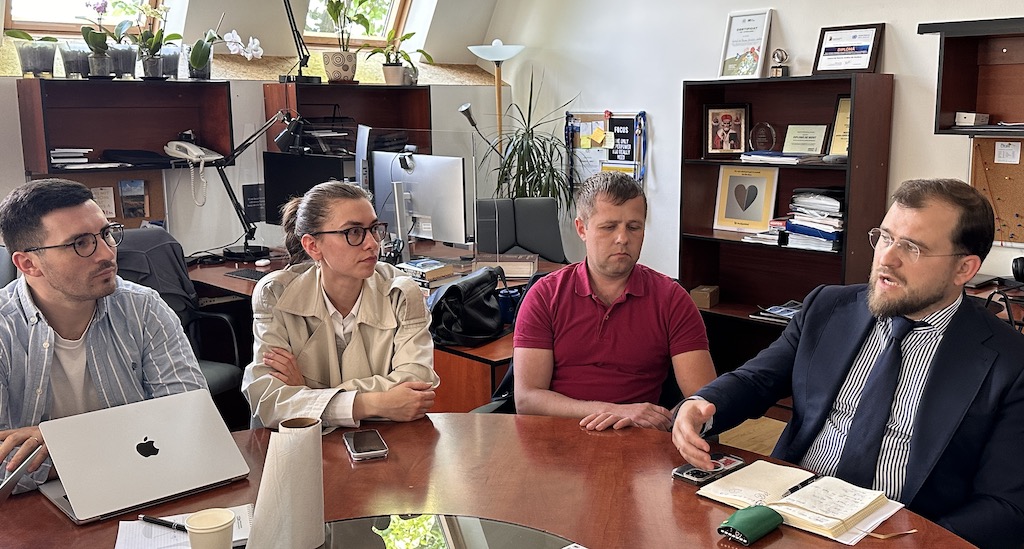
His colleague Dumitru Jomir, a former anti-corruption prosecutor, points to where the money still disappears: "everything related to public procurement... there is no sound criminal case in that, especially in the gas sector, railways, medicine procurement."
He is candid, too, about the limits of the vetting itself, which checks the judge’s financial integrity through comparing their actual lifestyle against a decade of declared income: "the commission didn't find yachts, cars or houses in Miami. I think the biggest difference is around €30,000 or €40,000" – modest sums Jomir notes, next to what campaigners once expected to expose. The vetting process also monitors the ethical (potential conflicts of interest) and tax integrity.
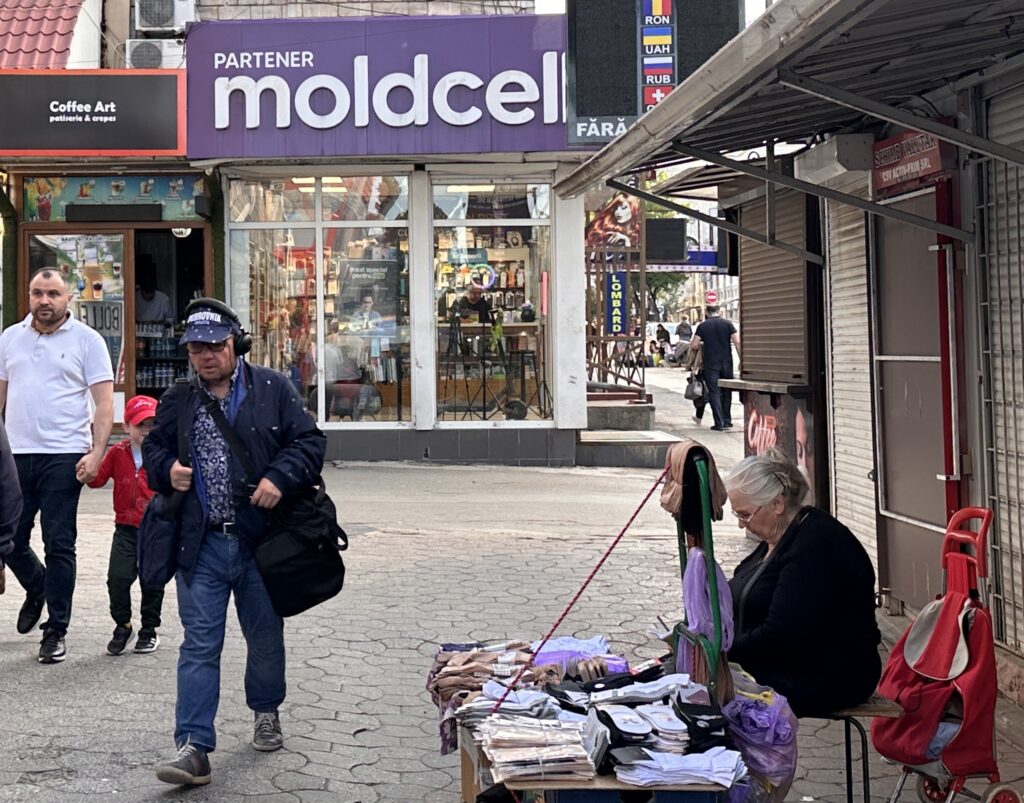
In this context, and considering Moldova’s chronical economic instability and citizen’s low trust in banks, especially after the 2014 bank fraud, it’s no wonder that gold shops and pawn shops, known as lombards, flourish on Chișinău’s main avenue: people prefer physical gold as a stable, inflation-proof savings vehicle rather than holding long-term deposits in Moldova leu, the local currency.
The economic bet
There are signs that Moldova's European turn is beginning to produce an economic dividend. At the Moldova Investment Summit in early June, businesses, the EU and the Moldovan government signed letters of intent covering around €1 billion in investment — a considerable sum for a country whose GDP is below €17 billion. "Europe sees the opportunity in Moldova," EU Commissioner Marta Kos said at the summit.
For Chișinău, attracting investment is more than an economic objective. It is also part of the political bargain underlying accession: Moldova is being asked to carry out costly reforms and loosen economic ties built over decades with Russia, while demonstrating to voters that the European alternative can produce visible benefits.
Whether it does will test the same institutions civil society groups have spent years trying to reform: if the investment pledged in June is to reach citizens rather than stall in the kind of opaque contracting LRCM and other NGOs have long criticised, it will need a level of procurement oversight neither organisation believes yet exists.
Screenshots and shadows
Russian interference in Moldova has not receded since the full-scale invasion of Ukraine; it has redistributed. President Sandu describes this pressure as no longer episodic but permanent: “Russian influence is continuous. It continued before, during and after the elections. Unfortunately, this is the new normal,” she said at a press conference in June in Chișinău.
In politics, the network built around fugitive oligarch Ilan Șor – now a rotating cast of nominally independent parties after his own was outlawed by the Constitutional Court – remains the most visible vector, but not the only one.
‘Elon Musk said that USAID is a criminal organisation. That means we, by extension, are a criminal organisation’ – Dumitru Jomir, Legal Resources Centre of Moldova
Victoria Mereuță, a legal officer at LRCM, points to a recent and troubling phenomenon: the emergence of organisations “that look like NGOs, but actually serve political interests”. She mentions in particular a structure calling itself Eurasia: "last year we saw the creation of it, and also some activities, like training young people and going for study visits in Russia."
Investigative journalists later linked participants in those trainings to activists who confronted authorities during protests in Gagauzia. Victor Moșneag's own reporting found something more transactional underneath the ideology: activists in the vote-buying network "were receiving like a salary every month for being part of a very big organisation," structured down to the level of individual polling stations, he says.
In the media, the shift has been migration rather than disappearance. Several Russian-language and Șor-linked television channels were shut down after 2022, but, as IPRE’s Adrian Ermurachi, puts it, "closing TV, maybe is seen as a solution for someone — I think it's not... people are not getting information anymore from TV, we are getting information from social media, Facebook, TikTok, especially TikTok, Telegram."
Sergiu Tofilat, a researcher at WatchDog, which tracks disinformation networks, says platforms respond unevenly – TikTok, he says, has removed propaganda-linked accounts more readily than Facebook has. Deepfakes and cloned outlets have added a newer layer: "images of independent journalists," Victoria Mereuță says, "are used to present different fraudulent schemes."
In security, Defence Minister Anatolie Nosatîi counts roughly 50 unauthorised drone incursions into Moldovan airspace over the past two years, several of them weaponised. "When you have dozens of missiles entering our airspace... it's not an accident," he says, describing Moldova as "a testing ground for the hybrid war while the battlefield for the conventional war is in Ukraine."
His ministry's 2023 national security strategy was the first Moldovan policy document to state plainly that “Russia poses a direct threat to the Republic of Moldova" – before the war, he says, "we completely avoided" saying so, "in order not to provoke reactions." Defence spending has risen from 0.3% to 0.6% of GDP, targeting 1% by 2030, a modest figure next to NATO benchmarks but a marked shift for an army once absent from public debate.
And in civil society itself, the tactic is delegitimisation. "A lot of effort goes to delegitimise civil society," LRCM’s Dumitru Jomir says. "If we publish a report, a lot of effort will go into delegitimising our findings." Victoria Mereuță describes the mechanics: "they take screenshots... of the budget we have on different projects, and then come up with a new narrative: look how much money they make, the luxury life they run, like oligarchs."
A draft "foreign agent" law failed in parliament only, Jomir says, because "the bad guys don't have a majority yet." The loss of roughly 80% of some organisations' funding when USAID support was suspended in 2025 gave those narratives fresh ammunition. "Elon Musk said that USAID is a criminal organisation," Jomir recalls. "That means we, by extension, are a criminal organisation."
Indispensable and exposed
The result is a sector that is, at the same time, more embedded in the reform process than ever and more precarious than it looks. The EU has made civil society involvement a formal condition attached to Moldova's accession letter, and NGOs sit on government working groups and feed reports into Brussels' human rights monitoring.
Trust in them, Jomir notes, is markedly higher among people who have actually dealt with one – "52% are trusting the NGOs if they are interacting or have interacted with them. If they didn't, they are only 20%" – a gap he says shows how much of the "civil society is corrupt" narrative rests on hearsay. "The trust is low," he concedes, "but there is more trust in civil society than there is trust in the parliament or political parties."
That same visibility, though, makes NGOs and independent media a preferred target, and funding remains scarce. "Like ten grant proposals to get at least one," is how WatchDog’s Sergiu Tofilat describes the search for money. Five parties now sit in parliament, and, Dimitru Jomir warns, four of them – not only Russia's traditional allies – "do not look at civil society with very friendly eyes... you have a unified position [believing] that civil society should be regulated more." It is, in effect, a warning about what happens the day PAS's majority erodes.
Gian Marco Moisé adds that “civil society is often perceived as an extension of PAS, which often needs to tap into its ranks to appoint specialists. This is surely the case of businessmen such as current Prime Minister Vasile Tofan and his predecessor Alexandru Munteanu. An even more prominent example is Doina Nistor, Moldovan Economic Development Minister in Dorin Recean government (March-November 2025), who previously served as the USAID project manager.”
The one clean win
If Moldova has a template for reducing Russian leverage, it is energy, not politics. "We used to get up to 70% of our electricity needs from the power plant in the region of Transnistria," says Energy Minister Dorin Junghietu. "They would get the Russian gas for free, and produce electricity for us – a cyclical, locked-in approach."
Since 2022, Moldova has secured at least 22 gas suppliers, scaled up renewable generation twelvefold, and synchronised with the European continental grid. "The Moldova you see these days versus [that of] 2022 – are different countries, energy-wise," Junghietu says. It is a transformation Chișinău would clearly like to replicate in its politics and its information space. Power lines and supply contracts, though, are easier to rebuild than public trust.
More :Moldova cuts energy ties with Russia. Will breakaway Transnistria follow suit?
What every interviewee agrees on, whatever their corner of the reform effort, is that 2030 is not just a technical deadline but a psychological one – a chance, as IPRE’s Adrian Ermurachi puts it, to "use this opportunity" before "this window is going to close." Whether it survives the next scandal, the next disinformation wave, or the next election in which a fragile majority has to be rebuilt from scratch is the question Moldova's civil society cannot yet answer for itself.
That makes accession a question of reciprocity as much as reform. Moldova is moving quickly to meet the EU's demands, but sustaining public support will also depend on whether Brussels can offer visible returns – investment, integration and credible progress towards membership. If that exchange begins to look one-sided, the optimism on which the accession project depends could prove difficult to sustain.