How the MAGA movement failed to create a cult of Charlie Kirk
Krytyka Polityczna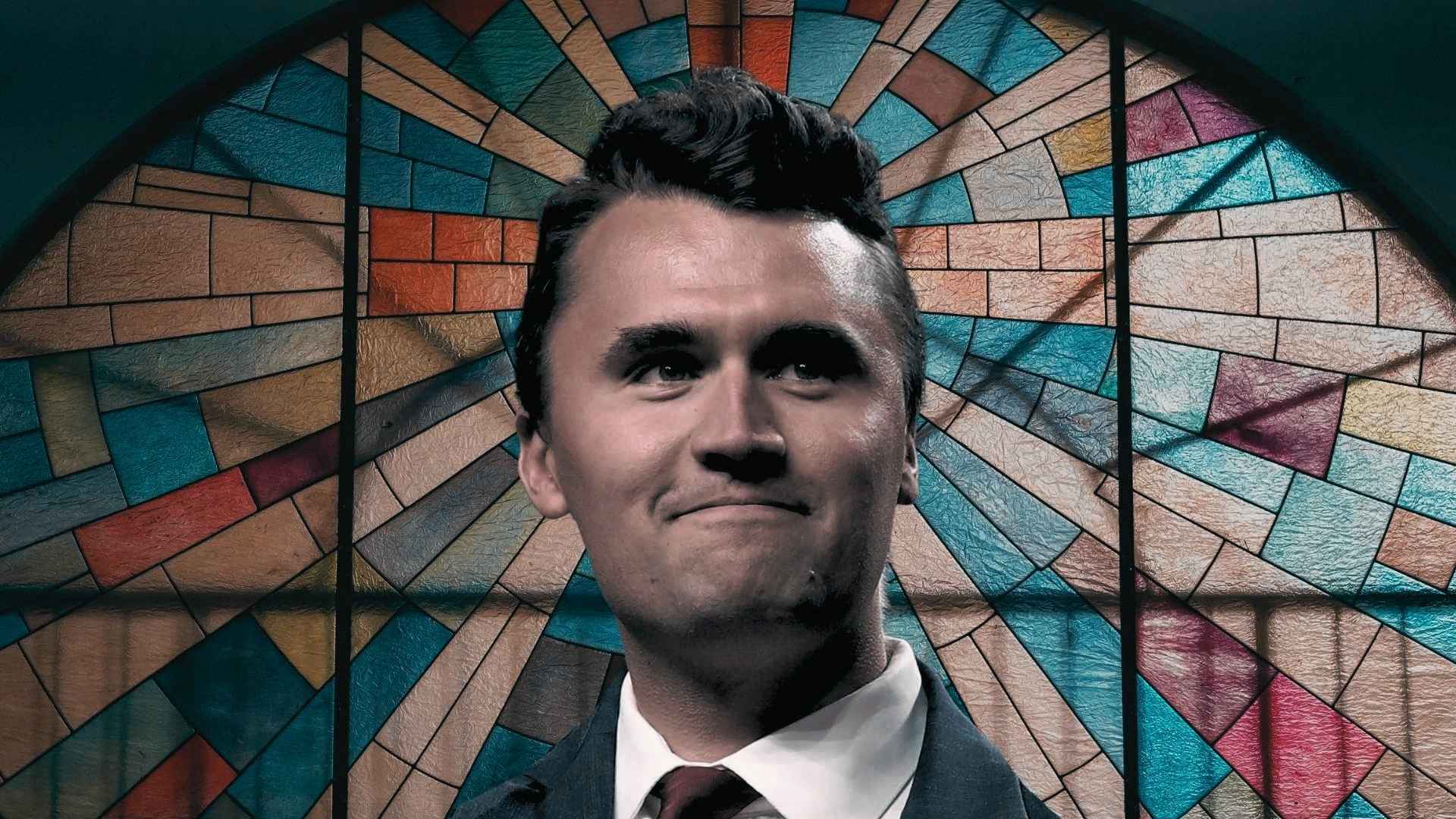
When Charlie Kirk was killed by a terrorist's bullet a year ago, many commentators expected his death to be used to intensify mass repression against the left and to create a mobilizing, radically right-wing cult base. That did not happen – why? The post How the MAGA movement failed to create a cult around Charlie Kirk first appeared on Krytyka Polityczna.
For American conservatives, Kirk remains an important point of reference, but his cult has never gone beyond the right-wing bubble. For a significant part of Americans, the activist today functions as a ridiculous meme, rather than a martyr from the pantheon of American civil religion. The movement he built has fallen into internal disputes and conspiracy theories. Meanwhile, the Left is achieving successive successes in the Democratic Party primaries and after the November elections, it has a chance to gain significantly more influence on American politics than it has had for a long time.
Why did the American right fail to create a political cult of Kirk or use his death to pacify the “radical left”?
Moral panic could not be maintained for long
Certainly not because the right did not try – both repression and cult-building. As Malcolm Ferguson recalled in an article on the anniversary of Kirk’s death in “The New Republic,” immediately after the attack, Stephen Miller, one of President Trump’s closest associates in the White House, told Fox News that in the last message Kirk sent him before “joining his creator,” the activist appealed to address “the problem of far-left organizations inciting violence.” As can be guessed, Miller promised on air that the presidential administration would fulfill Kirk’s last wish. During the memorial ceremony for the deceased, Miller warned the American left that they had “awakened a dragon.”
MAGA activists quickly targeted not only those who expressed joy over Kirk’s death on social media but also those who condemned violence while criticizing the activist’s views as extreme or hateful. Authors of such posts faced not only hate but also criminal threats, doxing, and ultimately – professional consequences. According to BBC citing Reuters, about 600 people lost their jobs or faced other professional repercussions due to their posts about Kirk.
As it later turned out, often unlawfully. The dismissed individuals pursued their rights in courts and before other arbitration bodies. In many cases, they were either reinstated – like Karen Attiah, the opinion editor of The Washington Post – or received generous compensation. The record-holder, an anthropologist from the University of Tennessee, received nearly 2 million dollars for being dismissed from her university position – on the condition that she would not seek employment there again.
Three weeks after Kirk’s death, President Trump signed an executive order NSPM-7, which directed federal agencies to focus their efforts on “antifa” and on communities voicing opinions “hostile to traditional American values,” such as capitalism or Christianity.
The MAGA movement and the administration failed to sustain the moral panic that would justify a frontal crackdown by federal justice on “antifa” and “leftism.” Without underestimating the danger of the authoritarian potential of Trumpism, it must be agreed that as a movement capable only of functioning in the rhythm of hyper-political “outrages” on social media, it can easily provoke moral panic but has a serious problem with maintaining it and turning it into fuel for a disciplined repression campaign.
Kirkification like censorship papa
Even worse for the right was the attempt to elevate Kirk to the status of a saint of American civil religion. These efforts faced fierce grassroots opposition, mainly on social media – the more MAGA tried to impose a cult of Kirk on its users, the more they responded with cruel mockery, turning the martyr into a meme.
According to the Know Your Meme encyclopedia, by October 2025, memes mocking Kirk’s cult had already appeared. Their creators, using artificial intelligence tools, overlaid the face of the deceased activist onto well-known pop culture characters, ending their screen life with a violent death – e.g., Voldemort or Iron Man. Online, one can also find memes depicting Charlie Davidson – the famous motorcycle with Kirk’s head.
The process of overlaying his face onto well-known characters even has a name: kirkification. One could argue that a similar mechanism is at play here as with our censorship papa. When young people are forced to adopt a cult of some person, the reaction is cruel mockery, expressed through an explosion of deliberately vulgar, tasteless memes.
Nihilism and cruelty of such memes can be discomforting. One can also have serious doubts whether they do not trivialize deadly political violence. At the same time, when the MAGA authorities try to use Kirk’s cult to build an undoubtedly authoritarian political project, such reactions are somehow understandable.
Especially since Kirk from the beginning was a controversial, divisive figure among Americans, and the views he propagated – especially on abortion, LGBT+ rights, or racial relations in the US – placed him very far from the American center. Attempts to build a cult of the murdered activist often took an unintentionally comic form, making it hard to distinguish between a serious canonization effort and its parody. An AI-generated song We’re Charlie Kirk is joyfully used, without changing a single note or word, by Kirk’s ideological opponents mocking his cult. During his recent tour across the US, leftist streamer Hasan Piker encouraged his viewers to sing it.
Even Kirk wouldn’t glue this together
Kirk’s death, instead of becoming an event uniting the radical right, turned into a subject of fierce disputes within the right-wing camp and a source of conspiracy theories. Just three months after the murder, during a conference of his organization Turning Point USA, a confrontation occurred between two right-wing opinion leaders: Ben Shapiro and Tucker Carlson.
Both accused each other of “betraying Charlie Kirk’s legacy.” The first accused Carlson of “betraying Charlie’s memory” by inviting openly anti-Semitic figures like Nick Fuentes for friendly interviews, whom Kirk kept away from Turning Point USA. Carlson responded that Shapiro is the one betraying Kirk’s legacy and his “commitment to free debate.”
Radically right-wing influencer and conspiracy theory propagator Candace Owens claimed that behind Kirk’s death are actually foreign services, most likely Israeli. Owens also targeted Kirk’s widow, Erika, accusing her, among other things, of connections to Epstein. It can be agreed with the distancing author Richard Hannania, who, while not necessarily progressive, notes that it’s not surprising that Kirk’s death becomes a source of absurd conspiracy theories, considering that the activist himself eagerly propagated them. For example, repeating Trump’s narrative about “stolen elections” in 2020. The “paranoid style in American politics” didn’t start with Kirk, of course, but the activist did much to sustain it in the next generation.
As the “New York Times” noted in a portrait on the anniversary of the activist’s death, just before his death Kirk clearly felt uncomfortable with topics such as the government’s policy towards Epstein’s case or the war in Iran. He was increasingly disagreeing with what Trump was doing but did not want to criticize him and declared trust in the president. Today, the Epstein case and even more so the war in Iran are cracking the coalition that gave Trump victory in 2024.