The Western Balkans faces the threat of colonial dependence. People close to Trump are planning major investments from Belgrade to Tirana.
Kapitál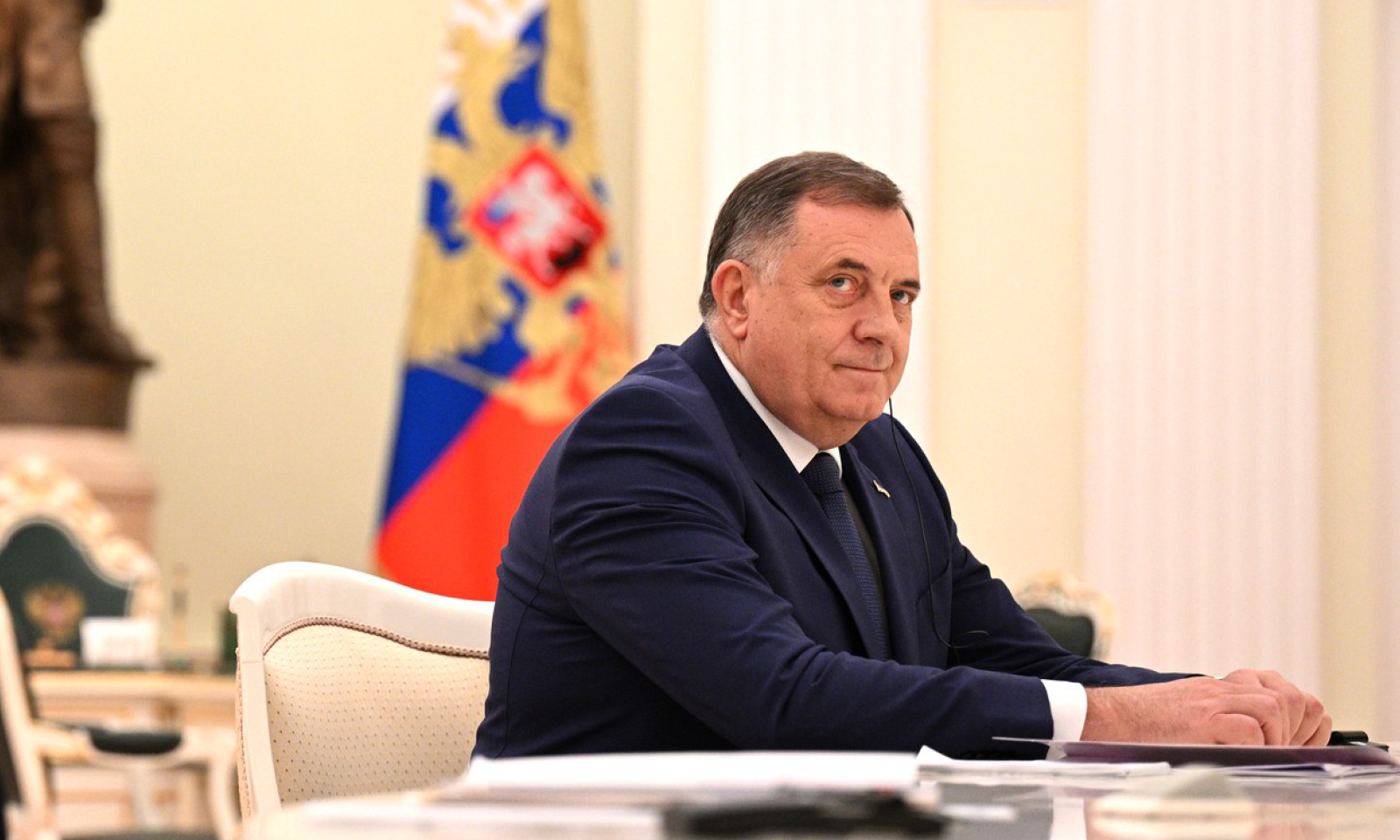
The region is under pressure from competing superpowers, which use political, energy, and military tools to strengthen their influence. How is the position of countries in the Balkans changing in the context of American, European, and Russian policies?
The son of the American president, Donald Trump Jr., arrived on April 7th in the Republic of Srpska in Bosnia and Herzegovina. In a spectacular manner, he expressed support from the United States to Milorad Dodik, the former president of this entity, in which he still holds significant power. Dodik considered Trump Jr.'s visit as a demonstration of strength against the central authority in Sarajevo.
Thanks to good relations with the White House (accompanied by several concessions), Dodik managed to achieve the lifting of American sanctions that had been in place against him for several years. The former president of the Bosnian Republika Srpska was accused in September 2023 of disrespecting the decisions of Christian Schmidt, the then High Representative for Bosnia and Herzegovina and the de facto proconsul of the country.1 Prior to that, he continuously questioned judicial decisions. The legislative assembly of the autonomous republic even passed laws prohibiting the enforcement of decisions by central judicial authorities in Sarajevo, which led the prosecutor's office in the capital to initiate criminal proceedings. Dodik was sentenced in August 2025 in an appellate process to one year of suspended imprisonment and a six-year ban from running in elections. Despite an international arrest warrant issued against him (which, however, ultimately did not come into force – ed. note), he met with Benjamin Netanyahu in Israel and subsequently with Vladimir Putin in Moscow.
After escalation of tensions, the situation calmed down. The National Assembly of the Republic of Srpska abolished the controversial laws, Dodik resigned from the position of president, recognized the legitimacy of the central judicial authorities, which he previously refused to accept, and paid a fine, thus avoiding imprisonment. "It is not good to remove the president of the republic in this way," he stated on the eve of his meeting with Trump Jr. "But if it helps the long-term fight for the Republic of Srpska, then it may make sense."
Since then, Dodik has appeared more frequently in the United States alongside people from around President Trump, including Michael Flynn, former National Security Advisor during Trump's first term. Flynn later became Trump's lobbyist. After returning from the USA, Dodik declared his sympathies for the MAGA movement (Make America Great Again) and pointed out the unsuccessful project of building a state in Bosnia, to confirm that the Republika Srpska "can cooperate with Americans, but not with NATO," which "bombed us twice with depleted uranium in the territory of Republika Srpska and Serbia." However, a few days later, he stated that he currently maintains a "neutral" stance towards NATO. The fact is that Bosnia and Herzegovina is subtly moving closer to the Alliance, as evidenced by the adoption of a cooperation program (October 2025) by the national commission, which includes representatives from Dodik's party. This key step towards closer cooperation with NATO was approved a week before the lifting of sanctions against him.
After Christian Schmidt resigned on May 11, 2026, and handed over a report to the UN Security Council on "consolidation of the rule of law" and the "risk of disintegration" of institutions in Bosnia, Europeans insisted that his successor be appointed as soon as possible. Conversely, the Russians demanded the abolition of the office of the High Representative itself, which can pass laws and dismiss political leaders, and labeled it as the "main source of instability" in the country.
At the Peace Implementation Council (PIC) meeting held on June 4th, a dispute arose over the name of the future High Representative. Washington and Rome attempted to promote Antonio Zanardi Landi, former Italian ambassador to Moscow and Belgrade. Paris, Berlin, and London supported the Frenchman René Troccaz, France's special envoy for the Western Balkans. The United States then sharply criticized the "inability of Europeans to reach a consensus on a European candidate" and announced that they are considering "reassessing their position in the current international presence in Bosnia and Herzegovina." They want the powers of the High Representative to be "much more limited," as they believe that Bosnia is "approaching the end of international intervention." However, the reality is that Schmidt's decisions conflicted with their interests, especially regarding the gas transfer issue.
Dependence on American gas has geopolitical significance
Washington aims to exploit the situation caused by the war in Ukraine and strengthen its influence in the energy sector in the Balkans, specifically through the construction of pipelines and related thermal power plants (a project worth 1.3 billion euros), entrusted to the company AAFS. This company is managed by Jesse Binnall, a former Trump lawyer, and Joseph Flynn, brother of the aforementioned Michael Flynn. Both were involved in a campaign questioning the results of the 2020 American presidential elections. The pipeline is to transport liquefied natural gas (LNG) from the Croatian terminal on the island of Krk. "We are approaching a colonial dependence. This project primarily has a geopolitical dimension for the United States," believes Damir Kapidžić, a professor at the Faculty of Political Sciences in Sarajevo.
The goal is to gradually replace coal-fired power plants with those connected to American gas. The European Union's ambassador to Sarajevo addressed Prime Minister Borjana Krišto in a letter, reminding her that Bosnia, as a signatory of the Energy Community Treaty, must adhere to EU rules—especially in public procurement and competition. "Long-term non-compliance with obligations arising from this treaty by Bosnia and Herzegovina (...) represents one of the main obstacles to the process of European integration," emphasized the ambassador.
For Washington, cutting off Russian sources in the region is crucial: American gas can flow from Greece, Albania, or Croatia to Bulgaria, Romania, the Western Balkans, Hungary, or Ukraine. Albania already signed an agreement at the end of April to build a thermal power plant in Vlorë, which will be supplied with American LNG over the next twenty years.
In early April, Joseph Flynn presented a pipeline project in Sarajevo, which is to be the next step in the lasting rapprochement between the USA and the Federation of Bosnia and Herzegovina. A month earlier, his brother Michael called the Dayton Peace Agreement (1995)—a key document for Bosnia and Herzegovina, whose signing was mediated by the USA—"outdated."2 In Banja Luka, Flynn advocated for decentralization to gain greater independence from Brussels. When asked how the Bosnian Serb Republic envisions its "freedom," he mentioned the example of Czechoslovakia's split, indirectly hinting at its independence.
The transactional approach is also applied by the Trump administration towards Serbia. Serbian President Aleksandar Vučić has long tried to maintain good relations with both Democrats and Republicans, but ultimately decided to align with the MAGA movement. His foreign policy of "four directions," aimed at balancing Moscow, Washington, Brussels, and Beijing, led to a series of concessions: energy dependence on Russia, handing over strategic mines and infrastructure to Chinese companies, and agreements with the European Union.
Vučić seeks to gain Trump's favor by supporting economic projects involving people close to the American president. At the beginning of 2024, Trump’s son-in-law Jared Kushner announced investments in Belgrade and Albania, to be carried out by the company Affinity Global Development linked to his investment fund, Affinity Partners, mainly financed by capital from Saudi Arabia, investors from Qatar, and the United Arab Emirates. This company collaborates with the Serbian government to build a luxury complex including the Trump International hotel on the site of the former army headquarters, partially destroyed during NATO bombing in 1999. The contract includes demolishing buildings and offering a ninety-nine-year rent-free lease, which can later be converted into ownership. Serbian authorities are exerting pressure to revoke the heritage protection of the former army headquarters, provoking protests and criminal complaints. Kushner eventually withdrew from the project, while Vučić attacked judges and passed laws limiting their independence.
Business interests did not deter Washington from imposing a 35% tariff on Serbia (one of the highest worldwide), likely related to economic cooperation between Serbia and China. Relations also cooled on the Russian side, as Vučić did not receive the long-term gas supply guarantees expected from Moscow, despite Serbia's energy system being dependent on Russia. Serbia also has to deal with US sanctions against NIS, the country's only refinery, in which Gazprom holds a majority stake. Belgrade signed an agreement on June 16th with Hungarian oil company MOL to acquire NIS, but the purchase of the Russian stake has not yet been realized, nor is it possible without US approval.
Regarding Albania, the government of socialist Prime Minister Edi Rama supported Jared Kushner and Ivanka Trump’s project to build luxury tourist complexes worth 1.6 billion dollars (1.4 billion euros). These complexes are to be built in protected areas near Zvërnec and on Sazan Island. Besides the company linked to Kushner, Qatari investors and several Albanian oligarchs allied with the local government are involved in the resort's construction. The project sparked mass protests in Tirana, known as the "Pink Flamingo Revolution," referencing the emblematic bird living in Lake Narta—one of the endangered sites. These protests are among the largest since the fall of communism in 1991. Like in Serbia, Albanian youth are sensitive to environmental issues and social inequalities, and in their pursuit of justice, they are attempting popular resistance against non-transparent deals made by political elites, local oligarchs, and foreign investors.
Neighboring Kosovo is heavily influenced by the interventionism of American Democrats from Bill Clinton’s era, which laid the groundwork for declaring independence in 2008. Due to Kosovo’s disputed status, this independence remains limited: nearly half of UN member states do not recognize Kosovo, and its security still depends on NATO forces and US troops stationed at Bondsteel base between Pristina and North Macedonia.
During the first Trump administration, Washington contributed to the fall of the first government of leftist Prime Minister Albin Kurti by supporting his opponents. However, the leader of the Vetëvendosje party quickly returned to power thanks to his nationalist and anti-corruption agenda, remaining a challenging partner for the West—mainly due to his intransigence towards Kosovo Serbs and his efforts to unite with Albania.3 The prospect of a "Greater Albania" remains incompatible with the Western project of a multi-ethnic Kosovo after so many efforts to prevent the creation of a "Greater Serbia" or "Greater Croatia." Kurti is now trying to establish good relations with the United States (which supported his opponents in the 2020 elections), thus aligning with American positions on Gaza, Iran, and Venezuela.
Region in the grip of rival superpowers
"For Kosovo, relations with the United States are crucial, even existential. Since five EU member states do not recognize Kosovo and progress in European integration is stalled, each government tries to maintain these relations. Moreover, the United States remains a key supporter in defense matters," explains Agon Maliqi, an independent Kosovo political analyst. At the end of April, three members of Congress submitted a resolution supporting Kosovo’s accession to NATO. This initiative aligns with the ongoing US strategy to expand the North Atlantic Alliance, which the Americans began in the 1990s—despite confusing rhetoric from Donald Trump. The expansion of this military organization in Eastern Europe continued during his first term, with North Macedonia joining the alliance. On the Balkans, only Bosnia, Kosovo, and Serbia remain outside NATO, although the last maintains close cooperation, demonstrated by joint exercises conducted in the south of the country in May 2026.
The proposal presented in the US Congress is seen as a reward for Kosovo, which, a few days earlier, along with Bosnia, announced its willingness to send troops to Gaza as part of Trump's "Peace Council" international forces. This council was established in January 2026 in Davos and, besides the USA, includes twenty-six other countries, including Kosovo. Albania, Kazakhstan, Morocco, and Indonesia also confirmed their participation in the military operation in Gaza. Kosovo’s Prime Minister Kurti compared this mission to NATO’s mission in Kosovo after the 1999 war, although at that time, troop deployment was authorized by the UN Security Council. The American initiative to support Kosovo’s NATO accession aims to influence the stance of European countries that do not recognize Kosovo, four of which are NATO members (Spain, Greece, Slovakia, Romania).
"The Western Balkans is a playground for rival superpowers," states Boštjan Udovič, professor of international relations at the Faculty of Social Sciences in Ljubljana. "The European Union is coming last. It does not understand this region and has left a free space that others have exploited." The fact that Albanian elites in Kosovo have aligned with Washington’s priorities is related to European diplomacy’s reservations, which believed it could push its vision but has long postponed the integration of Balkan countries.