AI-pocalypse
Voxeurop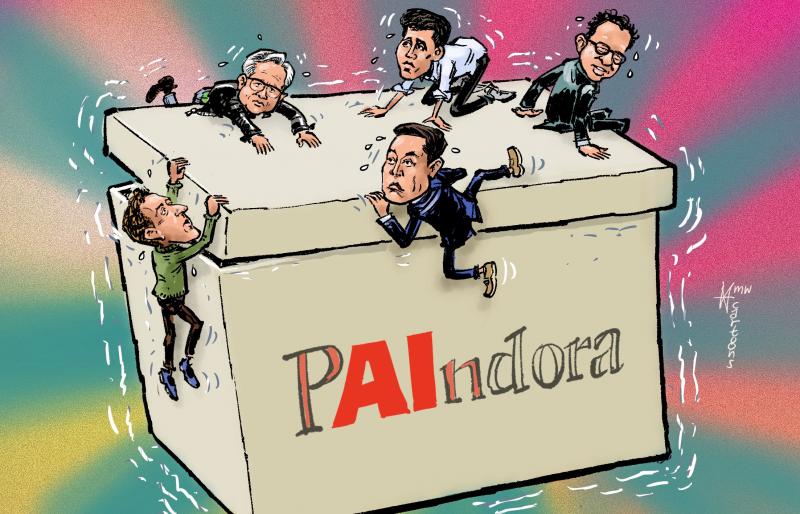
The European Union faces a complex challenge: balancing AI regulation with industry growth amid global competition and rising ethical concerns. As major tech giants dominate and fears of existential risks grow, can the EU carve out a distinct path in the evolving AI landscape?
Caught between the need to regulate artificial intelligence and the desire to be a key player in the industry, the European Union no longer knows which way to turn. Lagging behind the United States and China, the EU is seeking to support AI development within its borders while simultaneously enforcing its regulation. This delicate balancing act has left both advocates and sceptics of AI unconvinced.
The European Regulation on Artificial Intelligence (or AI Act), a piece of legislation adopted in 2024 that sets out guidelines for AI development in the EU, is now almost fully implemented. The French company Mistral is now positioning itself as the most capable representative of Europe in the AI market. Valued at 21 billion euro, it nevertheless pales in comparison to giants such as Anthropic (around 850 billion euros) or OpenAI (around 750 billion).
Beyond the economic considerations, the explosive growth of AI also raises pressing concerns around copyright, image rights, the protection of workers, environmental protection and democracy.
More :Data centres in the EU: political will, local resistance
These crucial questions are overshadowed by warnings from tech industry leaders who – typically without evidence – warn of the mortal danger that out-of-control AI could pose. In a public debate driven by both the messianic fervour of Silicon Valley and the recently highlighted threats of human extinction, the European Union is struggling to make itself heard. Confronted with the siren call of AI, will the EU manage to chart its own course?
We’ll be discussing all this and much more at our next Voxeurop Live event with journalists Elena Sánchez Nicolás and Alberto Puliafito. Find out more here.