French youth are in the streets. They are fighting for better education and shaping their political identity.
Kapitál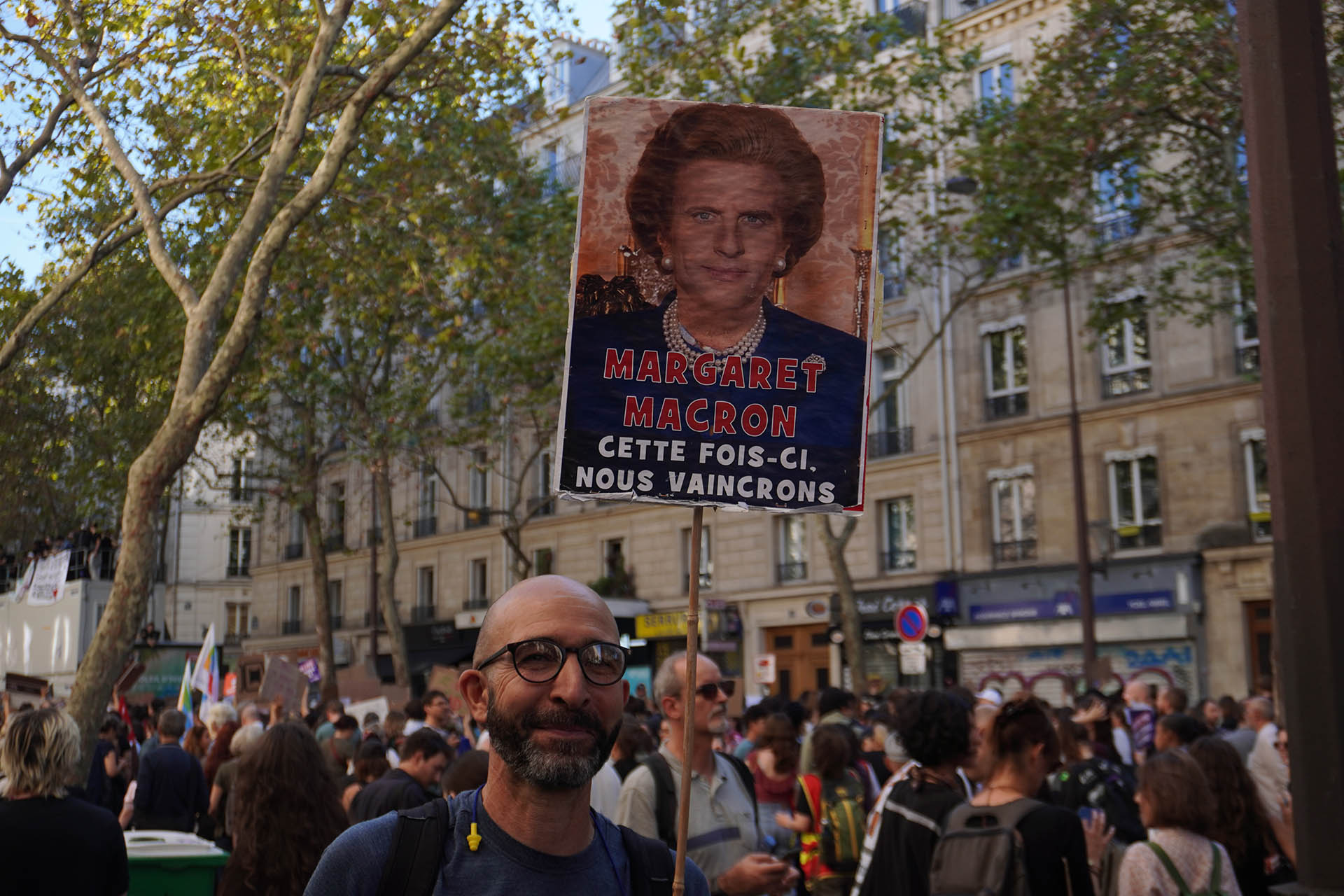
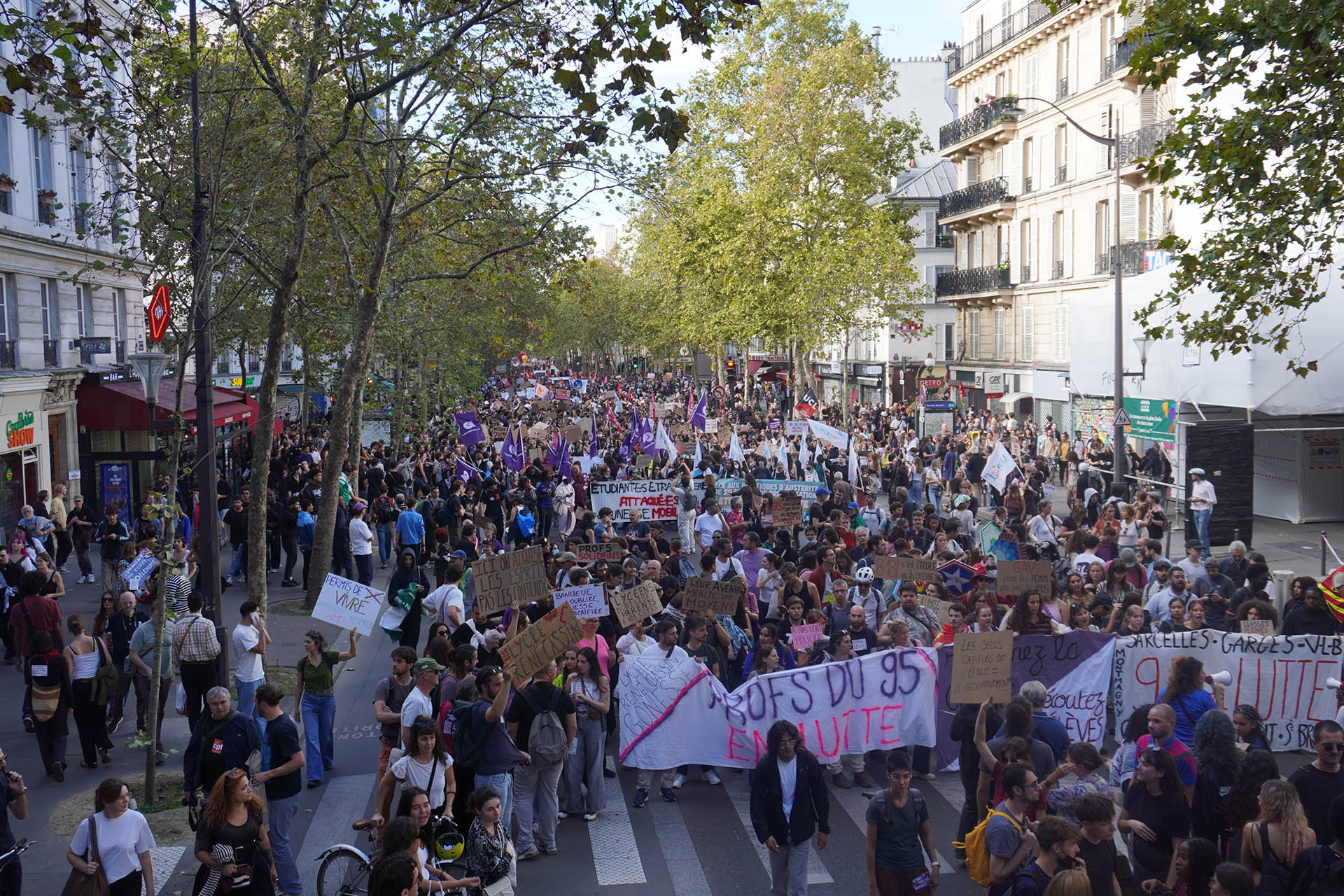
The spirit of the Gallic rooster's revolution has awakened again. This time, it was sparked by students dissatisfied with the state of French schools, joined by teachers and other education staff to express their solidarity with the youth. The involvement of major unions added a nationwide and more institutional dimension to the action. It is reported that there were about half a million participants (official government statistics cite 266,000). Headlines of world newspapers are filled with photos of burning cars, groups of students standing (sometimes with their teachers) against riot police with helmets and shields, young faces covered with masks or French flags. Are opposition political parties behind the escalation of the situation, or is it rather an incompetent government?
The wave of revolution in the land of the Gallic rooster has awakened again. This time, it was sparked by students dissatisfied with the state of French schools, joined by teachers and other education staff to express their solidarity with the youth. The involvement of major unions gave the action a nationwide and more institutional dimension. It is said to have about half a million participants (official government statistics report 266,000). Headlines of world newspapers are filled with photos of burning cars, crowds of students standing (sometimes with their teachers) against riot police with helmets and shields, young faces covered with masks or French flags. Are opposition political parties behind the escalation of the situation, or is it rather an inept government?
It all started on September 17, when teaching staff at Saint-Exupéry High School in the Paris suburb of Créteil began striking due to an acute shortage of teachers, which also affected the poor regime of instruction (many students per class, poor schedules causing stress and overload). Soon after, students themselves and some parents joined the teachers. The protests spread from the Île-de-France region around Paris to the entire country, as the problems of the French public education system are systemic, mainly affecting schools attended by poorer communities. Besides the shortage of teachers, there are also issues with the condition of school buildings and equipment, as well as socio-economic barriers that prevent poorer families from sending their children to better schools. That is why many describe the French meritocratic school system as more of a “hereditary” system (good education and social success are inherited, or more precisely, reproduced through the transfer of economic and cultural capital in wealthy families).
However, the protesting secondary schools in suburban areas were joined by better-off high schools and renowned universities. Students from the prestigious Sciences Po created a barricade on Boulevard Saint-Germain, so the atmosphere of civil unrest extended into the wealthier center of Paris.
The Complaint Book
Student and teacher unions are demanding fundamental reforms and increased investments in public education from the government. Besides higher wages and a larger education budget, they also call for repairs and modernization of schools (some schools could not open windows during the summer heat), reduction of class sizes, accelerated hiring of new teachers, greater consideration of students’ opinions, and now also an investigation into police actions against protesters. So far, the government has not presented any systemic solutions, and its unified stance is questionable, facing criticism for disproportionate police interventions.
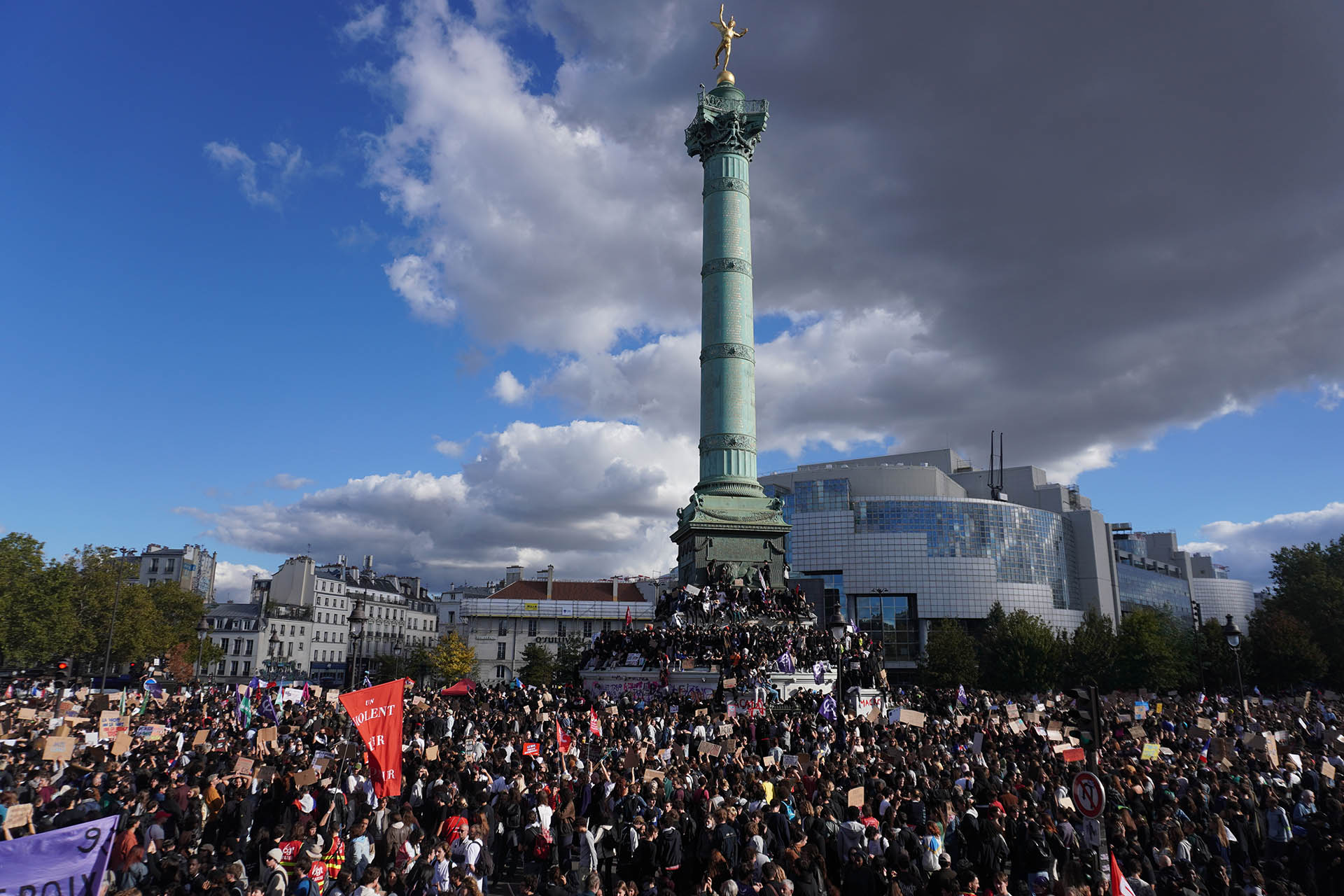
Political actors are trying to exploit the dramatic course of protests for their own benefit, especially with the presidential elections approaching. Jean-Luc Mélenchon, leader of the far-left party France Insoumise, who has a good chance of reaching the second round where he would probably face Marine Le Pen, celebrates the blossoming of “the most powerful student movement since May 1968” and calls on parents to go out into the streets with white ribbons and helmets to defend protesting students against police forces. French Prime Minister Sébastien Lecornu accused the far-left of exploiting protests as proxy conflicts in the fight for the presidential seat. He condemned the “political instrumentalization” aimed at inciting the public against the police and deliberately “sowing chaos.”
The government wants to engage in dialogue about the issues, and the Minister of Education even made a digital platform available where students can submit their complaints and demands. However, this initiative is met with skepticism by unions. Many see this platform as reminiscent of the “Complaint Book” launched by President Emmanuel Macron during the “Yellow Vests” protests (2019). At that time, the complaints submitted were not even published. Sophie Binet, president of the General Confederation of Labour (CGT)—one of the most significant trade unions in the country—stated that the student protests are “a sharp response to all the lies of the government,” which, instead of recognizing the real social dimension of their demands, depicts the protesters as puppets manipulated by political forces.
Violence in the streets fuels critics: the government, which must defend disproportionate police interventions (the most serious case being that of a fifteen-year-old student who had his arm amputated after a stun grenade exploded in his hand while he was throwing it), but also the far right, which uses these incidents to attack immigrants and Muslims in the suburbs. Conservatives call for respecting authorities and institutions, while right-wing liberals disapprove of further public spending on a centralized (and thus poorly managed by principle) school system. They also criticize vandalism, economic damages, and violations of the rights of those who want to attend classes.
Protesters attack police officers with pyrotechnics, set fire to fire trucks or buses, and dozens of school buildings have already been burned. Blockades have disrupted the operation of nearly a thousand schools across the country. During unrest in the streets or in front of schools, various conflicts occur. Sometimes police disperse peacefully protesting students and their teachers; elsewhere, students chase away teachers or a lone policewoman. Each side finds footage that allows them to criticize or defend what is happening in the streets. According to official government data, most of those detained were minors. Students now face a difficult task of defending their demands, as the government must regulate the unrest and defend its repressive apparatus.
Education is a right, not a privilege of the wealthy
The youth took to the streets, growing up in a world marked by an atmosphere of fear and uncertainty, but also anger and increasing aggression. The political leadership and the policies of previous generations have left them a devastated environment, a ruthless economic system, and international relations on the brink of world war. Young people are losing trust in current establishment politicians, who only pretend to care about their problems but do not implement systemic changes because they are too costly and inconvenient.
For members of Generation Z, these protests may become a reference point in their political self-awareness. They show signs of what sociologist Émile Durkheim called “collective effervescence,” i.e., shared euphoria from a sense of belonging to a larger whole. In footage from school blockades and marches, we see not only collective anger but also collective joy, not only generational conflict but also intergenerational solidarity.
The youth sing in the streets of Marseille, waving French and often Palestinian flags; “Arafat scarves” are also a common part of protest outfits. The far-right and traditionalist right probably will not understand this combination of symbols, nor perhaps a large part of their parents’ generation, shaped by different narratives about a world divided into good and evil. People from Trump’s MAGA movement often spread conspiracy theories claiming that youth supporting Palestinian rights are manipulated by neo-Marxist woke ideology spreading jihadist propaganda (this rhetoric has also been adopted by several Slovak commentators). Such ideological schemes divert attention from universal values that may underpin young people's attitudes supporting minorities facing attacks. They may again feel that their older generations do not take them seriously and instead stigmatize them constantly.
Recall Greta Thunberg and the youth protesting for climate measures. They also faced disparagement because of their age, despite highlighting serious global problems. Critics accused them of skipping school and being manipulated by radical movements. The same accusations are now directed at French students. Today, they fight not only for better school conditions but also to be taken seriously. They demand their political voice in society. They hold banners with slogans like “We didn’t go to school so we could teach you a lesson,” “Education is a right, not a privilege of the wealthy,” “Only adults can defend their rights,” or “You can take our phones but not our freedom of speech.”
French youth stand up for values once considered primary goals of any policy rooted in the heritage of Enlightenment and revolution, such as justice, equality, the right to education, a decent life, and solidarity. Today, these values are not decisive in politics, even if political leaders declare them. They must be set aside in favor of economic recovery, increasing GDP, and boosting competitiveness (a discourse that the right also applies to education). However, the absolute dominance of the market and individual freedoms over the ideals of the common good and solidaristic relations is barbaric. Economic liberalism has become a legitimate social ideology because it promised prosperity, freedom, and ultimately a better society. However, it lost its legitimacy when people realized that increasing wealth of capital owners does not eliminate poverty and inequality (not even in the wealthiest countries), nor does it improve general access to housing, healthcare, social services, or the quality of education. Not for everyone.
Macronism is ending, and young people want change
Next year will definitively mark the end of the decade-long era of “Macronism,” and the atmosphere in the country (including voter preference polls) suggests that the French want to turn the page and start a new chapter in political development. The “president of the rich” government has become a symbol of neoliberal state management, which has manifested in the decline of public services and worsening economic conditions for ordinary people. Increasingly, the middle classes and those living on the peripheries of the globalized economy feel it. Of course, young people from these environments also feel it—they have resigned themselves to the lack of prospects, knowing they cannot get into prestigious schools, secure well-paid jobs, afford their own housing, or likely survive in a safe world and healthy environment. Their reasons for wanting systemic change are literally existential, while the system (including education) keeps them in the illusion that if they try hard enough, they can be more successful and wealthier. Journalist Salomé Saqué writes in her book with a fitting title Be Young and Be Quiet.
The Prime Minister Lecornu acknowledged in his Wednesday speech (October 7) the legitimacy of the demands and expressed empathy towards youth traumatized by the COVID-19 pandemic, the war in Ukraine, and fears about the future (including financial difficulties in families). He again called for dialogue and announced increased investments in public education in the next year's budget. At the same time, he pointed out the limits of the state, whose financial capabilities are affected by economic problems. However, student unions and protesters do not demand empathy but immediate action, including ten billion euros for education. The “Red Vests” (the color of CGT unions) do not want to end up like the Yellow Vests a few years ago, who had to compromise and were also criminalized as a movement.
For the high school and university students involved in blocking school buildings and street protests, this experience may be formative. Not because of the dramatic course involving violence (which the organizers themselves disassociate from), but because they have entered the public space with political demands they promote through political actions. Children of lockdowns and digital social networks have come out into real streets and are demanding solutions to real societal problems. If they manage to stay at this level and consistently push their demands (without escalating violence that could be used as a pretext for repression and criminalization), they bring hope that solidarity among the weaker and marginalized can turn into a political force that shakes the system. At least, young people still believe in it. When teachers and parents join them, they may not lose hope that their older generations have abandoned them. “Sorry for the disturbance, but we are trying to save our future,” read one of the banners.

The text was created with the support of the Rosa Luxemburg Foundation, with a presence in the Czech Republic. The publisher is fully responsible for the content; the views expressed in the text do not necessarily represent the foundation’s position.