A woman is always to blame
Kapitál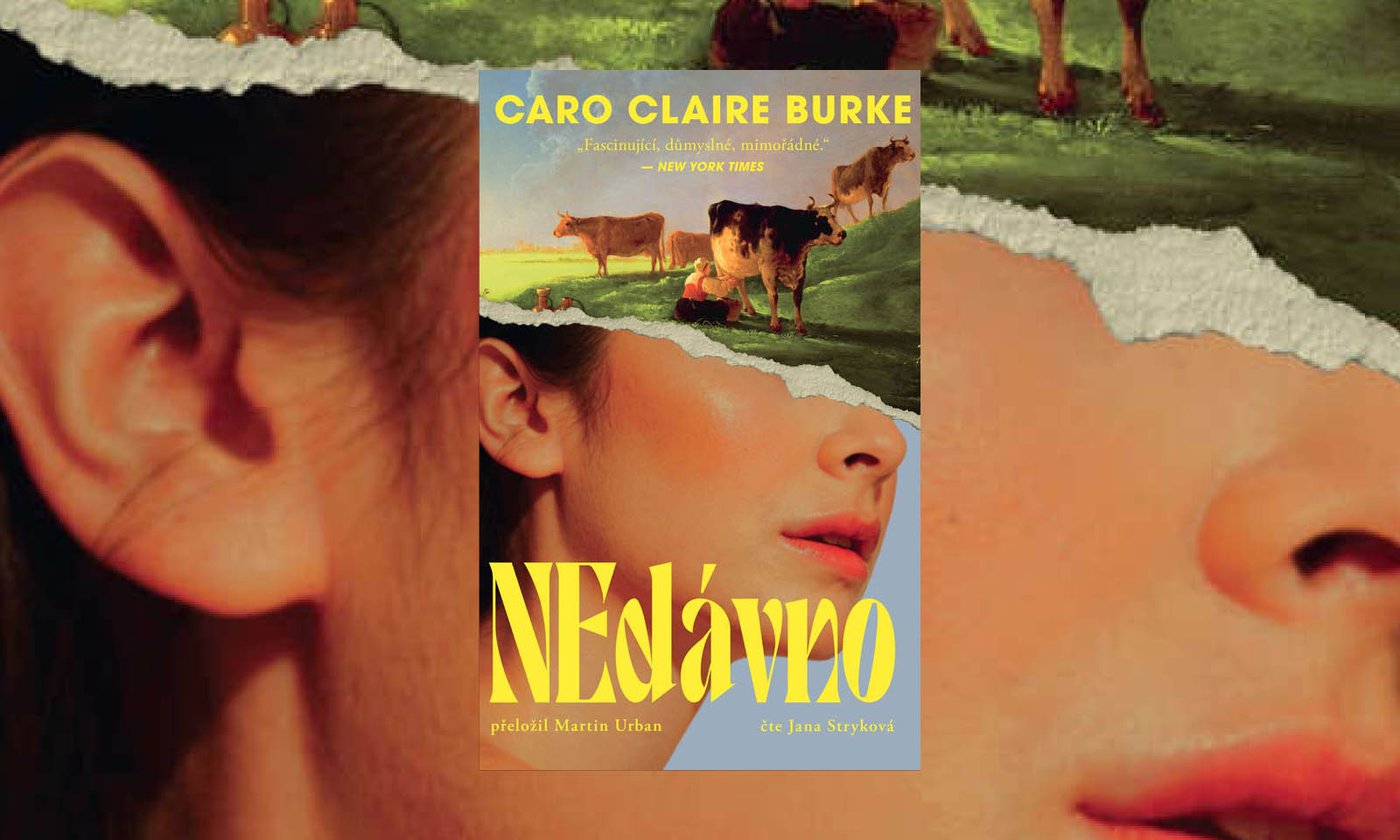
Influencer Natalie champions an idyllic traditional lifestyle, but after waking up in 1855, she is left without the technology, staff, or comforts on which her online image depends. Yet the novel Yesteryear promises more than her deserved downfall: it explores motherhood, feminism, patriarchy, and the boundary between posing and reality.
Influencer Natalie built her career on promoting an idyllic traditional life. One morning, however, she wakes up in 1855 – without nannies, a producer, modern technologies and other conveniences she relied on when presenting her “perfect” farm and household online. Now show us, sister, how you manage in the truly traditional world you praised!
The blurb for the bestseller Yesteryear (published in Czech under the title NEdávno) promises an orgy of schadenfreude.
The blurb, like the perfect lives on Instagram, however, is deceptive. And it also disappoints the mainstream audience that expected a straightforward mockery of the tradwives movement. Instead, it gets a systemic critique of today’s understanding of motherhood, liberal feminism, the attention economy and a world in which a woman can never win.
In Natalie’s world, everything is a woman’s calling card: a baked cake, a polished kitchen, attractive content on social media, her husband’s success and the quality of his erection. If any of these things fails, the fault is always the woman’s.
The author of the novel Yesteryear, Caro Claire Burke, is part of the writing duo behind the excellent pop-cultural and political podcast Diabolical Lies. In writing her debut novel Yesteryear, she was evidently inspired by the real-life tradwives movement, particularly the Ballerina Farm profile.
The novel’s main character, Natalie, is in fact a fictional reflection of the popular influencer behind the aforementioned profile. At the same time, she is the only character in the book developed in depth – we follow the world through her perspective, hate her cold cynicism and manipulation, and sympathize with her observations, ambitions and resourcefulness, with which she keeps the entire farm financially and organizationally afloat. No submissive “woman in her feminine energy” from esoteric manuals, but a ruthless manager of her own idyll. Her internal monologue is so convincing that at first it does not even occur to us to doubt her reliability as a narrator.
Compared with the complex Natalie, the characters of the children, the farm staff and her husband Caleb come across as rather flat. The author devotes little space to his frightening descent into the manosphere. It remains questionable whether it could have been prevented if he had been given the chance to pursue the only job he truly enjoyed – working as a kindergarten teacher. In a world in which even a privileged man must meet society’s and his family’s expectations, however, we will not find out.
“Being a substitute kindergarten teacher was the career version of a deflated penis. Embodied humiliation.”
Among the book’s strongest moments are its descriptions of the first birth and postpartum depression. Natalie is shocked by the sudden loss of her own identity and autonomy. She feels betrayed by her mother, mother-in-law and all the generations of women before her who presented motherhood as a natural and the most important vocation of a woman.
“I felt like one of those young men during the Normandy landings. I expected to naturally grow into the role of mother, since being a mother is supposedly a woman’s nature. But nothing about it felt natural.”
Motherhood is precisely a key point of radicalization in various directions for many women. As Naomi Klein writes in Doppelganger, sometimes the problem is named correctly, but all it takes is for us to switch one track incorrectly and we find ourselves on a completely different line. Not necessarily the one at the end of which Slovak video blogger and Republic party candidate Lívia awaits us in floral dresses with the promise of sourdough bread and a happy future for white children. Perhaps merely the one where we meet comedian Klaudia pontificating on YouTube about whether we went a little too far with the kind of feminism that demands both a successful career and a one-hundred-percent-perfect household from women.
The dilemma of whether to wear yourself out at home or in the corporation can be resolved by pretending to be the image of a perfect housewife online. And perhaps you will even be considered a feminist icon who has “fucked over” capitalism and owns her means of production (the household and the children) herself.
Burke brilliantly reveals that the goal of influencers, male and female, is neither to be popular nor unbearable. The goal is to be everything at once – and above all, to be addictive. The show called “Online Natalie” becomes more perfect than its living model, and the boundary between pose and reality blurs.
“Wake up. Shower. Wash your hair with shampoo and conditioner. Exfoliate. Shave. Blow-dry your hair. Curl your hair. Layer creams and products onto your skin. Make-up, blush, eyelash curlers, mascara, eyebrow pencil. As your mother-in-law would say: the absolute basics. While the sun rises outside, stare at your reflection in the bathroom mirror and examine your imperfections. Practice the sentence: it’s nothing. Practice the sentence: I like to start the day with a little moment for myself. Swallow the rising nausea in your throat. Swallow the anger. Swallow the anxiety. Swallow the desire to set the house on fire and walk out the front entrance while your husband, child and in-laws burn alive behind you. Breathe. Breathe. Breathe. Kill yourself. No — invoke your followers. Invoke Jesus.”
Genre-wise, it is a classic thriller; the plot moves along without unnecessary pauses and does not let us put the book down. Toward the end comes a major plot twist. After that, the story “gallops” too quickly toward the finale, with key events explained only through confusing memories.
Despite these formal shortcomings, the first reactions from readers suggest that the content itself is a greater problem. The book suffers from a syndrome similar to that of the film Barbie. For a mainstream audience expecting the simple punishment of an unsympathetic protagonist, it is too complex. And for people aware of the damage inflicted on us by the invisible hand of patriarchy and internalized misogyny, it is not radical enough.
Caro Claire Burke: Yesteryear. Alfred A. Knopf, 2026.
Caro Claire Burke: NEdávno. CZ Ikar, 2026.


This text is part of the PERSPECTIVES project – a new brand for independent, constructive and multiperspective journalism. The project is funded by the European Union. The views and opinions expressed are those of the author(s) and do not necessarily reflect the views and positions of the European Union or the European Education and Culture Executive Agency (EACEA). Neither the European Union nor EACEA accepts any responsibility for them.