From a Pink Submarine to Defending Democracy
Kapitál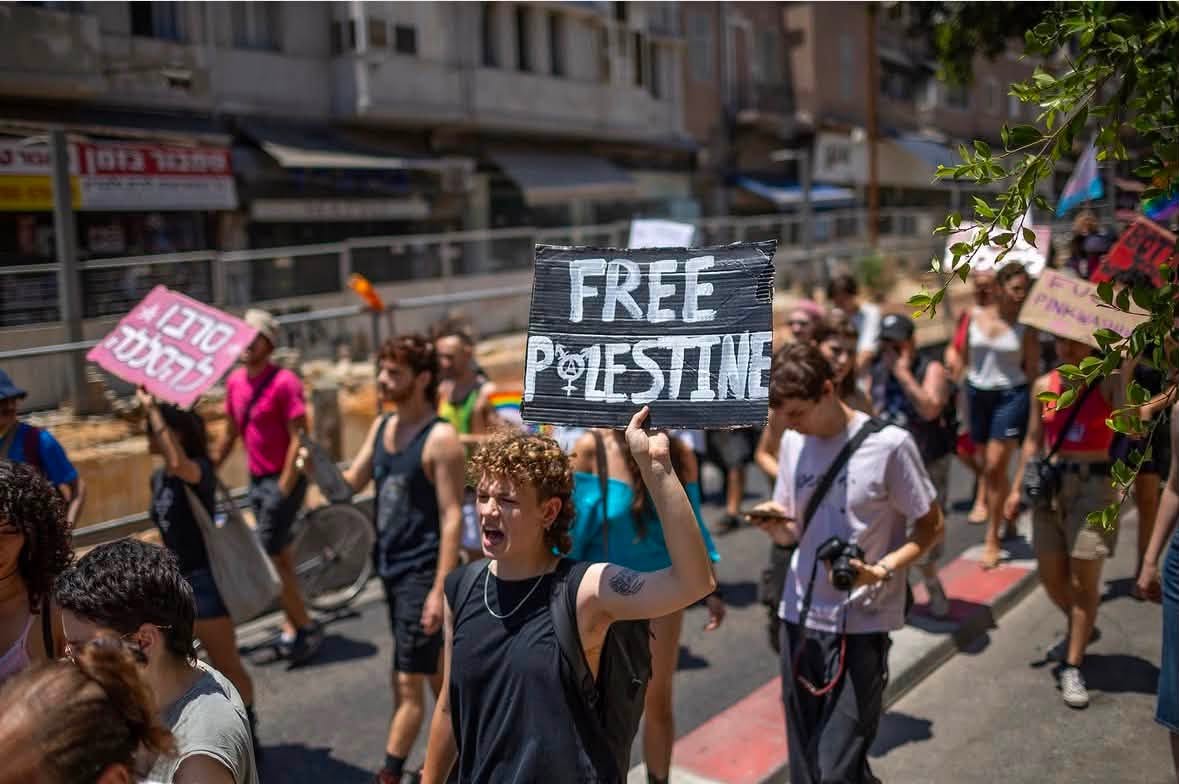
A young man in a purple T-shirt bearing the words Standing together rushes into the waiting room of Ichilov Hospital in Tel Aviv. Like my nephew, he most likely has a broken arm. It follows from the social media posts of this Jewish-Arab movement that he was attacked by Israeli terrorists in the West Bank, where activists go to defend Palestinian farmers against settler harassment and violence. From time to time, an Arab nurse wearing a traditional hijab comes out to check on the patients and calls for patience. More of us are waiting for casts, so people pass the time watching the news on television, where the question of whether Israel’s Arab parties may run in Israeli elections is currently being discussed. The Supreme Court ultimately overturns the decision of the Central Elections Committee, in which Netanyahu’s governing coalition holds a majority, as unlawful. In the waiting room, patients speak in low voices, and there is a silence that nevertheless heightens the tension in a country facing perhaps the most important elections in its history.
A young man in a purple T-shirt bearing the words Standing together rushes into the waiting room of Ichilov Hospital in Tel Aviv. Like my nephew, he most likely has a broken arm. It follows from the social media of this Jewish-Arab movement that he was attacked by Israeli terrorists in the West Bank, where activists go to defend Palestinian farmers from settler harassment and violence. From time to time, an Arab nurse wearing a traditional hijab comes out to check on the patients and calls for patience. There are more of us waiting in line for a cast, so people pass the time watching the news on television, where they are currently discussing whether Israel’s Arab parties can stand in Israeli elections. In the end, the Supreme Court overturns the decision of the Central Elections Committee, in which Netanyahu’s governing coalition holds a majority, as contrary to law. In the waiting room, patients speak quietly, and there is a silence that nevertheless intensifies the tension in a country facing perhaps the most important election in its history.
What condition is Israeli society in after October 7? Is it managing to come to terms with the trauma while also confronting the question of responsibility for the actions of its own government? Few Western societies can match Israelis in the extent of their civic engagement. Nevertheless, Israel’s media image is dominated by the politics of Benjamin Netanyahu’s far-right government and the suffering of the Palestinian population in Gaza. Less attention is paid to those trying to change the shape of their country. What does civic responsibility mean in a society where people are losing trust in politicians and institutions, but refuse to give up responsibility for their country’s future?
Facing the occupation
On Friday evening, I meet Galit Eilat in one of the few Tel Aviv cafés that are open. Most businesses are closed because of Shabbat. Galit is an internationally renowned curator concerned with the relationship between art, politics, civil society and human rights, particularly in the context of Israel and Palestine. She works mainly in the Netherlands, but is currently living in Israel, where she returned to care for her parents. “Everything here is upside down. We are not even able to agree on the meaning of words,” says Galit, who has just arrived from the West Bank, where she regularly goes with the organization Mistaclim (Looking the occupation in the eye). The main agenda of this nonprofit is to defend Palestinian farmers against violent attacks and harassment by radical settlers from the Hilltop Youth movement, who are systematically trying to drive Palestinian farmers from their homes. “Last week, a former head of intelligence for the Israeli Air Force and former CEO of El Al was with us in the village of Duma. He is over seventy years old. Police officers forcibly handcuffed him. It was only at the police station that they found out whom they had actually detained! People whom I would call nihilists are suddenly becoming the ones who set the rules. And a man who served the state all his life is suddenly being labeled an anarchist. If we cannot even agree on the meaning of basic terms, how can we conduct a dialogue at all?”

Galit takes out her phone and shows me several WhatsApp groups with endlessly long messages. These are people who work with Mistaclim, in constant contact and sharing information about what is happening on the ground, who needs help, who is currently there and who will replace them. “At the place I regularly go to, we have three shifts a day. Four people are there in the morning, another four in the afternoon and two at night. That means ten people a day, seventy activists a week, at just one location.” Some people go there personally, while others organize transportation, raise money, coordinate volunteers or communicate with Palestinian families.
Galit considers the occupation Israel’s key problem. “But nobody addresses it in the election campaign. Almost all parties—right-wing and left-wing—are failing in this respect. They are afraid of losing voters. They are even afraid to talk about Arab political parties and Israel’s Arab citizens, who nevertheless have Israeli citizenship.” We scroll through a photo gallery on her phone: pictures of Palestinian farmers, activists and settlers—some of them holding weapons. “Our task is not to fight. We usually do not even talk much; we simply stand between the settlers and the Palestinians. We have phones and cameras, and we document what is happening. If the situation escalates, we try to stand in such a way that the settlers cannot reach the Palestinians.”
The Mistaclim organization has even begun building fences together with Palestinian families around their homes and farms so that settlers cannot reach them at night. They finance them through collections supported by Israelis who cannot go to the West Bank themselves but want to help in some way. “Some activists behave confrontationally, which can make the situation even worse, because the Palestinians then bear the consequences. We have a different method. We try not to escalate the conflict.”

But as Galit points out, it is not only about physical protection. It is also important to be a witness. Not to leave the attacked farmers alone in a situation where they are exposed to violence and humiliation. Palestinian farmers often cannot rely on effective protection from Israeli security forces and remain exposed to violence by settler groups. “I do not understand how people can sit and drink coffee while someone is being harmed less than forty kilometers away.” She mentions that the experience of the Holocaust, when people living near concentration camps could ignore what was happening inside them, is a triggering moment for her. “Among us there are artists, writers, intellectuals and also former high-ranking soldiers. The situation today is different from the past. It is no longer just a few young radicals from Hilltop Youth. There are hundreds of them, perhaps more than a thousand. They receive money from the state, but also from private donors and religious organizations.” While scrolling through the gallery, Galit stops at a photograph taken in the West Bank. In one of the pictures, an activist is sitting on a well. “Look at the composition. Almost a biblical image, right? This person is sitting on a well so that the settlers will not steal the Palestinians’ water. He is simply sitting there.”
According to Galit, the most important thing is to find your voice and be prepared to pay the price for civic engagement. “It does not have to mean that you are fighting someone. Sometimes you simply do something for someone else. That too can be considered resistance,” concludes Galit, who plans to set out again the next day for another “shift” in the West Bank.
Who will protect democracy from its own government?
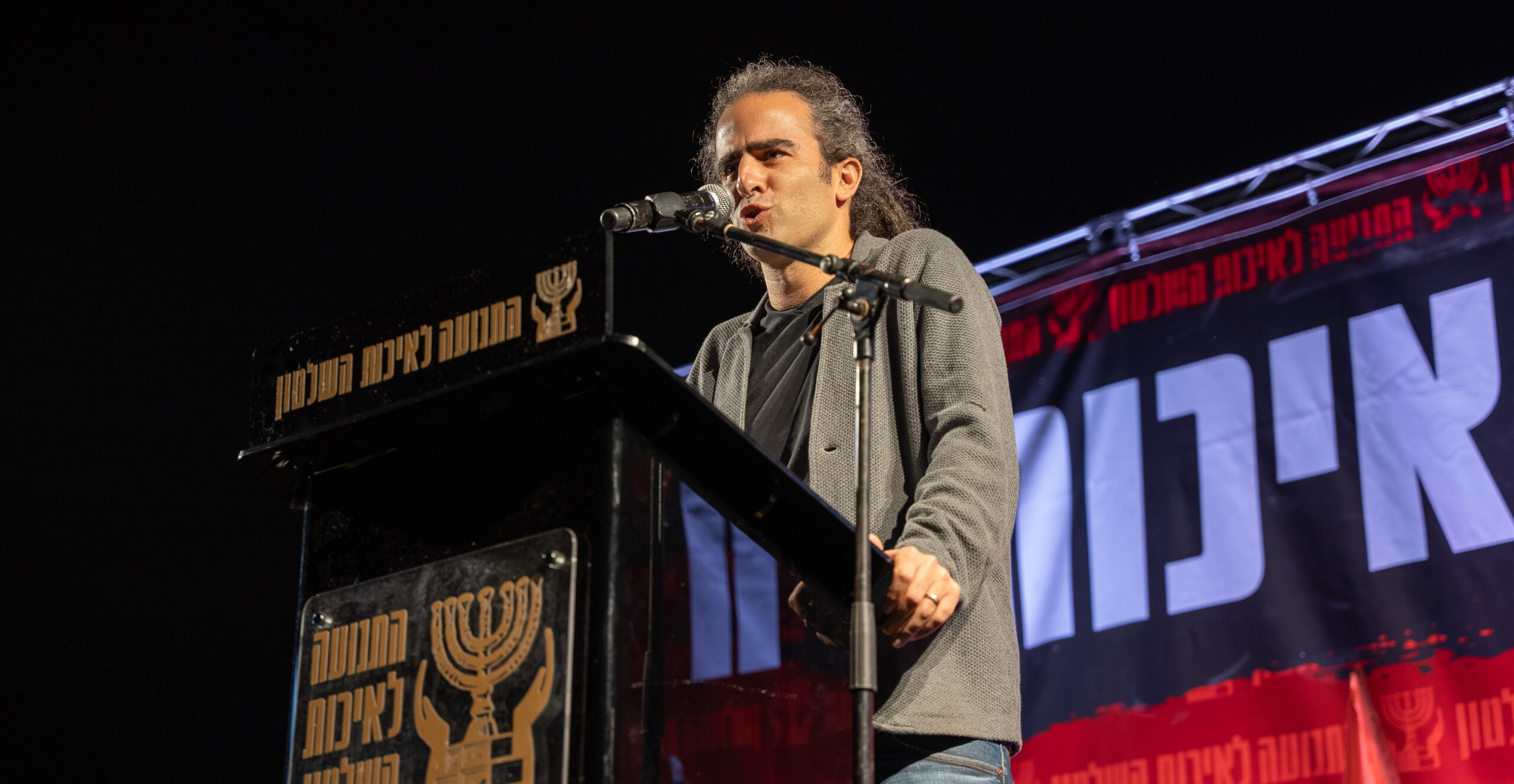
“Israelis are used to supporting nonprofits. About four years ago, someone knocked on my door at around ten in the evening. It was my approximately eighty-five-year-old neighbor. She gave me a check for five hundred shekels and said, ‘Go save Israel.’ She had seen the news, was shaken by what Netanyahu was doing, and wanted to help somehow,” says Tomer Naor, who has been involved in protecting Israel’s democratic institutions for fifteen years. We meet in his Jerusalem office. The ninth floor of an apartment building made of typical local limestone is full of young people doing internships here. The Movement for Quality Government in Israel (HaTnua LeMa'an Eichut HaShilton) was founded in the 1990s because of corruption scandals and a government crisis that lasted for many years. “We woke up too late. The government is trying to weaken the courts, the independence of the media, educational institutions and gatekeepers. Our goal is to defend the institutions that protect us from tyranny, and that is what we are doing.”
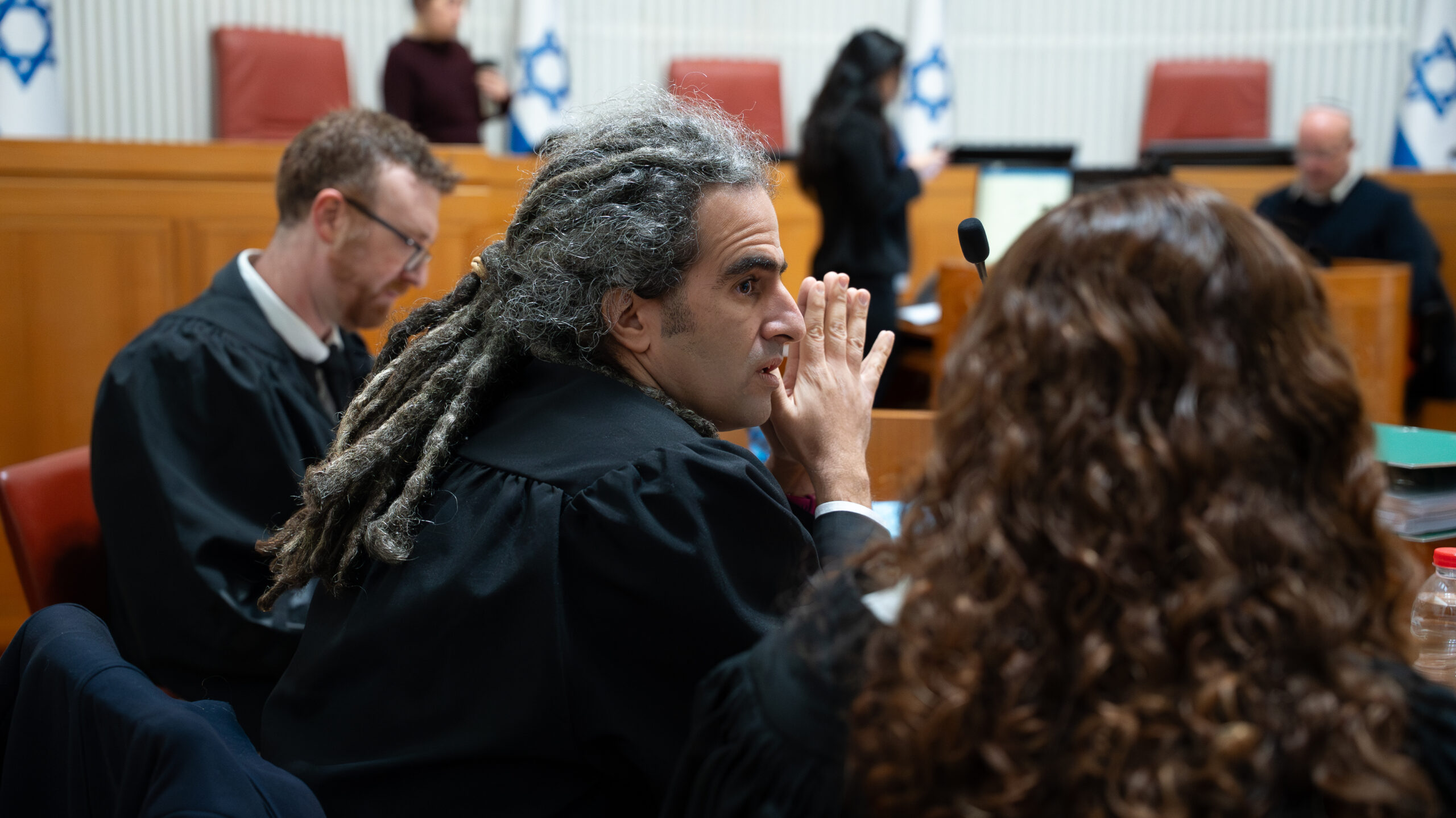
Tomer originally wanted to be a journalist; today he heads the legal department of one of Israel’s major civic organizations, litigates before the Supreme Court and is preparing for a possible challenge to the election. “I remember an international panel where colleagues from Poland and Hungary spoke. They told us, ‘You have no idea what is waiting for you.’ At the time, nobody really understood them. I only realized what they were talking about four or five years later, when something similar began happening here as well.”
We talk about similar tendencies in the Czech Republic and Slovakia and arrive at the elections, which Tomer considers one of the organization’s main concerns. The movement has submitted several petitions to the Supreme Court over illegal pre-election campaigning and is preparing monitoring centers with lawyers and civic activists for election day.
According to Tomer, Israeli democracy was based for decades not only on laws but also on unwritten rules of respect between political camps. His organization is therefore preparing a proposal for a single written constitution, which Israel has never had. According to him, approximately 120 experts in eighteen working groups are participating in the project. “We need something that will protect us from any future government that has a majority and decides to abuse it. We need a document that sets the rules of the game. And that document should be a constitution.”
I ask Tomer whether his organization also deals with Israel’s occupation of the Palestinian territories. “No, we do not get involved in that,” he replies. He explains that the movement was founded as a nonpartisan organization fighting corruption. “Corruption has no political color,” he says. While some Israeli civic initiatives focus on protecting Palestinians from settler violence or resisting military service, Tomer’s organization concentrates its efforts on protecting democratic institutions and the rule of law.
Another important topic for the organization is a commission of inquiry into October 7. Tomer is convinced that Netanyahu manipulated official records in order to create a distorted picture of what happened on the morning of October 7 and during the period preceding the attack. “But we need to know the truth about what happened. We owe it to the people who were murdered and brutally massacred that day.”
Many things have changed since October 7, including Israel’s international isolation because of the disproportionate retaliation in Gaza. Tomer too says he has lost a number of friends and colleagues from affiliated organizations abroad. According to him, people with whom he shared convictions about democracy, human rights and the rule of law were unable to distinguish between the Israeli government and its domestic opponents. “Those whom I considered my partners were the first to turn away from me. I lost friends. And some of them were really close to me. One told me, ‘I love you, but your government is doing this and that.’ But I am fighting that damn government! That is my job.He falls silent for a moment and continues with tears in his eyes: “Several of my friends were murdered on October 7 at the Nova festival. Of course you can criticize Israel. Of course things are happening in Gaza that violate international law. But people from whom I expected understanding began condemning me. And that was when I first realized how alone I was.”
Gaza outside society’s field of vision
Some young people who have spent most of their lives under Benjamin Netanyahu’s rule are skeptical even of the army, which holds an exceptional position in Israel. This is also the subject for twenty-year-old student Arkady, one of the young Israelis refusing to begin compulsory military service. Originally, he had been headed for an elite military intelligence program. After October 7 and during the war in Gaza, however, he gradually reached the decision that he did not want to serve in the Israeli army.
I meet Arkady on Saturday at the empty Tel Aviv University campus. It has just rained, and clouds of mosquitoes fly out of the artificially planted shrubs; Arkady casually brushes one off his elbow and passionately explains how he arrived at the decision that ended with seven days of detention at a military recruitment center. “I was seventeen or eighteen and began telling myself that I did not want to serve under the current government. It was after October 7. I watched what was happening in the West Bank, and gradually information about the situation in Gaza reached me. I went to demonstrations calling for the release of the hostages and increasingly lost faith in the government and the army. At first I still believed that the army protected Israeli citizens, even though I disagreed with its actions. Gradually, however, I became convinced that it primarily served political and military interests, not people’s security, and I began looking for a way not to enlist,” says Arkady, expressing something that many locals would condemn, without lowering his voice even when university employees pass by.
Arkady is a member of the Mesarvot initiative, which provides legal assistance and support in a situation where refusing military service can mean losing the support of family, friends and the wider community. “I do not want to claim that everyone who joined the army at eighteen is a bad person. At that age you are still a child and often do not have a formed political opinion. But I think we have to start asking what responsibility we bear for the institutions of which we are part.”
Arkady grew up in a liberal environment and has attended anti-government demonstrations since he was thirteen. His story illustrates a generation for whom civic activism is not an extraordinary response to a single political crisis, but part of growing up. “I spent seven years of my life protesting against the same prime minister. I cannot even count how many weekends I spent at demonstrations. In fact, I do not even know what it is like to live in a country where Netanyahu is not prime minister.” He recalls a school classroom where they had portraits of the president and prime minister on the wall. The presidents changed. The prime minister remained.
“Sometimes I ask myself what the demonstrations are for. All week I tell others how important it is to protest. Then I come to a demonstration, stand there, the police push us back, and I think: I hate it here, I want to go home, it is pointless anyway. And the next week I go again.”
The protests also produce comical situations. When sirens warning of a rocket attack from Iran sounded during an anti-war demonstration in Tel Aviv, the demonstrators ran to the nearest underground shelter. So did the police officers who had been dispersing them only moments earlier. “Suddenly we were all there together and the conflict stopped for a while,” Arkady recounts,“as soon as the danger passed, we all returned to the street. The police took a megaphone and announced that the demonstration was illegal and that they could use force against us. It was completely absurd. Before some demonstrations, you can also see buses waiting to take away those who are arrested. You look at them and say to yourself: Ah, so I will probably end up there today.”
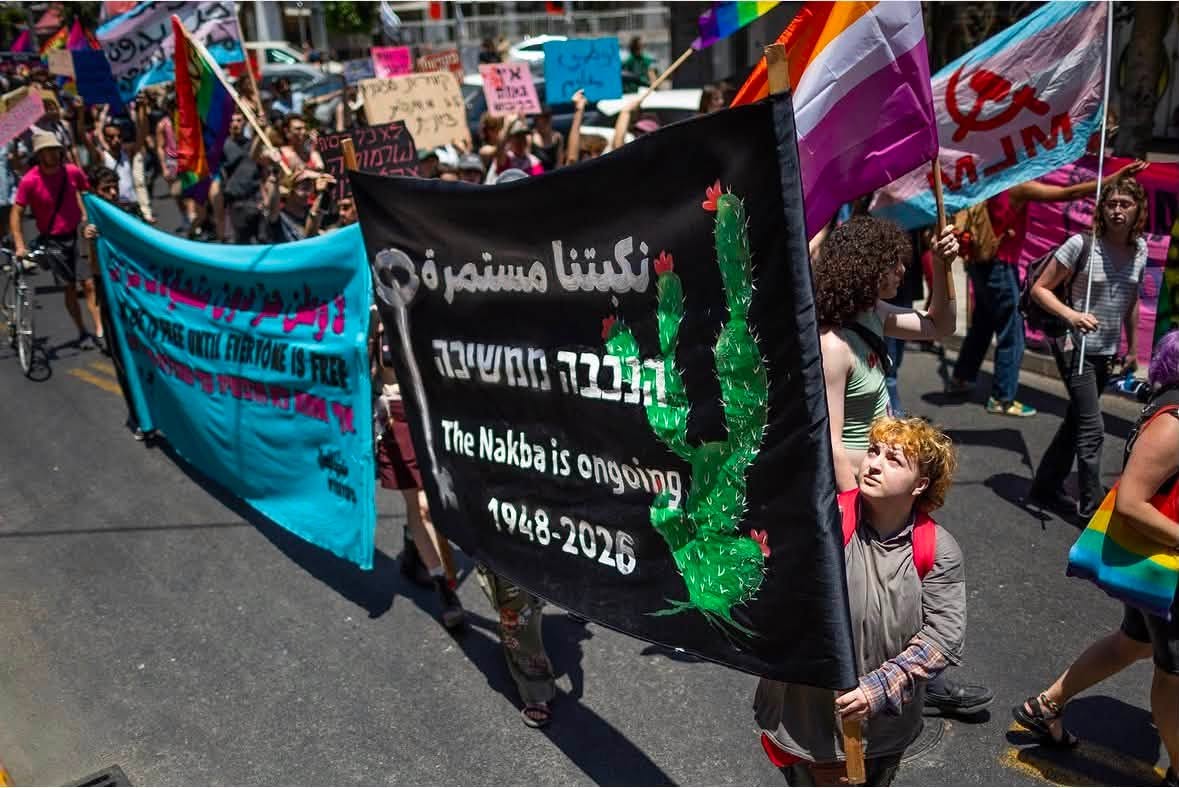
Although the regular Saturday anti-government demonstrations also included memorial events commemorating children killed by the Israeli army in Gaza, Arkady doubts that Israeli society will ever truly be able to reflect on and fully acknowledge what happened in Gaza. “I think Gaza is an enormous blind spot for Israeli society. In the West Bank there are groups of Israelis trying to help Palestinians. But Gaza is much harder to talk about. Imagine a woman standing with me at a demonstration. Her husband may be a former military pilot, her son serves in a combat unit, and her nephew is currently in Gaza. Military service touches almost every family, and this creates a kind of collective silence. I thought that when the war ended, Israeli society would have to look at what happened in Gaza. That there would come a moment when we would say: We did this, and we must take responsibility for it. Today I am no longer sure of that at all.”
He is also critical of some forms of international solidarity with Palestinians, particularly the cultural boycott, which he believes may have the opposite effect on young Israelis from what its supporters intend. “Imagine a fourteen-year-old Israeli girl who loves a foreign singer. And that singer suddenly announces that her music will not be available in Israel. What will the girl take away from that? That the world rejects her because she is Israeli. This may reinforce her belief that everyone is against Israel.” Yet cultural isolation may deprive Israeli society of precisely the experiences that help change people’s attitudes. When Arkady was eleven, he visited a museum in Bilbao. He stopped in front of one of Jean-Michel Basquiat’s paintings depicting police violence: “I stood in front of it and cried. Experiences like that also shaped my political convictions.”
He does not expect indulgence toward Israel from European protest movements. Quite the opposite—he calls for more specific political pressure: “I think it would be much more effective if European protest movements demanded concrete steps from their governments. For example, restricting arms trade with Israel. It is not enough to express solidarity with Palestinians while continuing military trade.”
And you want to defeat Bibi with this pink nail polish?
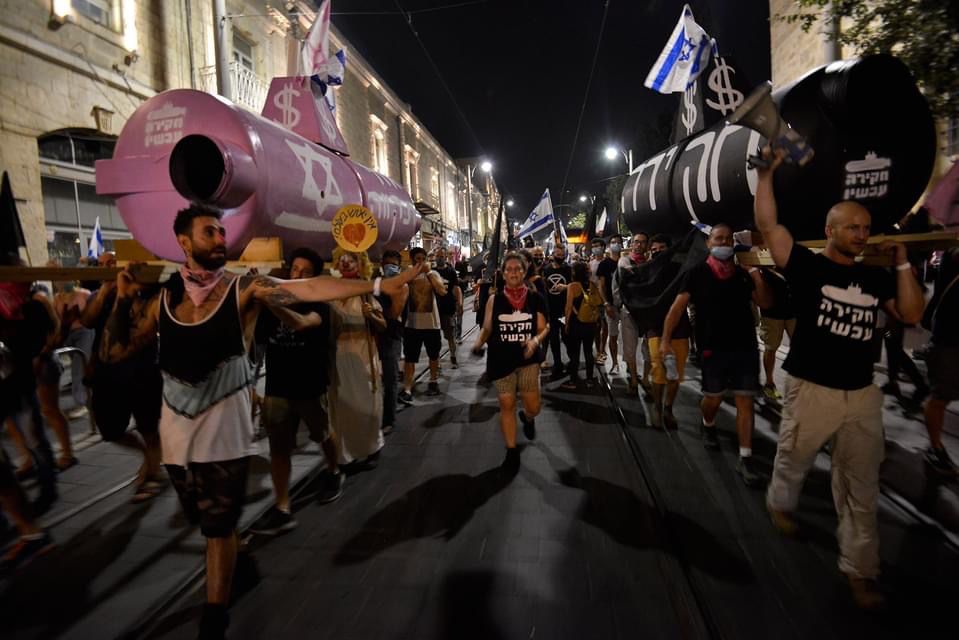
On Saturday, people heading out for an evening stroll filled Tel Aviv’s beach promenade. Among them, activists in striking pink shirts weave through the crowd, engaging passersby in performative discussions about the importance of the upcoming election. “When you come to a demonstration just to vent your anger, you leave exhausted. But when you create something that you enjoy, that has meaning and speaks to others, you want to come again. That is how a protest can be kept alive,” says Yaniv, an artist and designer as well as the founder of the queer feminist movement Pink Front, which emerged during the anti-government protests outside Netanyahu’s residence in 2020. Yaniv Segal recalls that the demonstrations at the time were dominated by older people, black flags and anger. Together with other artists, women and queer activists, he began bringing pink costumes, drums and theatrical performances into the protests.

“My father is a right-winger. We often disagree politically. When we started protesting outside Netanyahu’s residence, I had pink hair. Once I was at my parents’ house and asked my mother to paint my nails pink. My father looked at me and asked: ‘And this is how you want to defeat Bibi? With pink nail polish?’ I replied: ‘We already tried it without pink nail polish and it did not work. So why not try it with it?”
At first, some demonstrators considered it a trivialization of the situation. Yaniv, however, is convinced that creativity and art as tools of political resistance can give protests energy and attract new people. “When you use violence against police officers, they know exactly how to respond. But when a group of cheerful people in pink costumes stands opposite them, what will they do? Start beating them?” he laughs and greets passersby, who take a leaflet from him calling for participation in the election.
He gives as an example the protest against the corruption scandal involving the submarine deal. Pink Front activists brought a huge inflatable submarine in front of the prime minister’s residence, and when the police confiscated it, they unintentionally became part of an absurd performance themselves. “They drove through the city with a huge inflatable submarine tied to their car. The submarine said: ‘Netanyahu is corrupt.’ That is what is wonderful about art: If you let it work, it works. And if you try to suppress it, it may work even better. Because fighting art is simply ridiculous.”
An older man approaches the Pink Front stall, with its pink Israeli flag and a heart in place of the Star of David, and says in a sharp voice that he will vote in a way that allows him to survive. The activist in the pink shirt kindly wishes him good luck.
Yaniv considers it important that there is a whole range of civic movements. They have different tasks and need one another. When someone is arrested by the police, lawyers from another initiative step in. Other organizations work with the public or in parliament. Individual organizations do not have to do the same thing to be part of a common civic effort.
“Of course we hate one another!” Yaniv laughingly recalls the stereotype about Israel’s center-left and left-wing scene, “but when necessary, we can cooperate. There is of course tension between the different groups. Sometimes I ask myself: My God, what are they doing now? But then I remind myself that we are on the same side. There is no point attacking our own allies.”
Yaniv sighs and continues: “The Israeli left is in a rather absurd situation. At home, people hate us because we are too left-wing. Abroad, they reject us because we are Israelis. People often do not see how different the opinions in Israeli society are. Sometimes I tell myself that I have had enough, that I will leave and want nothing to do with what the Israeli government is doing. But then I realize that even abroad I will still be Israeli. And that we still have an enormous amount of work ahead of us here.”
Coordination of activities must also work during demonstrations. During an anti-government march calling for the release of the hostages, Pink Front walked at the head of the procession, drumming and singing, followed by thousands of people. At the same time, other demonstrators carrying photographs of Palestinian children killed in Gaza stood along the route. Yaniv realized that he could not continue with the noisy, almost carnival-like procession past their photographs. He raised his drumsticks and signaled to the drummers to stop playing. “We stopped and fell completely silent. We passed silently by the demonstrators holding photographs of the dead children and honored their memory with a moment of silence. Only then did we continue.”
I leave Israel with the feeling that I am leaving behind people who, despite everything, continue to defend the values also embraced by European liberal society, but which part of that society has given up on. Unjustly. Israel’s liberal and left-wing civil society is not monolithic. Its representatives differ in their opinions, methods and the areas on which they focus their efforts. Yet their activities often complement one another, and they are united by a determination not to give up responsibility for their country’s future.
As Arkady amusingly told me at the end of our conversation: “Imagine, some activists from Germany called us recently. They are preparing to increase the number of people called up into the army and contacted us. They called us and asked for advice about what they should do.”
And above all: If European pro-Palestinian movements are seeking real change, they should not overlook those fighting for democratic principles and Palestinian rights directly in Israel. Cooperation with the local civil society, which despite its own trauma refuses to give up responsibility for the country’s future, may be one path toward nonviolent change.


This text is part of the PERSPECTIVES project—a new brand for independent, constructive and multiperspective journalism. The project is funded by the European Union. The views and opinions expressed are those of the author(s) and do not necessarily reflect those of the European Union or the European Education and Culture Executive Agency (EACEA). Neither the European Union nor EACEA accepts any responsibility for them.