How to understand geopolitics?
Kapitál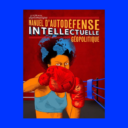
During an international crisis, information about events always reaches us through interpretive frameworks that guide how we understand them. The narratives offered by the media, politicians, and experts therefore shape our understanding of the world. In this guide, we offer several points of reference to help you recognize these distortions, identify their sources, and apply critical thinking to geopolitical discourse.
This text is part of the special publication Manual of Intellectual Self-Defense: Geopolitics (Manuel d’autodéfense intellectuelle: Géopolitique), published by the monthly Le Monde diplomatique in autumn 2026.
In times of international crisis, information about events always reaches us through interpretive frameworks that guide how we understand them. The narratives offered by the media, politicians or experts thus shape our understanding of the world. In this guide, we offer you several points of reference so that you can recognise these distortions, situate their originators and apply critical thinking to geopolitical discourses.
Identifying interpretive frameworks
One of the fundamental distortions of reporting on international affairs lies in the fact that it formulates the essence of conflicts from the position of the leaders of the country in which it originates. From France’s perspective, Ukraine “is fighting for our values”, Palestinian resistance can be reduced to terrorism and authoritarian regimes threaten democracies: the media explain world affairs as a series of confrontations between clearly identified camps, to which they attribute certain intentions and principles. This distortion is all the more problematic because for most citizens the media are the only source of information about international affairs. Very few have enough time, language skills and resources to study a crisis through sources other than Western ones, diplomatic documents or the work of specialists. Our understanding of conflicts therefore depends to a large extent on the interpretive frameworks of those who tell us about them. In foreign policy, the autonomy of the media is limited: the leadership of major editorial offices often includes people who attended the same schools, have the same references and networks as political leaders and diplomats themselves, while among journalists the depth of knowledge of foreign countries and international relations is limited.
Podcasts, videos and “critical” publications offer a useful counterweight to this uniform thinking, but how can we be sure of their reliability? Merely questioning established discourses does not mean that we have arrived at the correct analysis. Not all wars are fought along oil and gas pipelines, not all uprisings in the East are organised by George Soros, and American imperialism as such does not yet explain the weak international support for Palestine – especially on the part of Arab countries. This manual offers a method for assessing competing interpretations and forming one’s own opinion. It does not seek to promote some alternative narrative in place of the dominant one. Its aim is to guide the reader towards what can actually be understood from the analysis of geopolitics and international relations. These disciplines reveal the power rivalry, spatial constraints and dynamic processes that structure conflicts. They are not, however, exact disciplines: the “science of international politics” pursued by Hans Morgenthau, a representative of the classical realist school, cannot predict the behaviour of states. It can nevertheless still contribute to shaping how decision-makers define strategies. Concepts such as the “containment doctrine” (George Kennan), “soft power” (Joseph Nye) and the “clash of civilisations” (Samuel Huntington) have transcended the boundaries of academic circles and influenced public debates as well as political decisions.
Situating those who speak about the world
To understand “where” experts on diplomacy are speaking from, it is necessary to bear three things in mind. First of all, we must realise how important a position diplomacy and international relations occupy in the hierarchy of power institutions and academic disciplines. Speaking about conflicts on which the fate of the world depends, analysing the strategies of political leaders (and sometimes even serving as their advisers), is all the less conducive to modesty because this privilege belongs mostly to older men from the upper classes. Furthermore, the dominance of the United States in the field of international relations distorts the West’s point of view. Thanks to the power of their universities and think tanks, they can spread, even in allied countries, systems of thought that serve their own interests. Since the policy of “non-alignment” and the Gaullist tradition of French independence have disappeared, the voluntary subservience of some French commentators is at times almost comical. It is therefore useful to look at the professional backgrounds of the experts themselves: their affiliation with institutions, previous work, professional contacts and views on controversial issues. Have they worked for any of the many think tanks or university centres focused on strengthening the transatlantic alliance? Did they support the war in Iraq in 2003? Did they support the intervention in Libya in 2011?
Finally, even a brief overview of the main controversies surrounding geopolitics and international relations makes it possible to identify the implicit reference points present in debates. Some analysts favour power relations between countries, while others emphasise the role of international institutions, norms or economic dynamics. Knowledge of these major traditions makes it possible to better understand the starting points and “blind spots” of different approaches.
Analysing a conflict
The criteria mentioned above make it possible to decipher media and political discourse. But how can one form a sound judgement about an international conflict or crisis?
A good method is to superimpose several analytical layers. Like a cartographer who places several maps showing relief, communication networks, population density or economic activity on top of one another, it is necessary to study the same conflict through several grids.
The strategic layer reconstructs the perspective of military power. Do the protagonists possess nuclear weapons, the ability to project power (aircraft, missiles), an effective intelligence system and reliable allies? What positions do they occupy in the system of institutions and international alliances? What constants govern their foreign policy?
The social and political layer reveals the demographic, sociological and institutional characteristics of a state’s population. It makes it possible to assess the internal cohesion of states, their ability to manage a protracted conflict or tensions arising from the mismatch between the state, territory and population.
The material layer uncovers the resources, dependencies and capacities that determine the balance of power: what is the state’s economy based on? On what sources of supply does it depend? Does it control strategic resources, critical infrastructure or key technologies? What commercial or financial connections increase its power or, conversely, limit its independence? As early as the 1990s, Edward Luttwak pointed out that competition between powers was partly shifting from the military sphere to the geo-economic sphere. As Olivier Zajec, director of the Institute for Strategic and Defence Studies (IESD), states, “the wealth that states derive from their strategic-economic positions, from their own capacity to produce and exchange, is not an end in itself, but a means of strengthening political power”.
The actors layer draws our attention to the fact that international affairs are not limited merely to relations between states: transnational corporations, international organisations, armed groups, diasporas, social movements and religious actors can influence the development of crises. The fundamental question is therefore: who has the real power to decide, coerce or change the behaviour of other actors?
In addition to these layers, there are three other dimensions that often have secondary importance in analyses: history, which makes it possible to place conflicts in time, space (“geo” in the word geopolitics) and representations, which actors form of their environment. Since we discussed history in our Manual of Intellectual Self-Defense from 2024, here we will look in more detail at the dimensions of space and representations.
Reading space
Although geography does not mechanically determine the policies of states, it conditions them by imposing constraints and opening up possibilities. The shape of the territory, terrain, area, distances, borders, resources and communications all influence the strategies of actors. Olivier Zajec identifies three basic types of phenomena on which it is useful to focus if we want to analyse space more effectively.
The closedness or openness of space. The first question is accessibility. Some territories are open to major transport flows, while others are closed and therefore dependent on neighbouring states. Being landlocked forces states to seek access to the sea (Bolivia, Ethiopia, Serbia...). Borders define relations between neighbours and are therefore also a central subject of diplomatic initiatives.
Natural obstacles can separate territories (the Pyrenees between France and Spain), protect territory (the Urals in Russia) or, conversely, be a zone of movement that ignores political borders (the Sahara).
Russia is a good example of this tension between openness and closedness: despite a coastline 40 000 kilometres long, it remains a land power whose economic and political centres are located far from the open seas. Russian foreign policy has historically been linked to the search for ways to expand access to the seas, especially in the south. Buffer states located between two powers are exceptionally vulnerable because of the tension between closedness and openness. Poland, situated between Germany and Russia, suffered from this for a long time. In the 19th century, Iran (Persia) and Afghanistan were in a similar position because they lay between the Russian Empire and British India, powers that competed in the “Great Game” for dominance over Central Asia.
The land–sea duality: islands, straits and channels, routes and canals. The second phenomenon concerns the relationship between land and maritime space. An island location provides protection and openness, but also isolation. The United Kingdom embodies precisely this kind of maritime power: its military and merchant fleets enabled it to extend its influence far from the shores of its own territory. Its island position long protected it from attacks from the continent, but at the same time made it dependent on the continental balance of power. This is also why, throughout history, England sought to prevent a single dominant power from emerging in Europe and supported coalitions opposed to its main rivals.
Maritime power, however, does not depend solely on an island position. The United States, surrounded by two oceans and two neighbouring states, represents a different type of maritime power. Some commercial centres, such as Venice in the Mediterranean, Melaka in Southeast Asia or Lübeck on the Baltic Sea, built their influence on control of sea routes and strategic passages: straits, canals and narrows.
The centre–periphery opposition. Finally, the analysis of space also includes its organisation: in some territories, wealth and centres of governance are concentrated, while other territories constitute peripheries in relation to them. Contrary to the idea that globalisation “flattened” the planet by overcoming spatial hierarchies, it has in fact strengthened the power of large metropolises, production zones and territories located along major flows. The opposition between centre and periphery structures both relations between states and relations within societies. This dialectic forms the basis of analyses of uneven development developed by Marxists and Latin American authors of dependency theory in the 1970s, and later also by David Harvey. This British geographer showed how, in an attempt to overcome its own crises, capital continually seeks new territories for investment, production and consumption, thereby contributing to the reshaping of spatial hierarchies.
Understanding representations
A crisis is not perceived in the same way everywhere. Every geopolitical analysis presupposes an understanding of the ways in which other actors perceive the world, their interests and their actions.
Images of the world. In his book Politics Among Nations (1948), Hans Morgenthau insisted that it was essential for a diplomat to look at the political scene “from the point of view of other nations”, that is, to take into account their own definition of national security. This emphasis on different perceptions can also be found in the work of Robert Jervis, author of Perception and Misperception in International Politics (1976). According to him, “it is often impossible to explain decisions and major political strategies without taking into account the world images of leaders and also the images they form of other actors”.
In other words, states do not act solely on the basis of objective situations, but also according to how they imagine them. Their representations are influenced by their history, memory and interests. These phenomena are taken into account in some constructivist approaches (Alexander Wendt, Peter Katzenstein, John Ruggie), which emphasise the role of norms, identities and cultural frameworks in defining actors’ interests.
Perceptual errors and misunderstandings can become significant factors in the emergence of tensions, as was also the case with the enlargement of the North Atlantic Treaty Organisation (NATO). For Poland and the Baltic states, this meant security guarantees and definitive anchoring in the Western political space after the Soviet experience. For Russia, the enlargement represents the expansion of the sphere of Western influence, which it perceives as a threat, and a challenge to its strategic interests. For Americans, meanwhile, it reinforced their central position in managing peace in Europe. Different representations also encompass territories and the symbols associated with them. As Florian Louis emphasises in his book Qu’est-ce que la géopolitique? (2022; What Is Geopolitics?), some conflicts will remain incomprehensible as long as we perceive them only in terms of material criteria. Kosovo is a good example: a territory with limited geographical and economic potential occupies a central place in the political imagination of Serbs, who associate it above all with the Battle of Kosovo in 1389, that is, the founding event of their national narrative.
The same material reality can thus be reshaped according to how actors perceive it: ideological, identity-based or religious constructs rooted in collective representations are powerful weapons that leaders can use. The geographer Yves Lacoste often emphasised that many conflicts arose not because of disputes over territories, but because of contradictory representations that the parties involved formed of them.
Concepts. Representations influence how the major concepts of international politics are defined. Key terms such as “power”, “crisis” or “strategic credibility” can acquire different meanings depending on political and strategic traditions. In the West, power is measured through indicators such as economic strength, military capabilities, diplomatic influence or technological level. In several traditions of strategic thought in China (especially those influenced by Sun Tzu), power means the ability to build a strategic environment, act over a long-term horizon and achieve results without direct conflict. The concept of crisis, in turn, reveals the existence of different conceptions of time in politics. In Western societies, a crisis is considered a rupture to which it is necessary to respond quickly: identify the problem, make a decision and create a new equilibrium. In some Chinese traditions, by contrast, a crisis is regarded as a long-term process – not an extraordinary moment, but a sequence within a longer period of development, during which one must know how to wait, observe power relations and take advantage of opportunities. With the concept of strategic credibility, meanwhile, we can see different approaches to understanding power and influence. For Western political scientists and military personnel, this term refers above all to a state’s ability to convince others that it will honour its commitments and carry out its threats. It rests on economic, military and other capacities, political determination and its reputation (closely linked to the logic of deterrence). Olivier Zajec emphasises that Chinese academic literature attaches greater importance to continuity of planning, stability of foreign policy and persistent coherence. It does not, however, neglect classic instruments of power such as deterrence and military capabilities. Credibility therefore depends both on the ability to act and on the perception of the actor’s reliability.