People in the war who have been forgotten: stories of displaced Roma women in Ukraine
Kapitál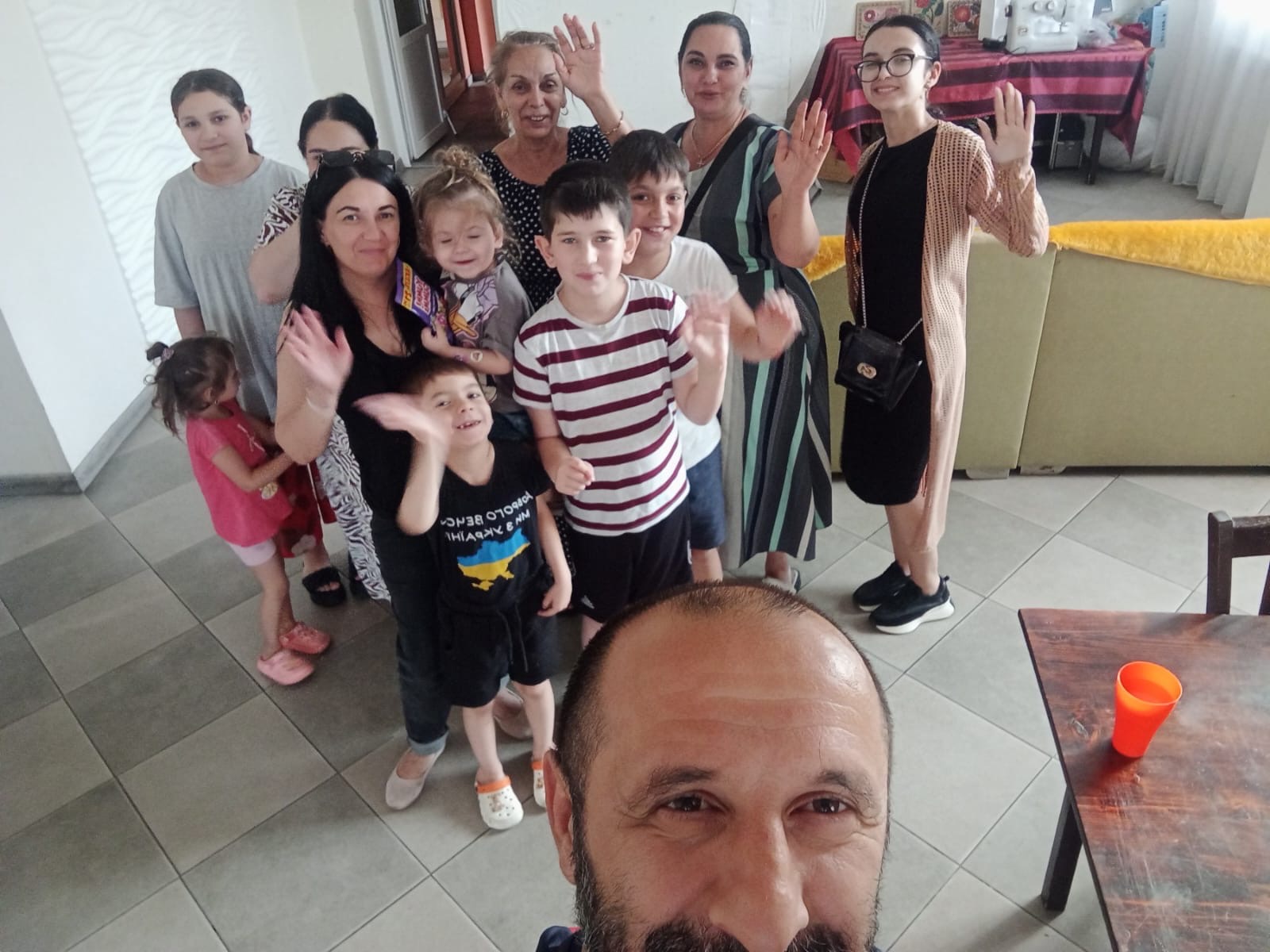
Approximately a quarter of the Roma population in Ukraine – around 100,000 men, women and children – has been displaced since the beginning of the Russian invasion. While European and international organizations have united in helping Ukrainian refugees, the flight of Roma people to European Union states has been accompanied by moral panic. Discrimination and the lack of documents have made it difficult for them not only to cross borders, but also to access essential protection and subsequent integration.
Approximately a quarter of the Roma population in Ukraine – roughly 100,000 men, women and children – has been displaced since the beginning of the Russian invasion. While European and international organisations united to help Ukrainian refugees, the flight of Roma to European Union countries was accompanied by moral panic. Discrimination and the absence of documents made it difficult for them not only to cross borders, but also to access important protection and subsequent integration.
A similar story unfolded in Ukraine itself. Many displaced Roma families were not accepted into state refugee centres. To this day, many Roma men and women have problems accessing education, work or healthcare services. As a result, many Roma families still depend on the help of Roma leaders or non-governmental organisations.
I was supposed to meet Rada Kalandia at ten in the morning. It was the second half of April, and the sunny day suggested the slow arrival of summer, which was nevertheless hidden behind the cold spring wind. I had already been in Mukachevo, less than fifty kilometres from the Slovak-Ukrainian border, for the third day, and I felt that my initial feelings of uncertainty and fear were gradually subsiding. It was my first trip to Ukraine. That was also why I was surprised that the city’s population seemed to be living a “normal” life. About as normal a life as one can live when one’s country is at war. Although restaurants, cafés and shops were open in Mukachevo, the city of roughly 80,000 people seemed somehow empty.
Walking towards the refugee house, I passed a memorial to fallen Mukachevo soldiers, surrounded by candles, flowers and wreaths. In my head, I went over the questions I had prepared for the interview with the displaced Roma women. Despite the fact that in this part of Ukraine sirens were heard only rarely in the spring of 2026, no one could complain about a shortage of problems. Even less so those whose identity made an already difficult situation even harder.
A crisis situation
Rada Kalandia manages the refugee house in Mukachevo and is also one of the displaced Roma women who had to leave the eastern regions of Ukraine shortly after Russia launched its full-scale war. I was nervous, but at the same time curious about her experience of the war. I was also interested in the stories of the other women who lived in the refugee house.
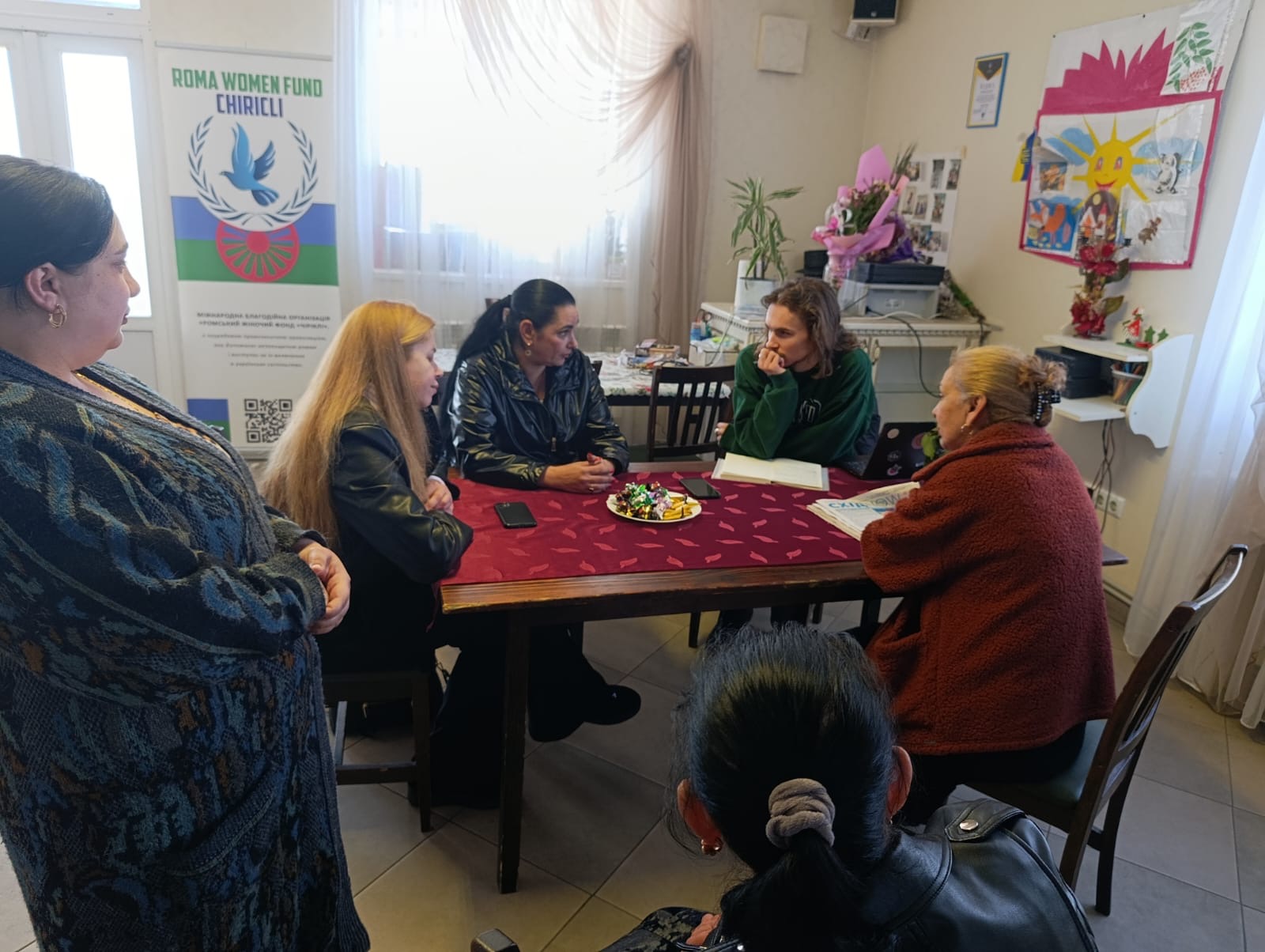
Rada and I entered a spacious common room full of tables, armchairs and sofas. It reminded me of a classic dining hall from school retreats and trips. While I took off my jacket and sat down at one of the tables, Rada brought me coffee. Since the interpreter Olena was not due to arrive for another few minutes, Rada did not waste any time and began describing the current situation in the refugee house without beating around the bush.
Right at the beginning, she started talking about discrimination, missing documents, and difficulties finding work and accessing education. However, she identified housing as the most urgent problem. ,,Financial support for our refugee house will soon run out, but people have nowhere to return to. And with current high rental prices, it is impossible for them to rent a flat,“ she explained, anxiety visible on her face.
In cooperation with the organisation Chiricli, which focuses mainly on supporting Roma women and children, Rada has helped a large number of displaced people since the beginning of the war. As humanitarian aid declines, however, temporary Roma shelters have become especially vulnerable.
When the interpreter Olena joined us, I learned more details. Until recently, the refugee house had been supported by the aforementioned organisation Chiricli. „It lasted two or three years. But now they no longer have enough resources to continue funding the house,“ Olena interpreted. Looking at the two women, I realised how helpless I was. It is a feeling every journalist who comes to report from a war zone must confront.
In the meantime, Rada began describing everything that most Roma men and women had had to endure since the beginning of the Russian invasion. „When the bombing of the city of Mariupol (an industrial port in southeastern Ukraine on the Sea of Azov, author’s note) and the entire Donetsk region began, Roma women and children were simply not evacuated,“ Rada claimed, frustration audible in her voice. ,,They stopped train connections from Mariupol and other cities. And people had no way to flee,“ Olena added.
At that time, the Chiricli organisation came to the aid of Roma families, providing money for petrol or diesel and directing women and children to safe shelters. „But the war is still going on; it is not over,“ Rada stressed.

Many people are still in active war zones. And because of declining humanitarian aid and a lack of funds, they are forced to remain there. „They have nowhere to go, because they know that if they leave their homes, they will have nothing left,“ one of the displaced women who had meanwhile joined us explained.
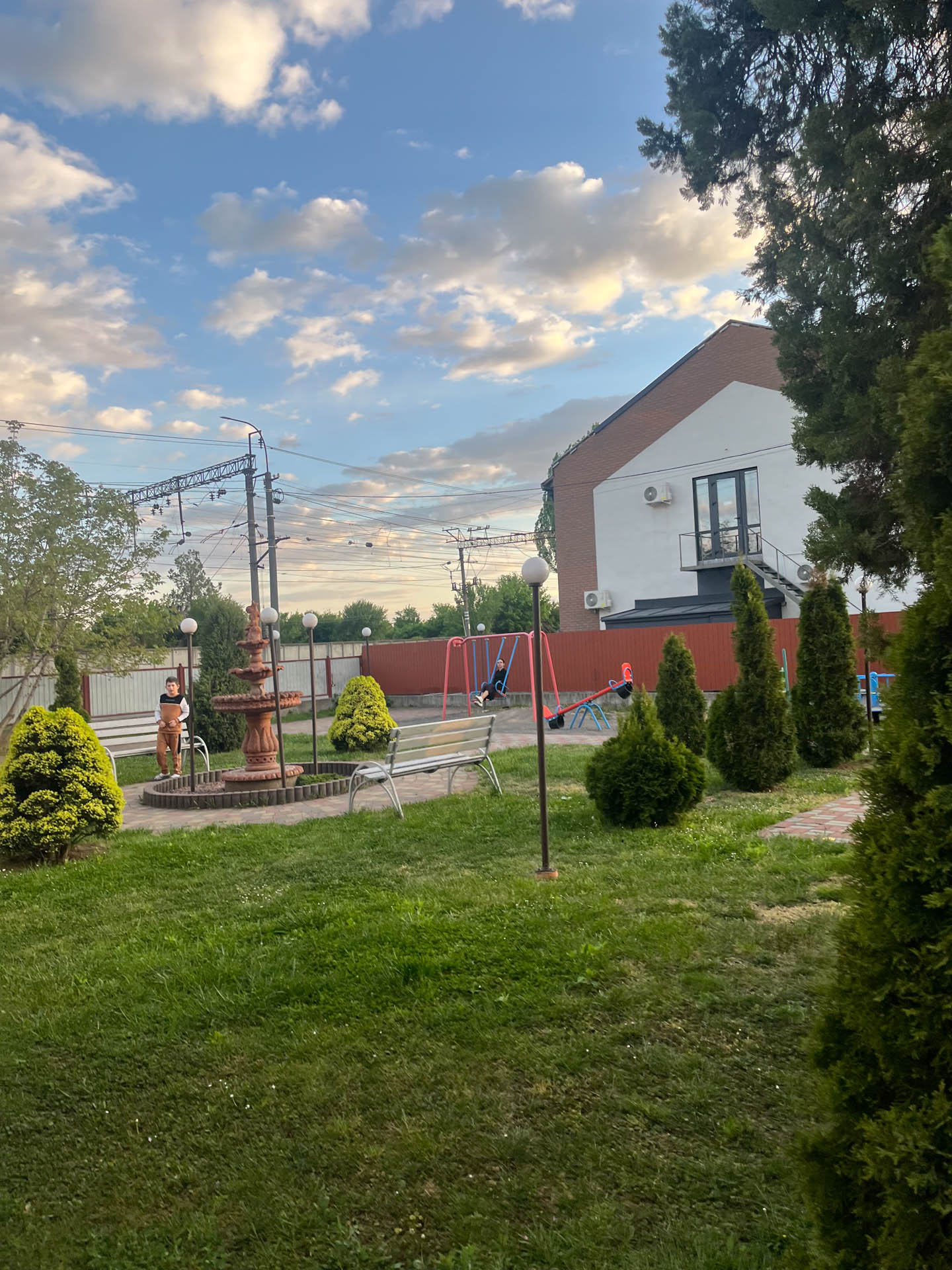
Roma families living in the Mukachevo refugee house have no certainty either, as they face the threat of losing their roof over their heads. Yet they have nowhere to return to.
The exception is actually the rule
During my interview with Rada Kalandia, I did not yet know that what was happening in the refugee house in Mukachevo was not an isolated case. A few days later, I met Eleonóra Kulchar, director of the Roma organisation Blago in Uzhhorod.
Eleonóra was one of the first Roma women whose story I had read about before my trip to Ukraine. When, after 24 February 2022, she saw that nobody was helping displaced Roma men and women, she opened the first Roma refugee camp in Uzhhorod with the help of local Roma entrepreneurs, accommodating roughly 3,700 displaced people over more than three years. ,,Everyone knew that we had a shelter. All the local authorities in the Donetsk, Zaporizhzhia, Kharkiv and Lviv regions had my number and called me,“ she described the situation during the first months of Russian aggression.
The huge influx of displaced people required a large space. The roughly 740 square metres, including a kitchen and common room, resulted in a high rental cost. „Every month we paid $5,000 in rent. Add electricity and water, which came to roughly $6,500 to $7,000 a month. $7,000,“ Eleonóra stressed.
As the military conflict dragged on, support from donors began to weaken. In August 2025, Eleonóra was forced to close the refugee centre. ,,Thank God! Thank God that the donors supported us for so long,“ she stressed, looking up at the sky with her fingers crossed.
Despite this, people still call both women – Eleonóra Kulchar and Rada Kalandia – trying to leave the war zones. „Yesterday they called me from Lviv, saying that Roma from Kharkiv were at the station and asking whether we could take them in. I told them that we were still building a new refugee camp. My heart aches, but I cannot help them,“ Eleonóra said, making no attempt to hide her grief.
Many Roma families therefore have to rely on themselves. Especially when support for Roma non-governmental organisations fails. While some are lucky and manage to secure enough money to rent at least a small flat, others often face a Sophie’s choice: either return to the war zones or sleep on the street.

Every man for himself
One of the women facing such a dilemma is Vlasta. She is a grandmother and guardian of two children whose son died in the war. Until August 2025, she lived with her grandchildren and husband in Eleonóra Kulchar’s refugee camp in Uzhhorod. When the camp closed, she did not have enough money for rent. Although internally displaced persons receive monthly financial support of €40 per adult and €60 per child, it barely covers food. So there can be no question of using the support to afford a flat, including a two- or three-month deposit.
Vlasta and her family were forced to return to the city of Sloviansk in the Donetsk region, where they come from. When they arrived in their hometown, they encountered yet another barrier instead of help. „The Sloviansk social authorities told us to leave immediately,“ Vlasta recalls.
In February 2026, the Ukrainian parliament passed a law ordering the mandatory evacuation of children from areas of active fighting. In practice, this means that if parents or guardians refuse to evacuate children from an active combat zone, thereby endangering their lives, state authorities evacuate the children without the consent of their parents or guardians. Subsequently, the children may be taken away from their parents or guardians. The problem is that the law does not take into account the ability of economically vulnerable groups to secure accommodation, food or safety for themselves and their children outside active war zones.
Moreover, a large number of displaced Roma men and women have difficulty finding work in the Zakarpattia region – whether because of the change in environment, discrimination or insufficient qualifications. The primary group of displaced people consists of women with children who cannot financially support their families. „Remember that not all women are educated. They cannot write in Ukrainian,“ Rada Kalandia pointed out.
Shortly after the aforementioned law was adopted, several human rights organisations sent an open letter to President Volodymyr Zelenskyy, asking him not to sign it. Although they agreed that civilians needed protection, they argued that forced evacuations must be accompanied by ensuring dignified living conditions for civilians. In a joint report from April 2024, UNICEF and the Global Child Protection Area of Responsibility (CP AoR) stated that „protection is not only about physical safety. It is also about ensuring that children remain connected to their families, recover from trauma and can safely return home when conditions permit“. President Zelenskyy nevertheless signed the law. At the beginning of March 2026, many families who did not want to be separated from their children but were not economically self-sufficient were therefore left to live on the streets.
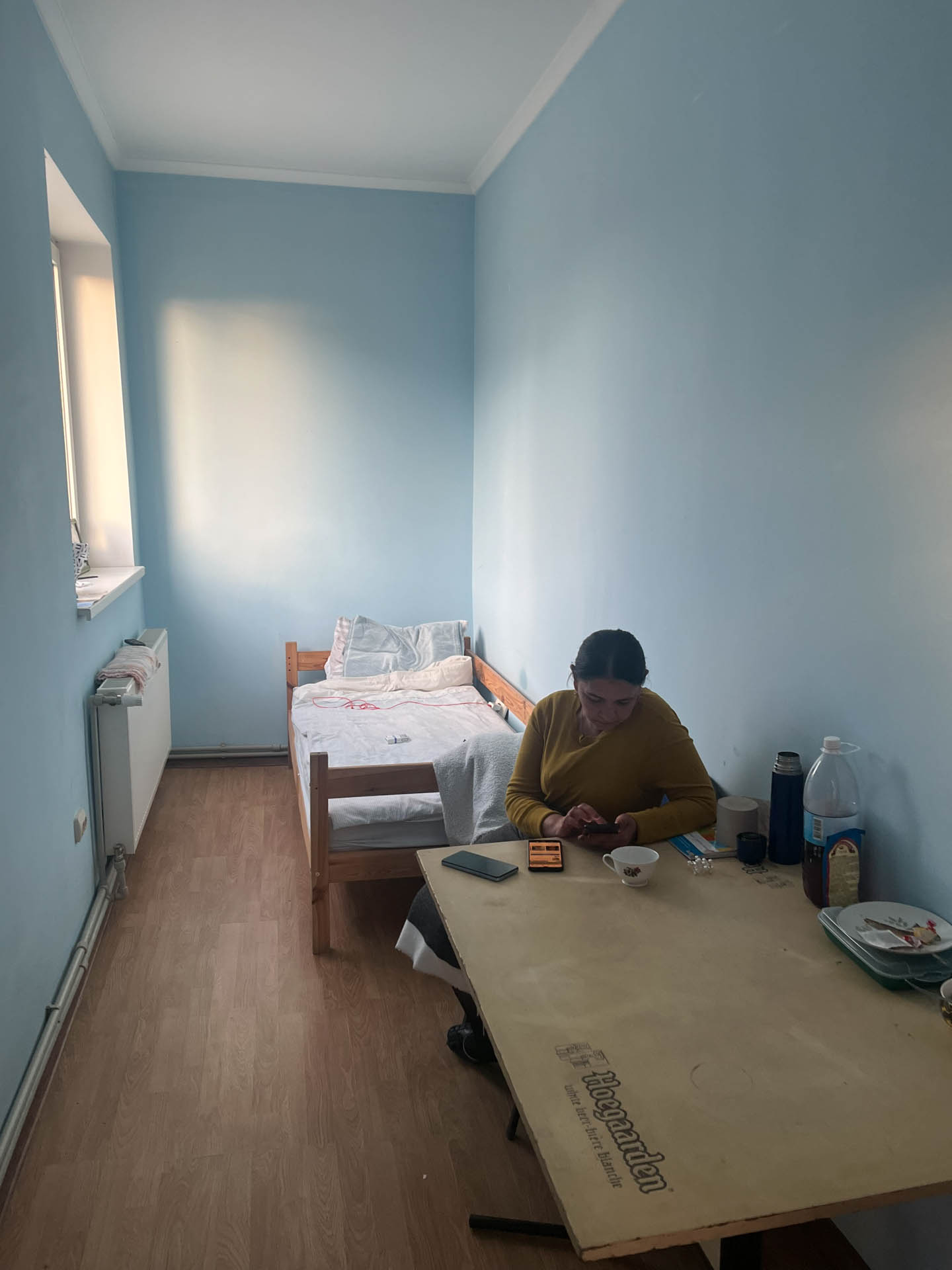
I met Vlasta in the refugee house in Mukachevo. Her family was lucky. When she faced the prospect of sleeping on the street with her children, she learned through friends and family acquaintances about the refugee house in Mukachevo. „Rada took us in and provided us with the help we needed. We washed, ate and were able to sleep,“ Vlasta recalled, nostalgia in her voice and a broad smile on her face.
I returned her smile, but my head was full of questions. What will happen now to the women and their children in the refugee house in Mukachevo? Who will help them when they lose the last shelter they have?
Without papers, not even bread
,,Everyone has their problems,“ Vlasta remarked after telling me her story. That is true. Besides Vlasta, I had the opportunity to speak with three other women who were living in the refugee house in Mukachevo during my visit. Although they had much in common, their problems differed.
Shortly after the beginning of Russian aggression, they fled to Germany, where they received refugee status and the necessary assistance that came with it. Recently, however, all three returned to Ukraine. They learned about the refugee house in Mukachevo from friends and acquaintances. This is where the similarities between their stories end – their motivations for returning were different from the outset. While Andrea was driven to return mainly by a strong sense of belonging, Maria and Irina returned to resolve problems related to their papers and documentation.
Irina came to the refugee camp to try to bring her children back from the Russian Federation after years of separation. „The war in Donbas began in 2014, and I sent the children to my mother in Russia,“ she explained. When she wanted to take her children back in 2021, the Russian authorities prevented her from doing so and deported her for five years. She received no help from the Ukrainian side either.
After February 2022, she was forced to leave the Donetsk region. She later tried to apply for family reunification at the Ukrainian consulate in Germany. There, she was told to resolve the situation in Ukraine. ,,So I came to Ukraine, but nobody here wants to help me,“ she sighed. ,,As a Ukrainian citizen, I want my children back. They only have birth certificates,“ she added sadly.
At present, however, Ukrainian authorities are overwhelmed by the large number of applications for civil registration. That is also why cases such as Irina’s are often pushed aside. The main reason is the current war, which has deprived many Roma and non-Roma people of their civil documents. Several families living in Eleonóra Kulchar’s refugee camp had had to flee bomb attacks. „When people are being bombed, they do not think about packing a bag with documents. They just run,“ Eleonóra remarked.
For many Roma families, however, documents were missing as a result of decades of segregation and socio-economic inequality. In 2018, a report published as part of the RomaBelong campaign identified problems with registering a child’s birth as one of the main reasons for the absence of civil documentation among Roma. Some Roma lack sufficient awareness of state registration processes, are afraid to register with state authorities or live in excluded communities. The report’s authors also claim that Ukrainian legislation constitutes a barrier that means that ,,parents without documentation cannot register the birth of their children“. Ultimately, this creates a vicious circle in which both parents and children remain without documents.
Rada stressed that one of the greatest weaknesses is legal assistance for Roma families. ,,When you turn to state institutions or organisations that provide free legal assistance, it takes a very long time,“ she explained. ,,Families burn out psychologically and lose trust because they do not understand why it takes so long,“ she added. The absence of documents contributes to limited access to state refugee centres, education and employment opportunities. The result is a cycle known as generational poverty.
A clear solution, a difficult task
On the penultimate day of my trip, I attended a conference at which a social atlas of Roma communities in the Zakarpattia region was presented. Under the auspices of the Ukrainian ombudsman’s office, the Council of Europe and the independent Chiricli foundation, the current challenges facing Roma communities were presented: from problems with housing and civil registration to access to education and healthcare. The document contained everything I had discussed with Eleonóra, Rada and the displaced women.
Its weakness, however, was that it did not offer clear and concrete solutions. In this context, I remembered one of my last conversations with Rada in the refugee house in Mukachevo.
She described how the Ukrainian ombudsman’s office had launched a new project intended to help resolve problems connected with civil registration. ,,It was supposed to be a simplified system for registering Roma. But I did not see it simplify anything,“ she explained, disappointment in her voice. ,,They showed local authorities how to register Roma using a simplified system. But the officials did not take it into account at all and continued doing what they had done before,“ she added. It works only when Rada goes to the office with Roma men and women. ,,When they go alone, they resolve nothing. It will take another two or three years for them to receive the necessary documents.“
Although analyses by international organisations are important, it is impossible to talk about solutions to problems with civil registration, housing, education or employment without the participation of Roma women leaders such as Rada. ,,We have access to the communities. We have the ability to involve them; we have their trust,“ Rada stressed. She is already dealing with most of the problems for which the Ukrainian state lacks sufficient resources or has simply given up.
The names of the displaced women have been changed because they wished to remain anonymous.


This text is part of the PERSPECTIVES project – a new brand for independent, constructive and multiperspective journalism. The project is funded by the European Union. The views and opinions expressed are those of the author(s) and do not necessarily reflect those of the European Union or the European Education and Culture Executive Agency (EACEA). Neither the European Union nor EACEA can be held responsible for them.