What is the price of a dignified death?
Kapitál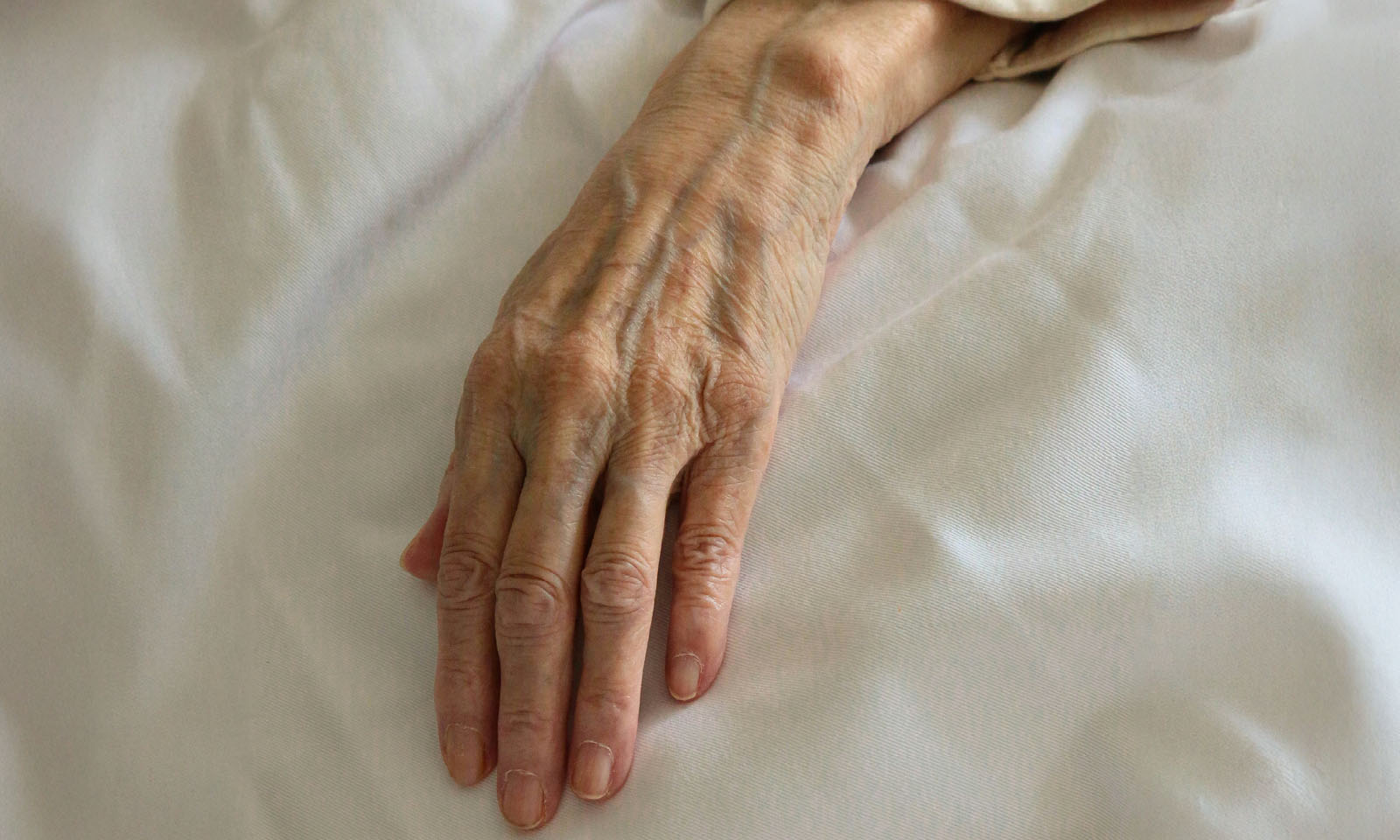
We tend to imagine dying with dignity as the possibility of passing away without unnecessary suffering, in the presence of loved ones, and with some right to decide about our own end. Yet something remains unsaid in this vision. If we regard dignity as an inalienable part of human existence, why does preserving it in the final months of life so often depend on the ability of others to give us their time, attention, and care? Ultimately, reflecting on a dignified death brings us to the question of what value we assign to a person at the moment when we no longer expect anything from them.
We tend to imagine dignified dying as the possibility of departing without unnecessary suffering, in the proximity of loved ones and with a certain right to decide about our own end. Yet something remains unsaid in this idea. If we consider dignity an inalienable part of human existence, why does preserving it in the final months of life so often depend on the ability of others to give us time, attention and care? Ultimately, thinking about a dignified death leads us to the question of what value we attribute to a person at the moment when we no longer expect anything from them.
What does it mean to remain human?
I am not sure that I know what it means to die with dignity. I understand the individual ideas associated with this phrase, but when I try to combine them into a single definition, something always eludes me. Dignity seems to be one of those concepts whose meaning we take for granted until we have to explain it.
In everyday life, we often associate it with autonomy, privacy and the possibility of making decisions about ourselves. A dignified life is one in which a person does not have to constantly defend their own value before others. They can make decisions, refuse, disagree, organise their time and to a certain extent determine how they will be treated. Yet dying brings us into a situation in which these possibilities may gradually narrow. A person may lose the ability to move independently, communicate, take in food or recognise the people around them. What we managed throughout our lives on our own, we suddenly need to do with the help of others. And it is precisely then that it is important that, in their eyes, we do not cease to be ourselves.
If we derived dignity exclusively from autonomy, we would have to admit that it too disappears along with the loss of independence. I cannot accept that. Yet I feel that this is often how we look, albeit unconsciously, at old and ill people. Perhaps that is why it is worth turning the original question around. Instead of thinking about how a person preserves their dignity while dying, we could ask what enables us to continue recognising their dignity.
On the shame of needing others
One of the sentences that troubles me most in connection with old age and dying is: I do not want to be a burden to anyone.
It contains a concern that is easy to understand. Concern for the people we love, fear of their exhaustion, unwillingness to transfer our own suffering onto them. At the same time, however, it carries the idea that dependence on the help of others is something for which we should at least apologise.
I do not want to strip this sentence of its personal meaning. Someone says it out of love, someone out of fear, another based on previous experience with demanding care for their loved ones. Nevertheless, I think it is worth reflecting on a society in which the need for help so easily turns into a feeling of one’s own superfluity.
From childhood, we learn to understand independence as success. First we learn to walk, dress and eat without help, later to earn money, secure housing and take care of ourselves. In this story, dependence is something we gradually overcome. In adulthood, we are expected to minimise it. Yet this story is only partly true. We never cease to depend on the work and care of other people. Our independence is made possible by an entire network of relationships, services and institutions, whose existence we usually become aware of only when they stop functioning. The difference between a self-sufficient and a dependent person therefore does not lie in the fact that one needs help and the other does not. It often lies in the extent to which the help we receive is visible.
A person who can order food, pay for cleaning or use transport does not appear in the social consciousness as dependent. Their needs are mediated by money, and therefore meeting them appears as an expression of independence. A person who needs someone to help them get out of bed, by contrast, is confronted with their own dependence without this economic mediation.
Perhaps that is why we can more easily accept dependence that can be bought than dependence that we must admit to another person. When dying, this asymmetry becomes particularly visible. The need for care may intrude into the most intimate areas of life, and a person loses the ability to pretend that they can manage on their own. In such a situation, we do not consider it dignified above all that they can accept help bravely or gratefully. It is dignified if they can accept it without having to defend their right to need it.
Care is not merely an expression of love
When we talk about dying, we often come to the family. To the idea of loved ones who remain with a dying person, help them and accompany them through the final period of life. It is an idea I understand. At the same time, however, I fear that its self-evidence sometimes prevents us from seeing all that it demands of people.
Care is a relationship, but also work.
It has its physical demands, time requirements and emotional consequences. It means administering medication, changing incontinence aids, helping with hygiene, organising examinations, preparing food, doing laundry, getting up at night and paying constant attention to another person’s needs. Sometimes it also means helplessness, irritation and the desire to leave for a while. Admitting these feelings does not call love into question. It means rejecting the idea that love can remove the material and psychological demands of care.
In our understanding of family relationships, however, these two aspects are often confused. If we love someone, surely we should take care of them. And if care is an expression of love, the question of its demands as work may seem almost inappropriate.
It is precisely here that personal ethics meets political economy. When society assumes that care will naturally be provided by the family, it also assumes the existence of someone who will have time for it. Historically, this person was most often a woman, whose unpaid work enabled both the household and the broader economy to function. Today, the forms of family life are changing, but the expectation of available care persists. People may be expected to work, run a household, care for children and accompany a dying loved one at the same time. Often without sufficient support and with the awareness that their own exhaustion is secondary compared with the suffering of the ill person.
I do not consider such an arrangement an expression of solidarity. Rather, I see it as its inadequate social organisation. Surely solidarity should not mean that several individuals must manage with their own strength a situation whose demands exceed their abilities. It should mean that we do not leave them alone in it.
Dignified dying therefore cannot, in my view, be separated from dignified conditions of care. Not because the needs of a dying person and the needs of their carers are identical, but because they are interconnected. If someone has no opportunity to rest, ask for help or acknowledge their own limits, their ability to provide sensitive care gradually becomes exhausted. Yet if we expect people to care for their loved ones or patients even at the cost of their own exhaustion, we relieve society of the responsibility to provide them with the necessary support.
On the right not to be grateful
I also think about how large a part of our idea of a good patient is made up of obedience. A person who accepts help should be patient, cooperative and grateful. They should understand that the staff have a lot of work, that the family is tired and that not all their wishes can be fulfilled. It is natural to take into account the capacities of the people who care for us. But this should not mean that an ill person must constantly subordinate their needs to those capacities or fear that, with another request, they will be a burden to someone.
A dying person is often in a situation in which they must rely on people from whom they need something. They may fear being too demanding, alienating the staff or exhausting their loved ones with another request. This is also why dignity is not manifested only in the quality of the tasks performed. It is also related to whether a person can express dissatisfaction, refuse help in a particular form or ask for something extra without feeling that they are breaking an unwritten agreement about being undemanding.
They do not have to be a pleasant patient to deserve respect.
I consider this important precisely because, in the final period of life, the power imbalance can manifest itself very subtly. Someone decides when food will be eaten, when a person will wash, who will enter the room and how much time can be devoted to conversation. Most of these decisions need not be made with bad intentions. They may simply result from the organisation of work. For the person they concern, however, they represent a substantial part of everyday experience.
Respect begins with explaining to a person what we are going to do and waiting for their response. With not speaking to them as if they were a child, unless they really are one. With not talking about their body as though it did not belong to them. With not assuming that the loss of physical independence also means the loss of the ability to make decisions. These gestures may seem small. Yet dignity is not always a matter of major ethical decisions. Sometimes it depends on whether a person can still feel like someone who matters.
What price does dignity have?
There is something troubling about dying for a society oriented towards performance. It is a period of life whose value cannot easily be justified by future results. Caring for a dying person may not lead to recovery, a return to work or the restoration of independence. Its aim may only be to alleviate pain, ensure comfort or make it possible to spend the remaining time in a way that suits the person.
How do we value the time someone spends at the bedside of a person who is afraid? What is the result of a conversation after which nothing objectively changed, except that the person feels a little less alone? And what value does help have that does not prolong life, but makes it possible to live through one day with less suffering? It is precisely in questions such as these that the limitations of the idea that the social value of work must be derived from its productive result become apparent.
Care for dying people is necessary even when it can no longer bring any future economic benefit. Its meaning lies in the person themselves, the person receiving it. This idea may sound self-evident. Nevertheless, its consequences are not always reflected in how we organise public services, remunerate care work and distribute social resources. If we claim that human value is not conditional on productivity, we should be able to defend this principle in budgetary decisions as well. In Slovakia, this question is reflected, for example, in the funding of mobile hospices. Although the Ministry of Health increased reimbursements for their services from February 2026, the Slovak Association of Hospice and Palliative Care warned that the new amounts do not cover rising costs and that some mobile hospices may be forced to cease their activities. The ministry set the reimbursement for a nurse’s daily visit at 50 euros, while according to the association, at least 70 euros would be needed for sustainable operation. From this amount, providers must cover not only the nurse’s salary, but also medical supplies and operating costs. The dispute is therefore not merely a question of differing ideas about the appropriate price of a healthcare service. It shows that even the possibility of caring for a person at the end of life depends on decisions we make when distributing public resources.
The question of access to care is not new, however. According to the Oncology Profile of Slovakia from 2025, the capacity of hospice beds with an available palliative care specialist in 2022 reached only 24 percent of the level recommended by the European Association for Palliative Care. The publication also states that waiting times for admission to a hospice range from two to six weeks. In the context of dying, however, time does not have the same meaning as when waiting for an ordinary service. The time during which a person waits for the necessary care is also the time they have left.
On grace
The word grace repeatedly returns to me in connection with dying. Not in the sense of forgiveness or religious redemption, but as a name for a certain consideration towards human fragility.
Grace can be the ability not to insist that a person behave according to our expectations. Not demanding reconciliation, gratitude or optimism from them. Accepting that they may be tired, angry or simply not want to talk. Grace can also be the willingness to remain nearby without the need to fix anything. To listen to a repeated fear, adjust a blanket, bring a tissue or glass of water, or respect the wish to be alone.
At the same time, however, I fear a society that leaves the dignity of the dying dependent solely on the grace of individuals. Kindness is essential, but it cannot replace justice.
If the possibility of receiving adequate care depends on income, family background or the exceptional dedication of staff, then we have made dignified dying something that we morally grant to everyone, but cannot materially secure for everyone. This is precisely where I see room for political thinking that does not begin with an abstract conflict between the state and the individual, but with the experience of mutual dependence.
Remaining close even in helplessness, being there for one another
I do not know whether a dignified death can be achieved in the sense of some final, satisfying form of departure. Perhaps the very idea of a successfully completed life is too marked by our need to find order even where things can no longer be put in order. Yet I increasingly think that dignified dying is not something a person has to manage at the end of life. It is rather the way we treat them when their possibilities gradually diminish.
It means not deriving their value from what they are still able to do. Respecting their decisions when they can express them, and not forgetting their personality when they can no longer do so. Not confusing dependence with helplessness and care with the right to make decisions for another person.
It also means recognising that good intentions are not enough. That attention needs time, care needs people and people need conditions in which they do not become exhausted to the limits of their strength.
Not all of us have a family that will stay by our side. Not all of us have savings, suitable housing or the possibility of choosing where we will spend our final months. Yet our value should not depend on the relationships and resources we have managed to accumulate during our lives. If dignity is to have any universal meaning, it must also apply to a person who has no one to advocate for it on their behalf.
Ultimately, I think that this is where one of the most demanding forms of solidarity lies. Caring even for a person from whom we no longer expect anything. Not because they earned it through their previous life, not because they were useful, good or loved.
Simply because they are still among us.

The text was created with the support of the Friedrich Ebert Stiftung, representation in the Slovak Republic