The struggle for Taras Shevchenko University in embattled Ukraine
New Eastern Europe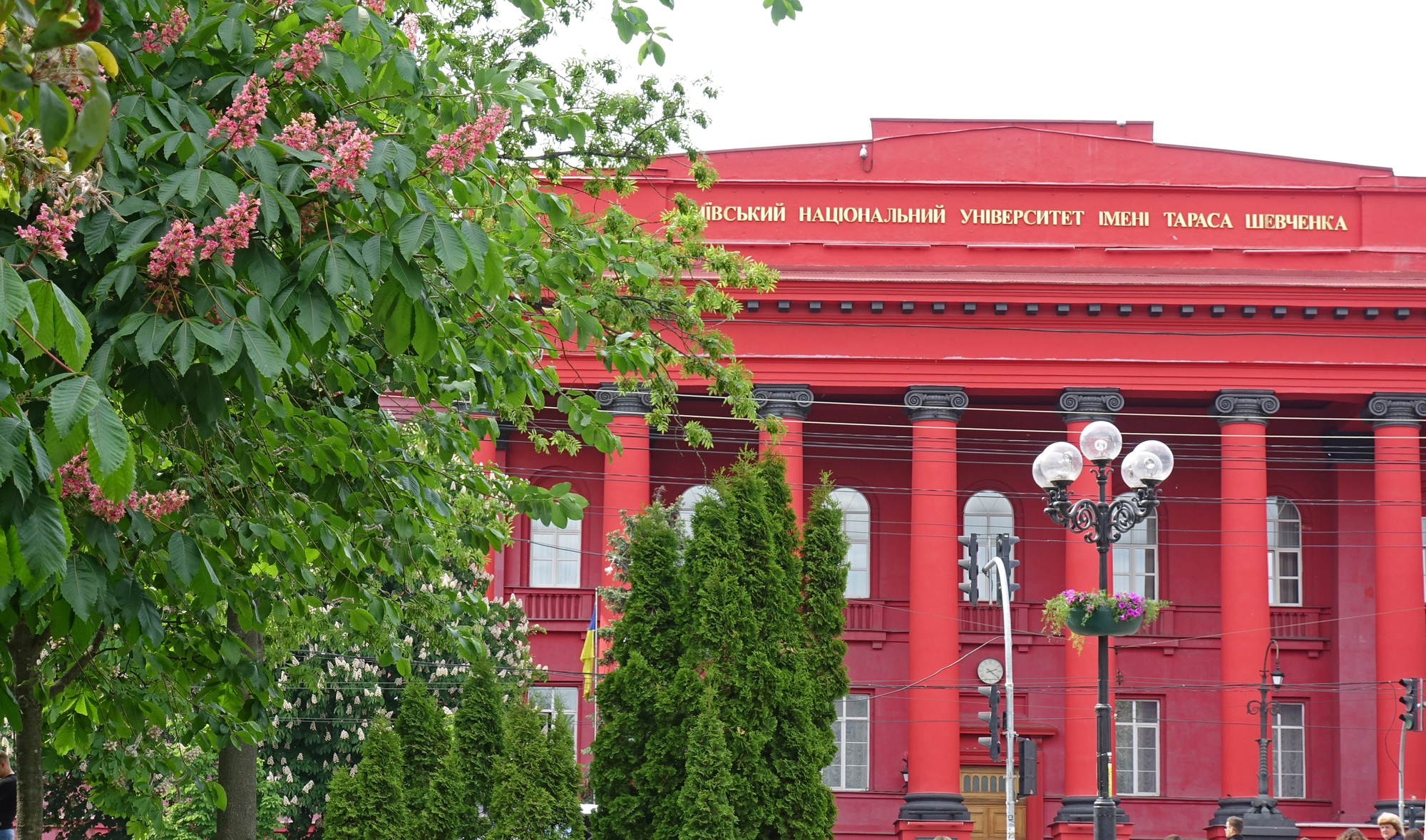
The election of the next rector at Ukraine’s foremost university offers insight into wider issues facing the country. Against a backdrop of never-ending war, Taras Shevchenko University is struggling with issues of corruption and self-enrichment.
Ukraine is embattled in war with Russia and its own domestic politics, and so is the country’s flagship higher education institution, Taras Shevchenko University. As recently as July, university facilities were damaged as a result of the massive Russian shelling of Kyiv. The blast wave damaged the university buildings: in one of the buildings, glass was broken in windows and doors, and a dormitory was also damaged. But this was not the most damage suffered by Ukraine’s top academic institution, and the war does not appear to be the major threat to it. The major threat is from within, and it is called corruption. Instead of shattering glass, corruption damages reputation and shatters morale.
Student protests and rector’s resignation
The turbulence around the university has been felt for over eight months now. Hundreds of students gathered in front of the university, demanding the Rector Volodymyr Buhrov’s immediate resignation. Students chanted “We have Epstein at home,” referring to Donald Trump’s associate Jeffrey Epstein, “University is not a brothel,” and “Shame, shame, shame!” This was done in response to a widely publicized sex scandal surrounding the rector. Not surprisingly, the evidence was sketchy at best, and Buhrov denied any allegations. Why has there been so much noise then? The answer may appear to be simple at first. On March 2nd 2026, Taras Shevchenko University began the procedure for electing the rector. The elections usually involve a good deal of competition, which sometimes includes punches below the belt. Allegations of the misreporting of income and property, embezzlement, fraud, professional misconduct, and sexual harassment were all part of the vote.
The Court of Appeal upheld the decision regarding Buhrov in the case of irregularities in reporting annual income and assets, which is a criminal offence in Ukraine. The Ministry of Education and Science dismissed Buhrov after the court decision. His name is not even on the list of former rectors. Despite this, the now former Education Minister Oksen Lisovy has stated that the firing was simply due to the end of Buhrov’s contract. The guilty verdict was needed to make sure that he did not run for a second term. As Buhrov acknowledged, if the appeal confirms the court decision, he would not be able to participate in the elections, even though he intended to run for a second term. The rector’s mistake was the undeclared use of a Volkswagen Golf, which belongs to his son. He benefited from the use of his son’s car as part of his job and so he had to report this. There was even a legal fight over how many days in one year he used the car, 183 days or less. In a highly corrupt country such as Ukraine, the issue sounds not just grotesque but simply laughable at this point. It is normal in Ukraine that civil servants “forget” to declare ownership of huge mansions and luxury cars in their mandatory annual reports.
From communist Cuba to the Republic of Congo
As a result of the court ruling, Buhrov was immediately replaced with the acting rector and head of the university’s Institute of International Relations, Valery Kopiyka, whose most remarkable point in his biography was serving as a military interpreter for the Soviets in the Republic of Congo in West Africa. Kopiyka was appointed by the direct order of the Ministry of Education and Science in spite of proclaimed university autonomy. The
Before becoming the rector in 2021, Buhrov served as provost for administrative and property issues, which is usually the sign of a less likely contender for the rector’s office. His predecessor and protector, Leonid Guberskyi, ruled the university for 13 years and had to step down due to the law that allows rectors to serve no more than two five-year terms. He served as an advisor to communist Cuba in the 1970s and also led the university’s Institute of International Relations. Despite his formal retirement, Guberskyi, now 84, continues to take part in running the university. Although not mentioned in the report, he is clearly visible at the latest meeting of the university’s top governing body, the Rector’s Council, seated to the acting rector’s immediate left.
Academics or hectares of land?
Taras Shevchenko National University of Kyiv, established almost two centuries ago, advertises itself as a classic university with a distinct research profile and the leading contemporary academic and educational hub of Ukraine. The political leaders of Azerbaijan, Georgia, Kazakhstan, Tajikistan, Turkey, Uzbekistan, and of course Ukraine are honorary doctors of the institution. But the reality is not so bright. In 2026, Taras Shevchenko University was only able to secure a spot between 1801st and 2000th place in the Times Higher Education world university rankings. Positions in other world university rankings are not much better. By no means would Taras Shevchenko University qualify as a world-class university according to these rankings.
Why fight for the leadership of a university that can hardly achieve any meaningful spot in the world university rankings and is not doing great academically or financially? The announcement of election itself is somewhat surprising given that the country is at war and thus refuses to hold presidential, parliamentary, mayoral, local and other political elections. Why is there such an urge to elect a new rector for the university? The answer is property. Ukraine’s flagship university, located in Kyiv, owns a lot of properties, buildings and land. The media alleges the organization of a hostile takeover of Taras Shevchenko University in the style of corporate raiding. The alleged mastermind of this scheme is presented as a friend of Putin.
Postponed elections
Clearly, Taras Shevchenko University is not living through its best times. Just recently, in late September, one of the university’s buildings was badly damaged by a Russian attack, and not for the first time. A few days later, the university announced that there will be no classroom teaching, resorting instead to an ineffective online mode of instruction. Despite the ongoing war and regular bombardments of Kyiv, land in the country’s capital is becoming increasingly valuable. Large developers are ready to bear the cost of taking over higher education institutions to realize their construction projects. Thus far, the contestants achieved little by removing Buhrov, as the newly appointed acting rector also appears to be Guberskyi’s protégé and the most likely candidate in the elections. The education ministry postponed the rector’s elections, rescheduling them from May to October. As a result, the big battle for Taras Shevchenko University is all ahead. It is already October but the elections are nowhere on the university news. There are four candidates, recognized by the Ministry of Education, and Pohoretsky is not on that list. How transparent are these elections for the position of rector if one of the four candidates did not even bother to post her short biography? Maybe the elections are now postponed indefinitely as a result of wider political rivalry?
The sadness of the situation is made clear by the fact that the country’s political and business elites are so focused on amassing personal material wealth that even the leading university is being torn apart in leadership disputes over land and real estate development. At the same time, Ukraine’s academia is on a declining trajectory and is a hostage to its own property. This descent and decay is accelerated by the seemingly endless war. With the nation’s leading university being led by a temporary or acting rector, a question comes to mind: perhaps Ukrainian universities need external management instead of internally bred former communist functionaries?
On October 27, Valery Kopiyka won the election in the first round, getting nearly 52 percent of the votes. This was a quite expected victory, given that he was appointed as the acting rector by the ministry. Now the ministry has one month to officially appoint him as the rector, which should not be an issue.
Ararat Osipian is a founding fellow of the New University in Exile Consortium at the New School, New York. He was a fellow of the Petrach Program on Ukraine at the George Washington University and Sustaining Ukrainian Scholarship fellow at the New Europe College Institute for Advanced Study.