What does a forgotten region teach us about the need for closeness?
Kapitál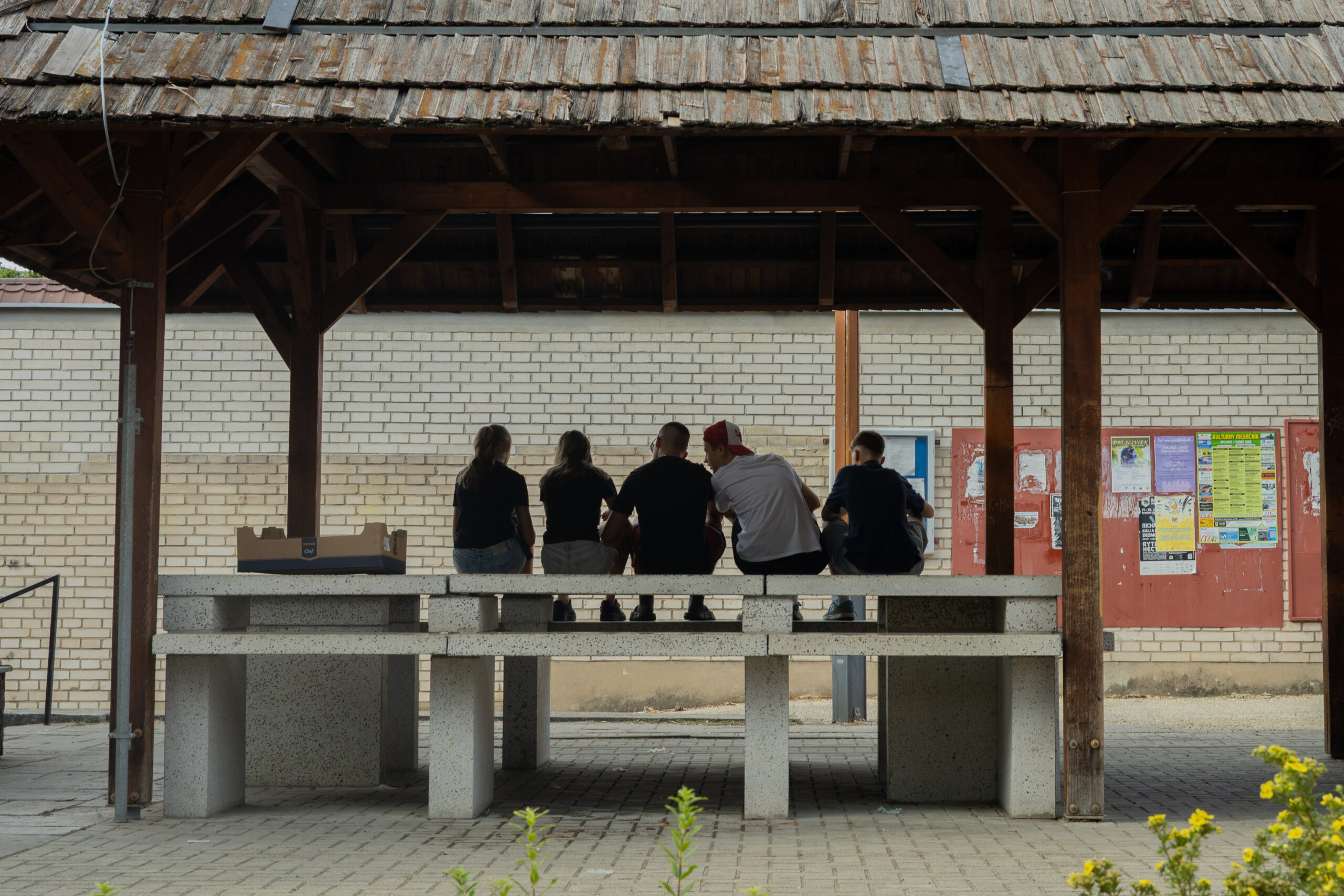
From Trenčín, I travel by a shaky train to Myjava, and from there continue by bus. Brezová pod Bradlom lies in the Myjava District, at the very edge of the Trenčín Region. It has held city status since 1966, but under current conditions it would have a hard time obtaining it. At the end of 2025, it had one thousand fewer inhabitants than ten years earlier; Brezová residents have to travel for basic services and can only shake their heads at the prospects of career growth or even better employment.
From Trenčín I travel by a rattling train to Myjava, and from there continue by bus. Brezová pod Bradlom lies in Myjava District, at the very edge of the Trenčín Region. It has held city status since 1966, but under current conditions it would hardly obtain it. At the end of 2025, it had one thousand fewer inhabitants than ten years earlier; Brezová residents have to travel for basic services, and they can only shake their heads at the prospects of career growth or even better employment.
I meet Evan halfway, at the Myjava railway station. He is twenty years old and, like a large proportion of his peers, he left to study in the Czech Republic. He has great ambitions; he is in his second year studying law in Brno. We are close, have known each other for a long time, and even lived together for a while. Despite this, I have trouble catching him in Brno. Every Thursday, immediately after school, he gets on a train and travels home. To Brezová. Every one of our conversations, whether intentionally or not, always ends up revolving around Brezová. All our shared plans revolve around when Evan will be home in Brezová. In every funny anecdote, he mentions experiences with his friends from home. To be honest, I never understood why this was so. I am from a city in eastern Slovakia, where I live relatively well, yet I am not particularly drawn back home. So what is special about Brezová?
I do not want to question the charm of small towns. Statistics, however, are not on their side, especially when it comes to young people. Across Slovakia, universities in Košice and Bratislava are the most popular; one in five young people also leaves to study abroad, and half of the population is considering leaving Slovakia because of low wages and a poor standard of living. Most young people living outside larger cities therefore leave their home region, at least temporarily, no later than after secondary school, and a large proportion never return. In regions with a long-term population decline, schools struggle to fill the minimum capacities of nursery, primary, and secondary schools, which subsequently leads to their closure.
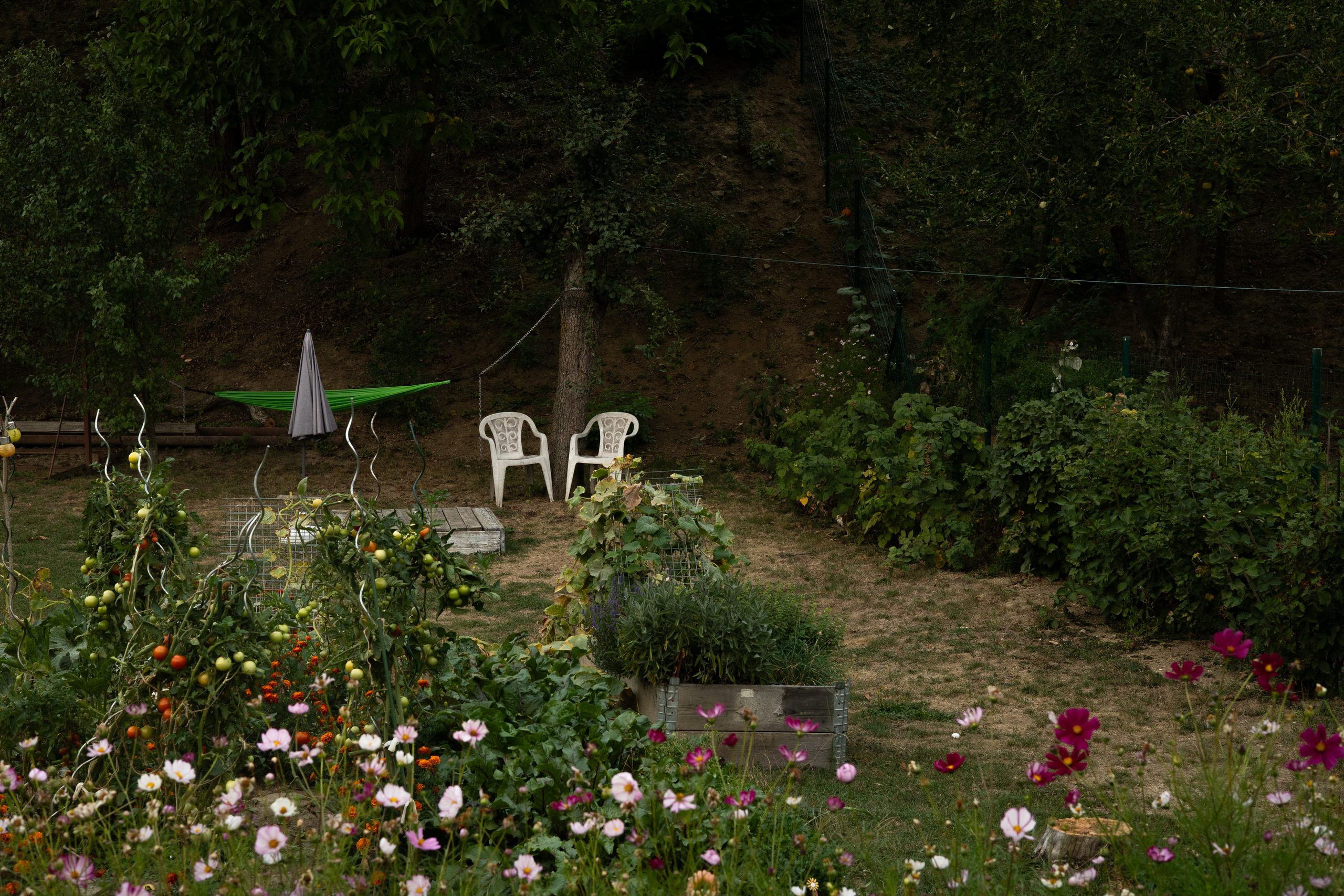
“Few children are being born, young people are leaving, and the population is ageing. We have empty flats; big cities do not even know this problem,” describes the region’s particularities pensioner Alžbeta, a native of Brezová. We talk in the garden behind her house. A bowl of plums sits on the table between us, and Alžbeta proudly tells me how she does everything in the garden herself. The former nursery-school teacher has spent her entire life in Brezová and describes herself as a local patriot, but, as she says, she is angry about everything going downhill. She has experienced the decline in quality of life first-hand at various times.
The region lacks jobs. Since the fall of the former regime, there has been no employment available nearby, and residents have been forced to travel for work to Trenčín, Nové Mesto, or Myjava. In the past, spring factories operated here and employed people from across the country, contributing to the town’s development. “The factory director was a passionate sportsman, so he supported both football and handball. Sport received maximum support here; an amazing sports hall was built,” Alžbeta recalls of her youth. After privatisation, however, the company began to collapse, and with it not only the development of sport but also that of the region. Since people primarily work outside the town, services are gradually leaving Brezová. They cannot survive. It is simply more practical to do one’s shopping or visit a doctor in another town on the way home from work.
Since 2013, the town has had no secondary school; in 2012, its two primary schools became one, and nursery schools are slowly offering more vacant places than there are children, as a result of which they have to close classes. Pupils travel to Senica, Bratislava, or Modra for secondary education, and leisure activities are similar. The town has only a primary art school; at one time it also had a large folklore ensemble, but it has not been doing very well in recent years. Attending clubs somewhere else is not easy, however; for that, Brezová would need better transport services.
“The connection to the outside world is terrible,” Alžbeta complains. “We used to have buses going directly to Prague. Now, when I want to go there, I first have to go to Bratislava.” Regular trips to the Czech Republic to visit her daughter and her family have thus become more complicated for the pensioner. Even getting to Bratislava is not that simple. A direct bus to the capital, which is only eighty-five kilometres away, runs only on Sunday afternoons. “The regional governor ruined our connections; I will not even talk about the trains,” she grumbles. Since 2003, trains have not gone to Brezová at all. For Evan, for example, this means that on the short route from Brezová to Brno, he always faces at least two transfers.
He admits that imagining a realistic future in Brezová is difficult; as a lawyer, he simply has no prospects here. What regularly draws him back to the region, however, is the community, which can be felt at every step. “People stick together here and help one another as much as they can.”
I noticed this the moment the bus dropped us off in town. Evan greeted everyone passing by, knew them all, and knew where everyone lived and who knew whom. A fairly common phenomenon in villages, but unheard of in a town, however small. All the more so because such strong neighbourly ties are maintained by the younger generation as well. “The whole region is quite distinctive in this respect. Since there used to be scattered settlements here, people lived in smaller communities and were dependent only on themselves and their few neighbours,” reflects Jakub, Evan’s peer and longtime friend. He is interested in his region and its history. In his view, this mentality of solidarity began to disappear during expropriation; when people lost their land, they also lost their connection to the region.
Alžbeta and Evan’s grandmother Anna also speak of the decline of solidarity. In their words, although the former regime brought regional development, it damaged relationships. The population agrees that the decline of recent years, together with the resulting departure of young people, merely sealed Brezová’s unfavourable fate. The community in Brezová has apparently not been what it used to be for a long time.
Relationships are completely different here
From an “outsider’s” perspective, however, I see it differently. Deeply rooted community values are still present here, only in a different form.
In her youth, Alžbeta played professional handball for Brezová’s women’s team and danced in a folklore ensemble. Today she can only nostalgically recall those times, but in recent years she has begun attending a ceramics course at the local primary art school, has an active group of friends interested in social affairs, and maintains close relationships with her neighbours. Including those who moved to Brezová relatively recently. Anna once helped establish the aforementioned folklore ensemble and ran a nursery at home for many years, caring for the children from the neighbourhood. “In the summer, I organised Olympic Games for them,” she recalls, pointing to the dilapidated pool behind the apartment building. During that period, she says, there was not a single day she spent without children. Today, she is always happy to see her now-adult grandchildren and their friends. In the smoking room in the basement, over coffee served on a silver tray, she goes through all the latest gossip with Evan.
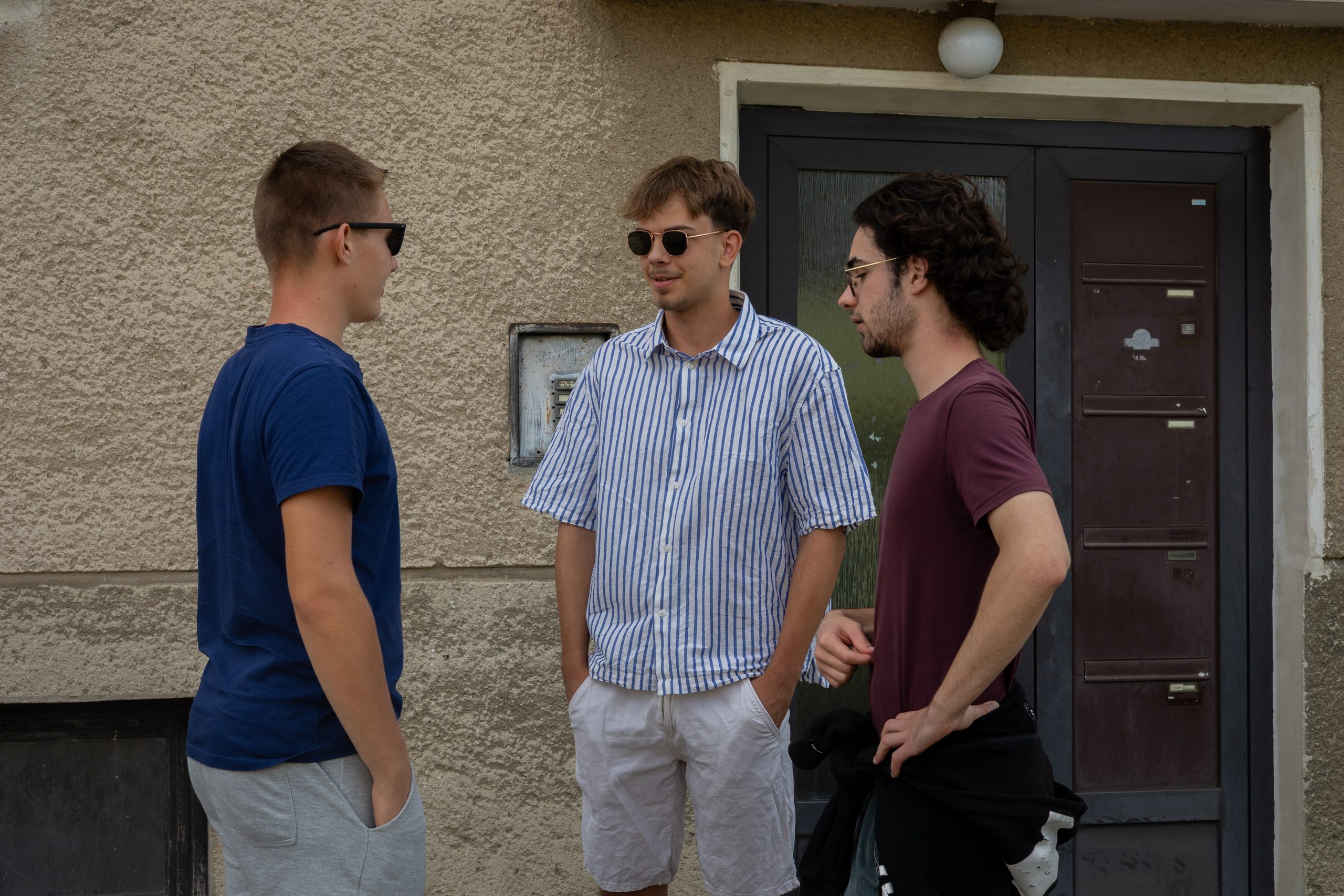
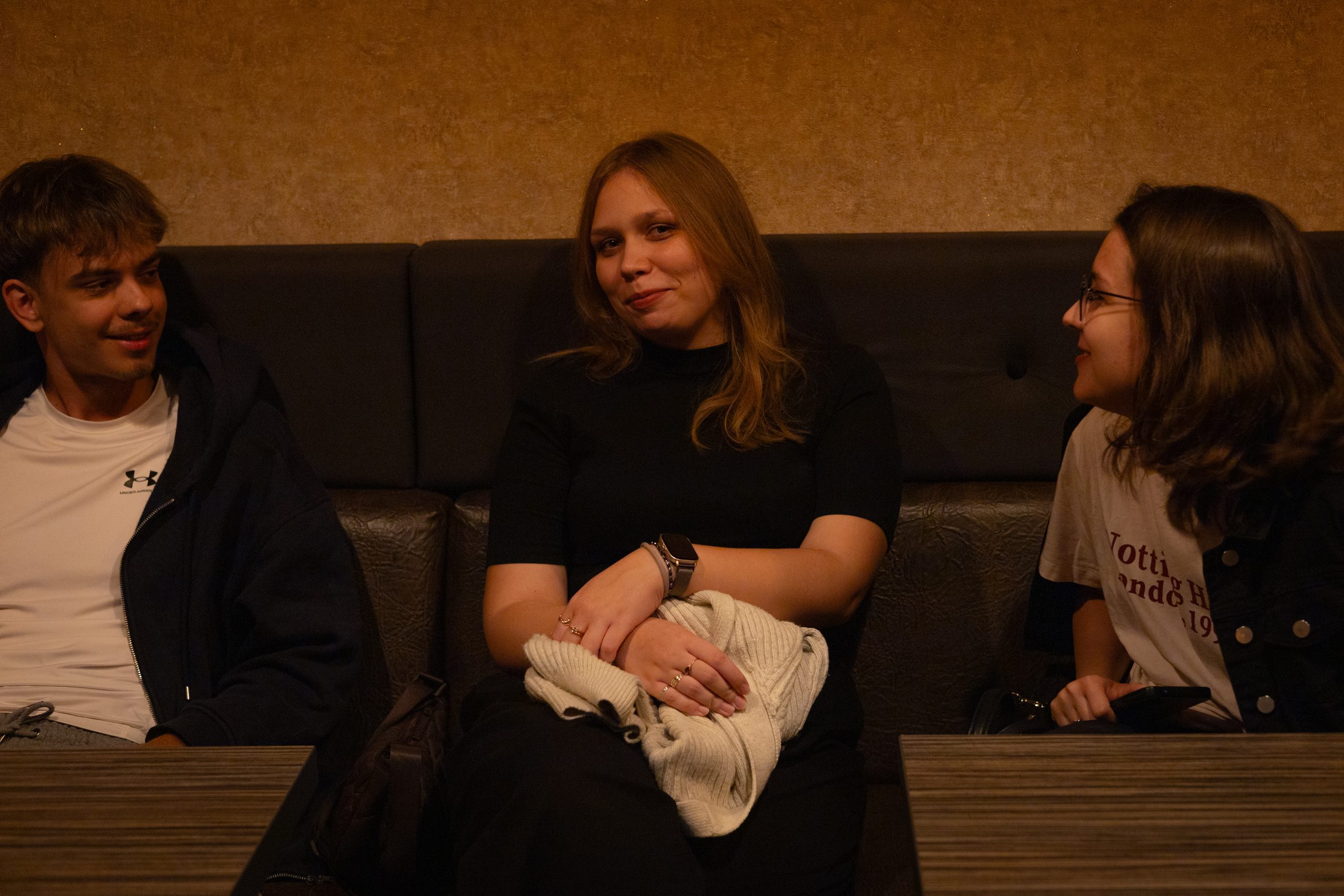
Although he studies in Bratislava, Jakub, like Evan, returns home as often as possible. When we talk, he and his friends are seeing one another after a long time and remain together late into the night. They strategically move between establishments, knowing well which one stays open a little longer during the working week. They part only when none of them can keep their eyes open any longer. Jakub briefly wonders whether this closeness between people is specific only to their group, but he quickly dismisses these doubts. What bothers him most about Bratislava is that he knows no one there. At home, he goes out into the garden and starts talking to his neighbour over the fence. On the way to the shop, he exchanges a few words with a former teacher, a friend, or a distant relative. At the town market, which is unused in the middle of the week, we pass various groups of all ages throughout the day. Some simply sit around; others arrive with musical instruments. The establishments are full from lunchtime until late evening, and on the streets we encounter families and young people on bicycles. From early morning, meanwhile, we see older residents sitting on benches in front of the apartment buildings.
Even with the passage of time, Jakub perceives the anonymity of a big city negatively, which is why he looks forward to seeing familiar faces every weekend. He and his friends have long managed to combine their studies with childhood relationships. “We were afraid of what university would be like, but we still meet whenever we have the opportunity,” he says happily. They did not attend the same secondary school; their friend Adam even moved to Levoča after primary school. After graduating, he enrolled at a school in Bratislava, yet he still returns to Brezová almost every weekend. The distance did not discourage him, and he remains part of the community in which he grew up. “I really appreciate what I have here. It is not entirely commonplace,” he confides. Besides his relationships, he is also kept here by Zvonkohra, a musical ensemble founded years ago by his parents. Some time ago, Adam took over as conductor. In his view, regular travel is sometimes limiting, but it is worth it.
For Anula, another of Evan’s friends, the Brezová community was an escape during adolescence. She attended a pedagogical school, where she spent four years in an entirely female environment that did not suit her. “The relationships here are completely different; it is so refreshing,” she says. She is also referring to occasional misunderstandings or exchanges of opinions, which are always resolved over a beer in the evening. “We have known each other for so long that I do not have to explain my behaviour. They already know the worst thing I can do,” she laughs. Later, at university, she no longer felt much like forming new relationships. “I went to secondary school in Senica, had a great group of friends, and we still hang out. But you return to Brezová, not Senica,” Evan adds. Jakub nods. “This is your home.”
I cannot think of anything that has improved
Although Brezová is home, the conditions are not currently in place for them to return permanently one day. “We are at the edge of the region, and it is clear that the local government has no reach here. They do not know what is happening here,” Evan says with a sigh.
“There is no industry here, but there are companies owned by very capable people,” Adam argues hopefully. Doing business, and indeed living in Brezová, does not guarantee success, but people keep trying because they care about the location. Family and close relationships are precisely why many have not yet given up on Brezová. According to Adam, those who have succeeded are happier here than they would be elsewhere. For example, Zvonkohra enabled Adam to travel around Europe, while Jakub enthusiastically helps organise political discussions in the region. But enthusiasm is not enough; capable people are also needed in the town’s leadership. Yet among their generation, they do not know anyone planning to enter municipal politics, even though several have been offered the opportunity.
The municipal council has eleven seats in total; before the elections, they barely managed to find enough candidates, and only the current mayor ran for the mayoral seat. In the 2022 municipal elections, a young coalition formed and took office with visions and enthusiasm. However, it has few successful projects behind it, and only a small number of its members appeared on the candidate list again. After two electoral terms, Simona Nemcová decided not to run. “It is an experience that shows a person a great deal about how the town works, as well as about the limits of municipal politics,” the young councillor assesses her several years in office. She perceives that, despite the strong community, an equally strong sense of resignation is also present in the town. “We pay the price for the lack of land and job opportunities,” she states as possible reasons for the stagnation. The town is trying to find other ways to improve conditions for young people; new rental flats, for example, have been created in the dilapidated primary school. This step, however, came too late. Years ago, the public had already unsuccessfully appealed for the dilapidated building to be used again.
Municipal councillor Gabriela Ciranová, meanwhile, sees the greatest potential in tourism. Brezová pod Bradlom and its surroundings are known as the birthplace of Milan Rastislav Štefánik, Jozef Miloslav Hurban, and other important diplomats of the twentieth century. The nearby scattered settlements were the cradle of the Slovak resistance, and the region also boasts beautiful nature. In many respects, it is an attractive location, but there is no effort to make effective use of its opportunities. According to Ciranová, the town is unable to attract investors, although there is room for them, and councillors’ proposals often end up in the bin. When asked what has changed for the better in Brezová in recent years, she replies: “I cannot think of anything for the better, and there is a lot for the worse.”
So where do young people get so much love and hope for this region? “From one another and from their roots,” Evan claims. “Whenever someone says we are going to rebel, Brezová always joins in,” he laughs. One can only hope that this fighting spirit will endure among the people of Brezová.


This text is part of the PERSPECTIVES project - a new brand for independent, constructive, and multiperspective journalism. The project is funded by the European Union. The views and opinions expressed are those of the author(s) and do not necessarily reflect the views and positions of the European Union or the European Education and Culture Executive Agency (EACEA). Neither the European Union nor EACEA can be held responsible for them.