"Moscow wants a deal with Washington that it can present to Europe as a fait accompli"
New Eastern Europe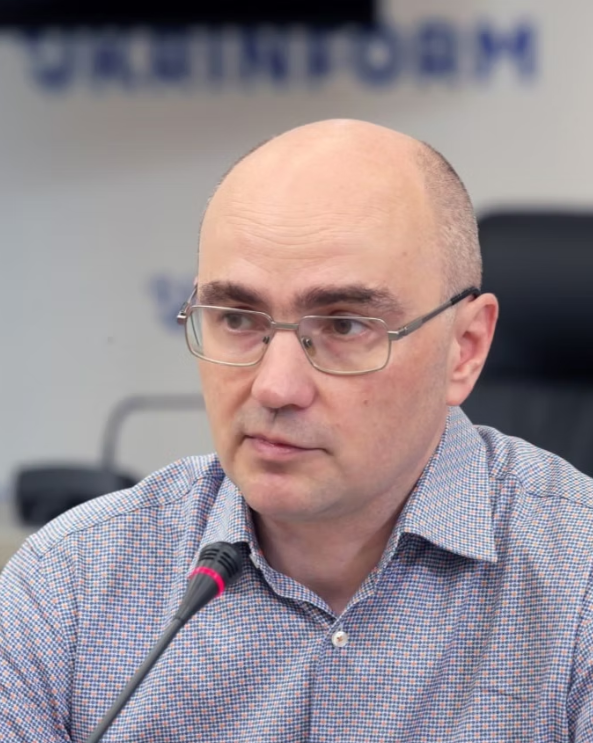
Interview with Dmytro Levus, a foreign policy expert and director of the Center for Social Studies Ukrainian Meridian. Interviewer Vazha Tavberidze.
“Even offering Russia a halt to the fighting along the current front line is an enormous compromise on Ukraine’s part,” says Dmytro Levus, a foreign policy analyst at the United Ukraine think tank. United Ukraine
At the US-mediated trilateral peace talks in Abu Dhabi on November 10 and 11, the first in nine months, Ukraine and Russia agreed on a large-scale prisoner exchange. There was no breakthrough on a ceasefire, territory or security guarantees. After the talks, RFE/RL spoke to Levus about what Kyiv or Moscow might be willing to concede to reach a deal, why Moscow is talking about a “new Yalta”, and how the US midterm elections could affect the peace process.
For Levus, the war is also personal: in April, his son Bogdan, an Azov fighter, was killed. At the end of the interview, he talks about what kind of peace he would consider worthy of his son’s memory.
This interview was first published by Radio Free Europe/Radio Liberty’s Georgian service
VAZHA TAVBERIDZE: Before we turn to Abu Dhabi, why did Russia agree to the ceasefire in Oleshky? Can the Kremlin claim a diplomatic victory?
DMYTRO LEVUS: The humanitarian operation cost Russia nothing, and with the world's attention on Oleshky, something had to be done. Moscow tried to seize the initiative and pretend to show goodwill. The Americans were involved, and Trump has struggled to get results in foreign policy. The first lady's efforts are seen as part of his administration's policy, and in this case she got a result.
Moscow may have seen a chance to make a show of supporting Trump while the Republicans were campaigning. The Kremlin used that imitation of goodwill to get its negotiator, Dmitriev, a meeting with Trump. I wouldn't call it a diplomatic victory. It was an attempt to conceal the Kremlin's true face.
The Abu Dhabi talks reportedly began with Steve Witkoff asking why the October Revolution is commemorated on November 7th. Vladimir Medinsky, who led the Russian delegation, took an hour to explain. What does that tell you about the talks?
I think the choice of Medinsky told you how seriously Russia took the talks. There was no prospect of progress towards peace. It was a waste of time.
After the talks, Medinsky promised to ‘take back every inch of our land’. And proceeded to quote Putin who said that any territory a Russian soldier has set foot on as ‘our land’. How much of that is just “media talk” - what is Russia actually demanding? What would it settle for?
Medinsky cuts a grotesque figure, but his words have to be taken seriously. Since 2020, Putin has been writing articles denying Ukrainians' right to exist and calling Ukraine an artificial creation. He keeps repeating it. In that sense, there's no limit to Russia's demands.
There was some irony in Medinsky saying this on 11 November, the fourth anniversary of Kherson's liberation from Russian occupation. Putin says that once Russia raises its flag or a Russian soldier sets foot somewhere, it's theirs forever. Kherson shows what that's worth.
American negotiators often say everything has been agreed except territory. The idea that Russia wants only the Donbas in exchange for peace is simply wrong. For Moscow, that's a condition for starting real negotiations. Russia is not prepared to give up its claims to the Kherson, Zaporizhzhia, Donetsk and Luhansk regions, and the Autonomous Republic of Crimea. It believes writing those claims into its so-called constitution enshrines its right to them.
Russia also wants to disarm Ukraine. The proposed troop ceiling went up during the talks, but Moscow still wants limits on Ukraine's armed forces and defence industry that would leave it unable to defend itself. And then you have Secretary of State Rubio who said the security guarantees would have to be acceptable to Russia. Moscow won't accept US or European guarantees that would stop it from resuming its aggression whenever it chooses.
Zelenskyy has spoken of freezing the fighting in return for security guarantees. How realistic is that, and would it mean giving up territory?
Even proposing to stop the fighting along the current front line is an enormous compromise. When Zelenskyy talks about security guarantees, he means real guarantees. Anything dictated by the Kremlin would be unreliable.
Ukraine could agree to freeze the fighting, but even in return for genuine guarantees it wouldn't recognise the loss of its territory. Remember Witkoff fretting in an interview last year about what a bad constitution the Ukrainians had because it wouldn't let them give up their territory?
Trump has suggested an agreement could go beyond Ukraine and cover European security, an idea Jared Kushner also voiced out earlier. According to Medinsky, the aim of the Abu Dhabi talks is to create a comprehensive security system for Europe, a modern-day Yalta and Potsdam. How worried should Europe and other countries be that this might become a reality?
We've already seen Russia try to end the war by dealing directly with Trump and presenting Kyiv with a fait accompli. When Moscow talks about a new Yalta, it overlooks that Yalta came after a major war it had managed to win. The logic of its aggression today is closer to Hitler's Germany: Czechoslovakia, then the Molotov-Ribbentrop Pact, when the great powers made decisions and presented everyone else with the result.
Ironically, another participant in the Abu Dhabi talks, Deputy Foreign Minister Ryabkov, made clear what Moscow wants, a few years back. In December 2021, he said: ‘NATO, pack your bags and get back behind the 1997 borders.’ Given Trump's scepticism about NATO and his calls for Europe to take more responsibility for its security, Moscow sees an opening. It wants to reduce the American presence and limit what NATO can do in the event of aggression.
Yet the Europeans aren't at the table when their own security is being discussed.
Moscow is trying to reach an agreement over their heads, just as it tried to do with Ukraine. For a long time it didn't envisage a European seat at the talks on Ukraine. When the question came up this summer, the Americans had broadly agreed to European participation and Moscow couldn't ignore it. Instead, it tried to turn the whole thing into a theatre of the absurd, as it often does. It started saying the representative had to be someone Moscow trusted and that it would be Schröder, its agent of influence. It turned the whole thing into a farce, an outright clown show, as Moscow quite often does.
Now it's a question of discussing a European security system, and Moscow is turning that into a farce too. Moscow wants a deal with Washington that it can present to Europe as a fait accompli, then deal with European countries one by one. With looming electoral shifts in mind, it apparently thinks it can pull that off.
Trump drew criticism for saying ‘Putin was treated with disrespect’ and ‘Ukraine will have a different shape’. But let's look at it from another angle. Given what we know about Putin and his delusions of grandeur, is it so hard to believe he really thinks he wasn't shown the respect he deserved? And isn't the fact that Ukraine can't retake the occupied territories by military means right now the sort of truth people simply don't say out loud? After all, Zelenskyy himself has said he is prepared to freeze the war along the front line.
When Trump talks about disrespect as if it were almost a reason for the war, it tells us how he sees Putin. He thinks leaders of great powers should be allowed to do more than international law, morality or diplomacy would allow.
As for possible territorial losses, the “different shape” quip, there is a different precedent in US diplomacy. The Soviet Union seized and occupied the Baltic states in 1940. They may later have been shown as part of the Soviet Union on American maps, but the United States never fully recognised their annexation. That helped them restore their sovereignty in 1991. I don't think the personal view of a president who often gets things wrong matters much in this context.
How might US policy towards Ukraine change after the midterm elections?
We've already heard Rubio say that US foreign policy will not change because the president is the one who sets it. No one disputes that.
I don't expect any sweeping changes in two months' time, but the conditions under which this administration conducts foreign policy will change. It will face considerably more obstacles and have less room to push its decisions through.
So I do expect some changes. It will be harder for the United States and for the president to engage with Russia. That's what I think we can predict.
One last question, and forgive me for asking something so personal. Your family has suffered a particularly painful loss in this war. What kind of peace would you consider worthy of the memory of the person you lost?
On Easter, April 12th, my son Bogdan, an Azov fighter, was killed. For us, for his family, it was an absolute catastrophe. I believe that a just peace for Ukraine must begin with the return of our territories. Russia and its leaders must be punished for their aggression. There should be an international tribunal for those who started the war, for war criminals and for those now committing appalling crimes in the occupied territories and against our prisoners of war.
Russia must also pay reparations to Ukraine. That's the minimum. The maximum would mean Russia must be disarmed so it can't launch another war for a long time. It also would mean rethinking how the territories east of Ukraine are organised. I don't know what form that would take: national projects, territorial projects, perhaps ones that combine territorial and economic changes. It would also mean getting rid of Russia's nuclear weapons. People say Russia's break-up would be a tragedy because we don't know who would end up with them. As if they were in responsible hands now.
How realistic is it to achieve that kind of peace?
I think the minimum is entirely achievable. Ukraine's strikes on Russian oil refineries, what Zelenskyy calls ‘long-range sanctions’, have hurt Russia badly. They need to be backed by sustained, comprehensive sanctions and timely aid to Ukraine. Russia can be defeated once it no longer has the money to wage the war. That takes all these measures together, instead of trying to look Russia in the eye.
Copyright (c) 2026 RFE/RL, Inc. Used with the permission of Radio Free Europe/Radio Liberty.
Dmytro Levus is a foreign policy expert and director of the Center for Social Studies Ukrainian Meridian. His areas of professional interest include informational confrontation in the conditions of hybrid war, ethnopolitics, frozen conflicts, electoral issues, and interfaith relations.
Vazha Tavberidze is a journalist with Radio Free Europe/Radio Liberty Georgian service.