"Putin lost the most in Shenzhen"
New Eastern Europe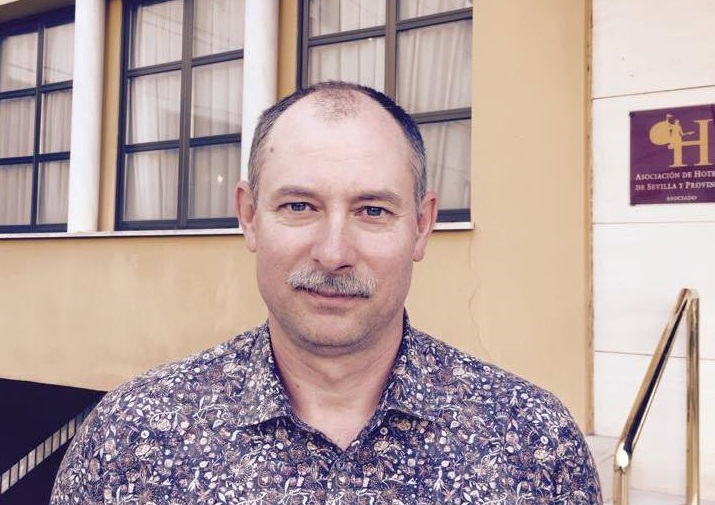
Interview with Oleh Zhdanov, a Ukrainian military analyst, retired colonel and former officer of Ukraine's General Staff. Interviewer Vazha Tavberidze.
VAZHA TAVBERIDZE: Let’s start with the most obvious question, but one we have to ask: winners and losers. Who won and who lost at this summit? What, specifically, did each of the three leaders gain?
OLEH ZHDANOV: The winner, of course, was the host, Xi Jinping.
Why? Because he held the summit and showed that he was in charge. He gave a clear demonstration of China’s foreign-policy approach under his leadership. In my view, Putin lost the most.
Putin was shown very clearly that he is not among the leaders who can hold meetings such as a Yalta 2.0 or influence world affairs. I think the Kremlin simply forgot Xi’s policy speech. Remember the party congress that confirmed Xi as leader? In that speech, he set out the party’s guiding line very clearly: a bipolar world. Bipolar means two. Who was the other one? Donald Trump. They were even holding hands as they went up the escalator.
It was obvious that Trump was trying very hard to elevate Putin somehow, to legitimise him, but Xi kept shutting that down. Trump was somewhere in the middle: he neither won nor lost. He reached no agreements and, essentially, suffered no reputational damage, apart from calling Putin a friend. You could put that in the minus column, among the losses.
The summit failed to live up to the hype and expectations of a possible Yalta 2.0. But were those expectations justified in the first place? Was there any reason to believe it could become a second Yalta?
No. This is a clear illustration of the power of Russian propaganda. They promoted this idea of a Yalta 2.0, of deciding the world’s fate, so relentlessly that you and I are now using the phrase and discussing whether it could have happened.
It could never have happened, because their interests are opposed. There is no common platform uniting them. They have done nothing together that has benefited all of them.
Without a foundation, without common ground, it simply cannot work. Look at how much persuading Xi needed. He was against this meeting. He did not want to hold it. He went through the protocol and that was it - An hour or an hour and a half for three leaders speaking three different languages. No results.
It reminded me of Leonid Ilyich Brezhnev. When he was asked about the party’s main task, he said it was world peace. It also reminded me of Krylov’s fable, The Swan, the Crayfish and the Pike.
The communiqué is laughable: we are for peace. The main thing is to curb the International Criminal Court so that the same war crimes can be committed with impunity. So that Putin does not meet Milošević’s fate.
Curiously, after the talks, Putin thanked Xi for organising the meeting and said: ‘I don’t think anyone expected everything to go so well.’ What, from his point of view, went so well? What do you think he meant?
I think that was a barb, sarcasm, Putin’s response to being placed behind Xi’s wife, seated at a separate table at lunch and prevented from stopping Xi after the group photograph. Xi and Trump went off to attend to their own business, while Xi held Putin back. Putin was left in the crowd, looking for familiar faces he could hug or shake hands with. In my view, it was a subtle sarcastic dig.
People in the Far East have a very subtle sense of humour. If that was sarcasm, I suspect the person it was aimed at probably understood it. Will there be a response?
Xi will not stoop to a quarrel with Putin. You can see how highly he places himself, and there is only one person he puts alongside him: Donald Trump. Vassals sometimes say things that are unpleasant for the king or the master. It happens.
The main thing for Xi is not to lose Putin. If you have been following this, the Chinese government is now actively demanding that Russia sign contracts, so that all the understandings between Xi and Putin are put on paper, with signatures and official seals. Why the rush? They are afraid there could be a change of power in the Kremlin. The situation in Russia is deteriorating, and it is impossible to say how much longer the elites will put up with it.
For now, everything is fine. Even verbal agreements work. But if something happens in the Kremlin and the leadership changes, China will invoke international law if it has a contract in hand. China never forgets that international law exists. It even occasionally remembers countries’ sovereignty and territorial integrity. Why? Taiwan makes it very wary of this issue. That is why it wants things on paper.
This covers the economy, energy supplies, logging, the extraction of minerals in the Russian Far East, even pumping 34 million cubic metres of fresh water from Lake Baikal.
For now, all of this rests on a gentleman’s agreement. China does not put much faith in such arrangements.
Let’s discuss Ukraine. It is not mentioned in the joint declaration, although Trump and Putin apparently discussed it at their bilateral meeting. Why did Ukraine not feature more prominently in the three-way talks?
Because Xi is categorically opposed to discussing it. This is a very sensitive issue for him because of Taiwan.
Xi tried to keep the subject off the agenda as much as possible because it is very important to him that Taiwan does not break away. Redrawing borders is a red rag to a bull as far as he is concerned. He is afraid of setting a precedent, so the subject is completely unacceptable to him.
Trump said Putin was furious about Ukraine’s strikes on the Crimean Bridge. How much do you think those strikes affected the atmosphere of the talks in Shenzhen?
Kyiv is striking targets such as the Crimean Bridge, which until recently was defended as heavily as Moscow itself. Russian Z-bloggers are now blaming Putin personally for the damage to the bridge.
Just a couple of months ago, some air defence systems were withdrawn from Crimea and sent to reinforce the air defences around Moscow and Putin’s residence at Valdai.
Putin warned: ‘Our response will be much more painful than what Kyiv did to the Crimean Bridge. I want everyone to know that.’ What might that mean in practice? What do you expect Russia to do?
They cannot do anything on the front. The front is more or less stable. In some operational sectors, we even have the initiative and are steadily regaining our territory.
Putin has only one means of putting pressure on us left: missile and drone strikes. I have no doubt they will target infrastructure and bridges.
They will certainly target the energy system, electricity substations, power lines and so on. That is the only thing Putin can do at the moment. We know and understand all of this so well that my family and I will be spending tonight in a shelter.
Not at home, but in a shelter, because I know perfectly well that retaliation could arrive tonight in the form of ballistic missiles.
Let’s return to the summit. It was a three-way meeting, but it could have been four-way. Europe could have been represented, but its representatives were absent. There is that familiar saying: ‘If you are not at the negotiating table, you are on the menu.’ Does it apply here?
No, it does not. It was not a three-way summit. It was two plus one. We come back to Xi’s policy speech: a bipolar world. Xi invited Putin because he does not want to lose Russia as a virtually free raw-materials asset.
As for Europe, Europe is China’s gold card. At present, the European Union is China’s largest trading partner by volume.
Where is China investing? Look at Europe: Chinese investment accounts for more than 20 per cent of the European car industry.
Interestingly, after all this, the Europeans were invited to Moscow for talks. What does Moscow hope to achieve with this invitation, and should the Europeans accept it?
By imposing a condition that there should be just one EU representative, Putin hopes they will quarrel over it and split European ranks. Even if they do not quarrel, the EU will take its trademark approach and discuss it endlessly. Even if they choose one person, they are unlikely to want to give that person a full mandate to make decisions.
There really is discord. Some people call Putin and talk to him. Some want to meet him; others are categorically opposed to meeting him. He is counting on disagreements within the European Union itself. That is one point.
There are also disagreements between Europe and the United States. There was an uproar this week when, on November 17, Elbridge Colby told a NATO meeting that Ukraine’s strikes deep inside Russia were militarily ineffective and had not helped slow the advance of Russian troops. He also argued that they could strengthen Russians’ resolve to continue the war. He then left the meeting without even staying to hear the Ukrainian defence minister’s briefing. What would you say to Colby’s arguments?
I do not know whether Colby understands the basics of warfare. I do not know him or his level of expertise on this subject. But judging by what he did, he does not understand them. One of the key tasks in achieving victory on the battlefield is to destroy the enemy’s rear.
If its rear is destroyed, the enemy becomes weaker. If its rear is strong, it can wage a war of attrition indefinitely. But I understand all these moves.
That includes Speaker Johnson, who has now said much the same thing: stop the strikes, because there are civilian casualties. The Kremlin’s fingerprints are all over this. The point is that there is less and less time before the New Year.
Come new year, there will be a new US Congress, and Donald Trump will no longer have the time or the ability to work on a settlement of the Russia-Ukraine war. So the Kremlin is putting all the pressure it can on Trump and his team, and they, in turn, are putting pressure on Ukraine.
Sign up to the deal. You are behaving badly. You do not thank us for the help. You are carrying out useless strikes on the Russian economy.
Now, and in December in particular, there will be unprecedented pressure on Europe not to help Ukraine, and on Ukraine to sign on any terms: agree, compromise, sign up to the deal.
Can Ukraine afford to resist this pressure if it considers it unacceptable? How dependent is Kyiv still on Washington, and what leverage does the United States retain?
Almost none. Yes, we still depend on intelligence, but we already have assurances from Britain, France and Germany that they could take the Pentagon’s place if it stopped providing us with intelligence.
That intelligence concerns strategic objectives, not the battlefield. The fact is that Trump has now removed all the leverage he had over Kyiv. We are not receiving weapons from the United States, and we are not receiving financial aid.
Take Starlink, for example. The strikes on the Crimean Bridge were carried out without it. We used Israeli technology. We also used technology developed by Russia: mesh modems.
These create a network between drones, with a second layer of drones acting as relays to maintain contact with the operator. We used this technology, and we are saying so. That is why there is no leverage left. We just need to hold out until January, then sit down with the US Congress, with both chambers. I think we have a chance of success there.
This interview was first published by Radio Free Europe/Radio Liberty’s Georgian service
Copyright (c) 2026 RFE/RL, Inc. Used with the permission of Radio Free Europe/Radio Liberty.
Oleh Zhdanov is a Ukrainian military analyst, reserve colonel of the Armed Forces of Ukraine, and video blogger who regularly comments on military and geopolitical affairs.
Vazha Tavberidze is a journalist with Radio Free Europe/Radio Liberty Georgian service.