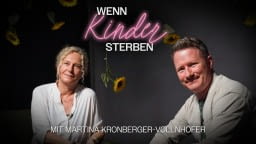
“We do not care for severely ill children, but for children with severe illnesses.” A small difference in wording—and a major difference in attitude. What does it mean when a child may die before their parents? When a diagnosis changes a family’s life from one moment to the next, throwing future plans, hopes, and certainties into turmoil? And how does this also change the way they view their own social environment? In this episode of “Dying Is the Very Last Thing,” Rainer Simader speaks with Martina Kronberger-Vollnhofer, director of the MOMO Pediatric Palliative Care Center, about a subject that contradicts our idea of the natural order of life: children with life-shortening illnesses and the families who accompany them. The discussion addresses diagnosis as a profound turning point, as well as withdrawal, loneliness, and being overwhelmed. But it is equally about vitality, closeness, hope, and the question of how much life is possible even at the end of life. Martina Kronberger-Vollnhofer offers insights into pediatric hospice and palliative care and explains what support ill children, their siblings, and their parents need. She describes how tiered hospice and palliative care for children, adolescents, and young adults works, and why respite is so crucial for affected families. One thing becomes especially clear: Children do not die more easily than adults. And those who accompany them remain learners throughout. A striking image from the conversation describes families with children suffering from life-shortening illnesses as travelers on a long, exhausting journey. What they need are rest stops: places where they can pause, catch their breath, regain their strength, and hand over responsibility for a moment. Pediatric hospice and palliative care services can be precisely these kinds of places—important points of contact and, at the same time, a form of prevention against exhaustion. An episode about the unimaginable. About enduring and letting go. About support and relief. And above all, about life—right up to the end. “Dying Is the Very Last Thing”—the talk show about life and its end.
“Wir betreuen nicht schwerkranke Kinder, sondern Kinder mit schweren Erkrankungen.”
A small difference in wording – and a big difference in attitude.
What does it mean when a child may die before their parents? When a diagnosis changes a family’s life from one moment to the next, and future plans, hopes and certainties are thrown into turmoil? And how does this also change the way they view their own social environment?
In this episode of “Dying Is the Very Last Thing”, Rainer Simader speaks with Martina Kronberger-Vollnhofer, head of the MOMO Children’s Palliative Care Centre, about a topic that contradicts our idea of the natural order of life: children with life-shortening illnesses and the families who accompany them.
It is about diagnosis as a profound turning point, about withdrawal, loneliness and being overwhelmed. But equally about vitality, closeness, hope and the question of how much life is possible even at the end of life.
Martina Kronberger-Vollnhofer offers insights into children’s hospice and palliative care and explains what support ill children, their siblings and parents need. She explains how stepped hospice and palliative care for children, adolescents and young adults works and why providing relief is so crucial for the families affected.
One thing becomes particularly clear: children do not die more easily than adults. And those who accompany them are always learners, too.
A striking image from the conversation describes families with children suffering from life-shortening illnesses as travellers on a long, exhausting journey. What they need are rest stops: places where they can pause, take a breath, gather new strength and hand over responsibility for a moment. Children’s hospice and palliative care services can be precisely such places – important points of contact and, at the same time, a form of prevention against exhaustion.
An episode about the unimaginable. About enduring and letting go. About support and relief. And above all, about life – right to the end.
Dying Is the Very Last Thing – the talk show about life and its end.
The online talk series “Dying Is the Very Last Thing” addresses questions, problems and topics related to dying, death and grief. These aspects are often neglected or even repressed in our society. As a result, we often lack the necessary knowledge, understanding and experience to deal with them appropriately when we ourselves are affected. In “Dying Is the Very Last Thing”, Rainer Simader (Head of Education at Hospiz Österreich) invites experts, people affected and relatives to share their experiences with us.