A Jacuzzi overhead, hotels on the other side of the wall. “Touristification” is making life difficult for city residents.
Krytyka Polityczna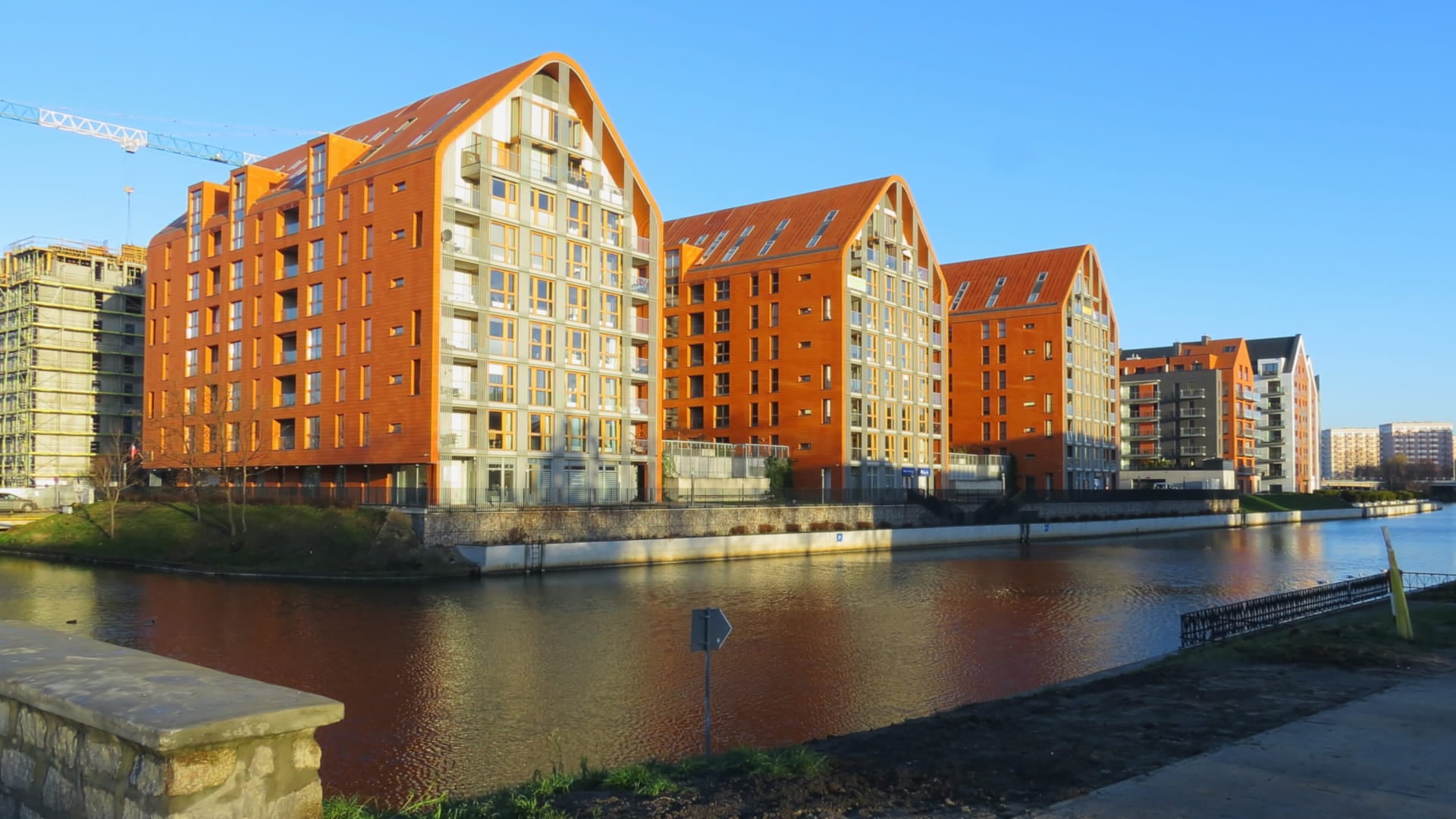
Touristification is an excess of tourism that turns attractive places into ghettos for tourists. Why does a city value someone who books accommodation and eats at an expensive restaurant more than a family with a child that has lived there for generations? The post Jacuzzi above your head, hotels next door. “Touristification” of cities is causing distress to residents first appeared in Krytyka Polityczna.

Ewa Karendys: Is it already time for Polish cities to stop boasting about record numbers of tourists?
Magdalena Milert: They should instead pay attention to quality of life.
Yet none of the Polish cities is as popular as Venice or Barcelona, which are struggling with an influx of tourists and where the slogans “tourists go home!” are appearing.
But that will probably change.
Can we expect the problem of excessively intensified tourism to affect us too?
I expect tourist traffic here to keep growing. The very fact that we are already appearing in various rankings of the most attractive tourist destinations is evidence of this. At the same time, saturation with trampled-over European cities, as well as numerous protests in popular tourist destinations, will make tourists start looking for something else. Besides, for many people, summer heat in Europe will become unbearable and they may choose somewhat cooler places—and Poland is one of them.
But is that a reason to worry?
Yes, because we are already beginning to notice the beginnings of touristification, meaning excessive tourism. Certain areas of attractive Polish cities are ceasing to be oases for residents and are becoming centers of temporary tourist accommodation. They become hollow shells and lose their uniqueness.
Of course, it is not that all tourism is bad. It is certainly an important segment of the economy. We would all feel its possible collapse acutely—just think back to the coronavirus pandemic and the lockdowns at the time. However, we cannot look at tourism through rose-tinted glasses alone. While I understand that cities boast about tourism records because it is a way of promoting themselves, the problem is that cities do not control this tourism development.
If you had to show me one place in Poland where the scale of touristification is most visible, where would you take me?
I’ll spare you Zakopane, but I’ll take you to Kraków’s Main Market Square. We have restaurants there that pride themselves on being Polish, but as a Polish woman I find it difficult to identify with this Polishness. They are such hollow shells: they serve pierogi and other Polish dishes, but it is expensive, the portions are small, and the food is not necessarily of good quality.
If we walked along the market frontage, down Floriańska, Grodzka, or any of the streets leading away from the square, we would see how much these places have changed. Just 15 years ago, there were cafés and pubs where locals spent their time. Today, many of these places are gone. They have been replaced by chain outlets—Starbucks, McDonald’s, or KFC—as well as kebab shops and other fast-food establishments.
Although the city is beautiful and there are more and more tourists, it is difficult to experience what is genuinely Kraków-like?
Yes. This phenomenon can be called different things; most often, people speak of Disneylandization or McDonaldization. Local culture is supposedly still present: in establishments, we see photographs of St. Florian’s Gate or other Kraków landmarks on the walls, except that they hang in a chain fast-food restaurant or clothing store. It is paper-thin localness. You can put it up as decoration and pretend that you are part of the place.
However, cities are slowly beginning to think about the effects of excessive tourism. This is the case in Gdańsk, where residents are demanding the creation of a cultural park in the Main Town. It is proceeding with difficulty because the idea is opposed by restaurateurs who, for example, want outdoor dining areas to remain open as long as possible.
Any solution that brings us closer to creating a framework is good. A cultural park is one of them. Because wherever we observe touristification, residents’ quality of life declines. Noisy outdoor dining areas are a nuisance, although it must also be admitted that residents themselves very often use the nightlife and entertainment offering in the center. Limiting late-night gatherings, however, is entirely reasonable. The same applies to limiting alcohol sales. It is not only about noise but also safety—people “under the influence” are more likely to commit offenses.
And will the new short-term rental regulations that the government has been announcing for a long time bring residents relief?
This law is arriving far too late. Certain damage has already been done. For years, people were able to operate in the grey area; now we are waking up with our hands in the chamber pot. The move toward limiting short-term rentals is a good one, although it probably should be approached more restrictively. And we should recognize that the benefits of such rentals are smaller than the social losses associated with them.
Some cities in Europe and around the world have decided to reach into tourists’ pockets. That may happen here too: next year, more than 1,600 municipalities will gain the option of charging a tourist fee—up to five zlotys per night. Could this be the best solution, so that visitors contribute to maintaining cities?
On the one hand, yes, we should pay the city for the opportunity to use it. On the other, I wonder about the amount of such a fee. I remember traveling quite a lot as a student and feeling the pain of every euro I spent. Perhaps it is worth considering discounts for students? After all, traveling also has an educational dimension, and it would be good if discovering the world involved the lowest possible costs. For someone coming for a lavish bachelor party, a long vacation, or “workation,” an additional fee will not be a significant burden. But for someone counting every penny—it will be.
What else can be done so that the effects of the tourism boom do not affect cities so severely?
I would start with promotion. The message sent outward should be: “we are not a city for bachelor parties!” We also need to focus more on the harms associated with short-term rentals and greater attention from building inspectors.
An example?
I mean monitoring apartments that are being converted. A friend of mine had to sell his apartment because the neighbor above him began renting the property to tourists and installed a jacuzzi in the living room. It was in a new apartment block, on a gated estate, in one of Kraków’s central districts.
A jacuzzi?!
I was surprised too. That is an enormous load on the structure! Imagine living one floor below and wondering whether a huge tub full of water might fall into your living room. That is why I would advocate for more inspections: whether it concerns a jacuzzi, dividing apartments into micro-apartments, or converting basements into “apartments” for tourists.

Has any European city dealt well with such a problem?
Valencia is an interesting example. In residential buildings, tourist apartments may only be located on the ground or first floor, always below residential units. They must also have a separate entrance from the street.
But noise from the ground floor still travels upward. What does this change for residents?
For one thing, new guests do not enter the shared stairwell. Tourists can return at any hour, but they use a separate entrance. They do not pass by neighbors’ doors or drag suitcases along the corridor. This limits everyday nuisances and gives residents a greater sense of privacy and security.
In attractive cities, we are increasingly seeing tourist enclaves. In the case of Gdańsk’s Granary Island, the city assumed that such a prominent location would primarily serve tourists. Officials do not hide the fact that it is not a convenient place for families with children and dogs. But should such valuable land be developed with visitors in mind?
It would be easier for me to understand if the city said: I cannot imagine living with a child in a place with such polluted air or so much noise. But because it is tourist-oriented? That means the city values someone who books accommodation and eats at an expensive restaurant more than a family with a child that has not yet moved to the suburbs.
By setting aside tourist areas, we give visitors something that should primarily serve the local community. To me, this is a complete confusion of priorities! First, let’s create a good place to live, and then invite others to come and see it.
It is residents who create a community, build bonds, and bring urban vitality. Giving entire areas over to tourists reminds me of ghettoization. Instead of a living neighborhood, a hollow shell emerges.
And short-term rentals affect the housing market.
Enormously. They affect housing prices, quality, and even how apartments are designed. It is no coincidence that in tourist locations, units are being created that resemble hotel rooms more than apartments. Such micro-apartments are difficult to treat as places for everyday life. In practice, then, they are removed from the housing pool available to residents.
But short-term rentals also change the entire area. One aparthotel appears, and soon apartments in another building are divided into micro-units for rent. The number of tourists grows, and the surrounding services change with them. More businesses cater to visitors, prices rise, and the area becomes less and less local. This fuels gentrification: rents and the cost of living increase. Someone who has lived in a tenement building for 15 or 20 years eventually has to look for somewhere else. Sometimes because of noise and troublesome neighbors, and sometimes because they can no longer afford to live there.
European cities that want to get the tourism boom under control are trying various solutions: from introducing limits and fees to rewarding tourists for caring about the environment. In Copenhagen, tourists receive free coffee or museum tickets for cycling, using public transport, or picking up litter. Which of these ideas are worth bringing to Poland?
Above all, those that encourage people to support the local community and do something for the place they are visiting. It is important that, in exchange for the opportunity to use the city, tourists also give something of themselves. Not necessarily money, because it could be engagement.
The example of Venice, which charges day-trippers five euros on selected days of the year, showed that fees do not discourage holidaymakers from visiting the city at all.
That’s right, which is why I have reservations about fees themselves. For someone with a lot of money, they will not be a limitation at all. And for someone with a small budget, they may completely close off the possibility of seeing a given place.
Exactly, and today we want to travel more and more, tick off more places, and have experiences. How can we travel more consciously?
I think we can start by not “ticking off” places, but choosing destinations a little more consciously. The opportunities to travel have expanded greatly, while regulations have not kept up. The law is usually reactive: first a problem appears, and only later do we try to solve it. On top of that, social media constantly encourages us to travel. We have an entire sector of travel influencers who promote travel but rarely take social responsibility for the effects of the tourism boom. After all, promoting a place can completely change it.
Conscious travel therefore begins at the planning stage. We can consider whether we really need to go during peak season to the most popular destination, or whether it might be worth choosing a less crowded one. The means of transport, type of accommodation, and where we spend our money also matter. Using local services, restaurants, and shops helps support the economy of the place we visit. It is also worth remembering that the places we visit are primarily spaces where their residents live their everyday lives. Our presence should take their needs and their right to peacefully enjoy their surroundings into account.
On the other hand, there is increasing talk about responsible travel. For example, conserving water and other resources that we use more wastefully during vacations.
The most powerful tool, however, remains limiting the number of accommodation places. If there is nowhere for us to sleep, we probably will not fly to a given place.
Under the new short-term rental law being prepared by the government, local authorities are to be given the option of introducing zones without short-term rentals. The question is whether cities will dare to do so.
I fear that very strong social pressure would be needed for cities to actually decide on such a move. I do not think it will happen, because many people, including those governing cities, rent their apartments to tourists. Introducing restrictions would not be in their interest.
On the other hand, in the general plan, cities must specify the number of accommodation places in a given area. That may be more effective.
Can only strict orders accomplish anything?
I am a supporter of specific regulations that actually regulate something. If we leave something to goodwill, the strongest players will push through their solutions. Unfortunately, here, those who have money and contribute the most to city budgets still largely make the decisions. Without limiting this influence, the weaker side—the residents—will not get a breakthrough. If we do not stand up for them, little will change.
**
Magdalena Milert—a graduate of the Silesian University of Technology. An architect and urban planner. On social media, as @pieing, she talks about spatial planning, architecture, urban planning, and the psychology of space. She emphasizes that a city should be properly made and accessible to everyone, as well as adapted to climate change. Named among Forbes Women 2021. Author of the books: Kursoksiążka mieszkaniowa, czyli jak kupić mieszkanie i nie żałować (2021), Dla kogo jest miasto? Jak stworzyć przestrzeń, która o nas dba (2025) and Miasto przyszłości. Jak technologia zmienia nasze życie (2026).
The post Jacuzzi Overhead, Hotels Next Door. “Touristification” of Cities Troubles Residents first appeared on Krytyka Polityczna.