Milk bars for Berlin. The German left wants to spend more on them than all of Poland.
Krytyka Polityczna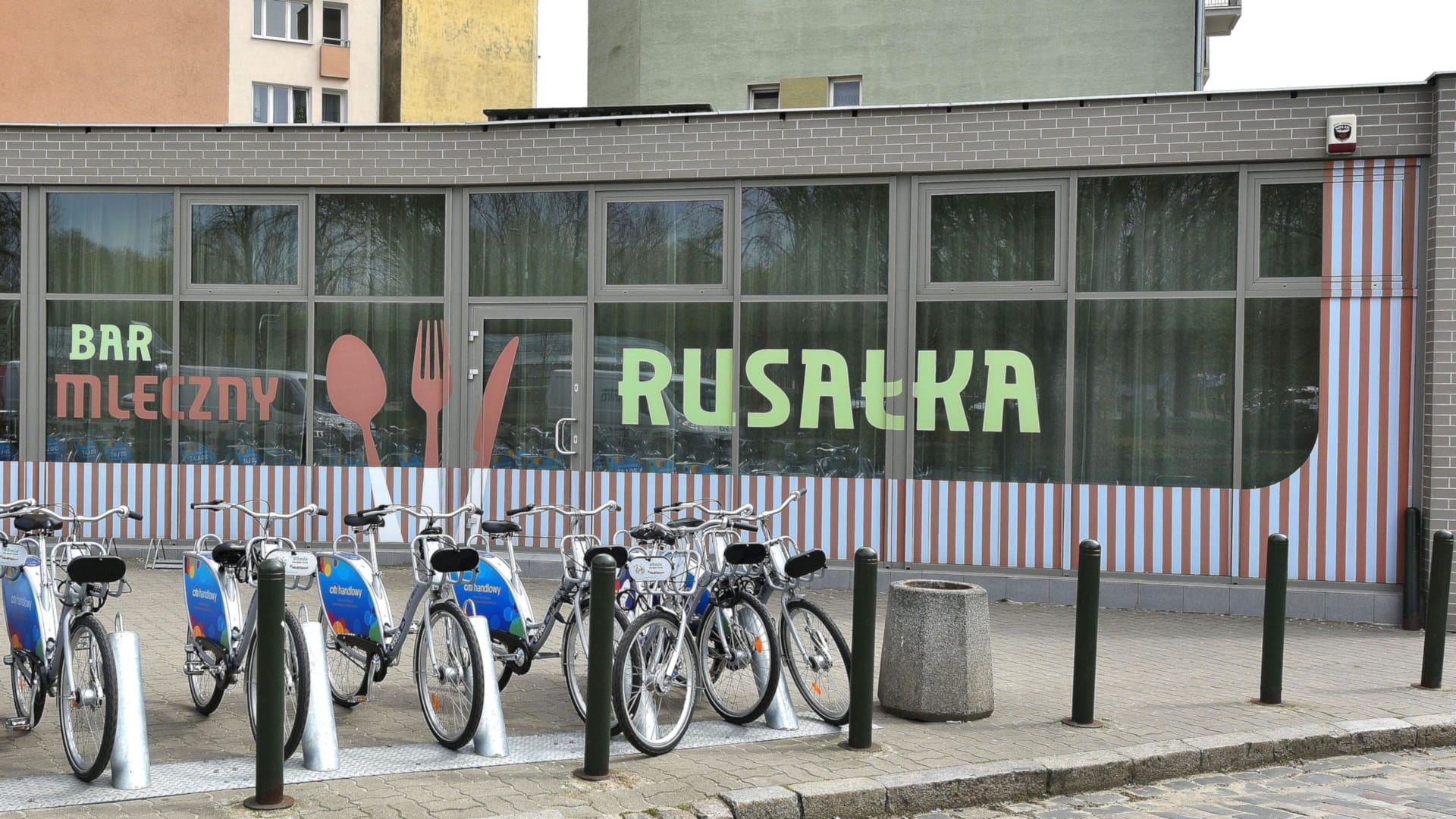
Lunch for three euros, with no proof of poverty and no questions about income. Berlin’s Die Linke wants to open public canteens in residential neighborhoods, citing Polish milk bars as one of its models. The post “Milk Bars for Berlin. The German Left Wants to Spend More on Them Than All of Poland” first appeared in Krytyka Polityczna.
In Berlin, it is difficult today to buy four kebabs for one hundred zlotys. At the Sztuka Mleka milk bar in Warsaw’s Wola district, a family of four gets a whole dinner for that money: a cutlet with mashed potatoes and cabbage salad, Hungarian-style potato pancakes, meatballs with rice, spinach lasagna and four drinks.
It is a few minutes past noon, and the lunch break is beginning. A student orders tomato soup. An office worker with an ID badge around his neck asks for cheese pierogi. Behind the door, on Grzybowska Street, stand the glass office buildings of what was once a working-class district, today the country’s financial center.
In Poland, milk bars are associated with the People’s Republic of Poland, Stanisław Bareja’s Teddy Bear and cheap food for the less affluent. In Berlin, they have become an inspiration for a new social policy. Die Linke, which won the September elections to Berlin’s House of Representatives with 25.7 percent of the vote, wants to open neighborhood canteens in the city, known in German as Kiezkantinen. The cheapest meal would cost three euros. Anyone could walk in from the street, without having to prove that they need help.
In June, the Die Linke group submitted a motion that explicitly named “the milk bars that still exist in Poland” as one of its models. The Berliner Zeitung titled its report on the presentation of the idea Back to socialism?. Since November 2, Die Linke has been negotiating a coalition with the Greens and the SPD. Its candidate Elif Eralp could become Berlin’s first mayor from the party. In a document following the exploratory talks, the three parties wrote: “We want to launch the first neighborhood canteen in the near future.”
Three euros for lunch
Saskia Richartz of Ernährungsrat Berlin, a citizens’ council working for good food, advised Die Linke while developing the project and visited Warsaw’s milk bars herself. As she says, cheap meals can be obtained in Berlin primarily at charitable institutions, for example at lunches for seniors or at Die Arche, an organization helping children. A tourist or someone working in a nearby office would not go there. A canteen could help older people “get out of the house and not eat the nth slice of bread with cheese alone at home.” A survey commissioned by Ernährungsrat found that roughly one in ten Berlin residents skips meals when they lack money.
Niklas Schenker, a Die Linke member of parliament, names as an inspiration alongside Polish milk bars the municipal soup kitchens opened in Istanbul by its now-imprisoned mayor Ekrem İmamoğlu. In New York, Mayor Zohran Mamdani is building municipal grocery stores.
Die Linke’s motion envisages three stages. First, the city would subsidize existing kitchens; then it would invite tenders for new canteens, preferably in public buildings. In the third phase, a public institution modeled on Studierendenwerk, which operates Berlin’s student cafeterias, would be established. The party wants to allocate 19 million euros annually for this. Schenker spoke in the House of Representatives of 20 million euros, which would be enough for at least 20 canteens serving around 14,000 meals a day.
“In the initial phase, we assume that an average subsidy of four euros per meal will be necessary. This includes collectively agreed wages, good working conditions and regional purchasing,” Schenker wrote in response to Krytyka Polityczna’s questions. The customer would therefore pay three euros, while the actual cost of the meal would be around seven.
More than for all of Poland
Poland’s 2026 budget law allocates 70.7 million zlotys in subsidies to milk bars. That is around 16 million euros. The Berlin project provides for more than 80 million zlotys annually for a single city. In Poland, however, the state subsidizes only specific ingredients, while in Berlin the money would also cover wages and the operating costs of the canteens.
Ola Fritz, co-owner of Sztuka Mleka, remembers the milk bars of her childhood as dirty and smelly places. Later she worked in corporate banking and ate at Bambino on Hoża Street, where pensioners, drunks and men in suits stood in the same queue. Looking for an idea for a new career, she wondered what could be cooked from subsidized products.
The subsidy covers only raw ingredients listed in a regulation issued by the finance minister, including butter, flour and carrots. The state reimburses 70 percent of their value, increased by a margin that cannot exceed 45 percent. Meat, fish and ready-made products are not on the list, although meat dishes have long been on milk-bar menus. In Hungarian-style potato pancakes, then, the state subsidizes the potatoes but not the meat. Apples are on the list; pears and yeast are not.
Fritz says that sometimes you have to laugh about it. Her employees peel potatoes themselves in the morning because prepared products are not covered by the subsidy. Without the subsidy, Fritz estimates, she would have to raise prices by 20–30 percent. Today she runs three establishments with her business partners, and a fourth is to open on Chmielna Street.
In autumn 2024, Fakt reported that Donald Tusk’s government wanted to reduce subsidies to milk bars in the 2025 budget by around 10 million zlotys. Finance Minister Andrzej Domański assured viewers on Polsat News: “It is absolutely untrue that the subsidy for milk bars will be drastically reduced.” He explained that after nine months the bars had used around half of the money allocated to them.
Real estate may prove to be Berlin’s biggest problem. Richartz says it would be difficult to maintain cheap canteens in premises rented at market rates. She therefore proposes using spaces that already belong to the city, such as cafeterias in courts and police buildings, also opened to nearby residents, or commercial premises owned by housing companies on large estates built in the 1960s. Die Linke’s motion also assumes that a pilot public canteen would cook for three to five nearby schools.
Pierogi as a sign of protest
Bar Prasowy on Marszałkowska Street opened in 1954. It closed at the end of 2011. The previous manager retired, and the district wanted to rent the premises to someone else. Activists then entered the bar and began cooking pierogi as a sign of protest. After several hours, the police arrived. The protest worked, however. The district announced a tender for operating exclusively a milk bar, with a minimum rent of 12 zlotys per square meter instead of the usual 60 zlotys. Kamil Hagemajer and his partners won the tender.
Today Hagemajer, a former financial analyst, is the president of Jadłodajnia Centralna and runs 25 milk bars, 22 of them in Warsaw. We meet at Prasowy; he is wearing a beige jacket and a bright turquoise shirt. At Prasowy, the state subsidizes the food and the local government provides preferential rent. Hagemajer says that subsidies account for around 40 percent of his company’s revenue. Around 500 people work in his bars. As he told the XYZ portal in August, Poles make up around 15 percent of the staff, while a large proportion of the employees are from Ukraine. In a conversation with Krytyka Polityczna, he points out that local governments can protect such places by making attractive premises available to socially minded entrepreneurs.
A pensioner and a manager at the same table
Hagemajer remembers the days when milk bars were seen as places for the poor. Some people did not want to go there because merely visiting one could reveal that they could not afford a restaurant. Then young people with laptops and residents of fashionable districts began appearing. Other guests decided that if hipsters were coming, things could not be so bad.
Today, a pensioner pays the same for tomato soup as a manager. No one checks incomes or requires certificates. Hagemajer sees the political strength of the milk bar in this. The Berlin project is also meant to work this way. Those who can afford more will therefore also benefit from the subsidy. Supporters consider this an advantage because no one divides customers into those in need and everyone else.
Dr Magdalena Tomaszewska-Bolałek, head of Food Studies at SWPS University, recalls that Polish milk bars have a history of more than a century. The first was established in Warsaw in 1896. In the People’s Republic of Poland, bars were “much cheaper than restaurants” and at least from time to time relieved working women of cooking. Today, as the researcher writes, they are used by seniors, students, lecturers, tourists and children whose schools do not have cafeterias. “They are not expensive, but preparing them takes a lot of time (e.g. pierogi), and today, as we know, this is a resource that we are very short of,” she writes about Polish dishes.
Berlin is short of billions
The Senate, the city government, expects a deficit of around 4.6 billion euros in 2026. In the document from the exploratory talks, the three parties acknowledge that the budgetary situation is bad. They want to finance new spending “through reallocations,” that is, by taking money away from other budget items. The document contains neither the sum of 19 million euros, nor the price of three euros, nor an indication of where the first canteen would be established.
Die Linke argues that, with city spending of around 44 billion euros, this amounts to approximately 0.05 percent of the budget. At the end of October, more than 70 organizations and experts signed an open letter calling for the canteens to be included in the coalition agreement and the budget. “If cheap food is written on the banners, then you also need to have money for it,” says Richartz. She does not insist on the price of three euros, however. If the cheapest meal cost four euros, she would not consider it a failure.
Tomaszewska-Bolałek qualifies that she is not very familiar with German social policy. In her view, “the cultural context of Polish milk bars certainly cannot be copied,” especially that of the People’s Republic of Poland, preserved in films such as Teddy Bear. Hagemajer has already spoken with Ernährungsrat Berlin and viewed premises in the German capital. He does not rule out opening his own bar there if the rent and conditions are suitable. In that case, the first such canteen in Berlin could be opened by a company from Warsaw.
The post Milk bars for Berlin. The German left wants to spend more on them than all of Poland first appeared on Krytyka Polityczna.