Innovative toast bread, or the Czech Republic one year after the elections
Krytyka Polityczna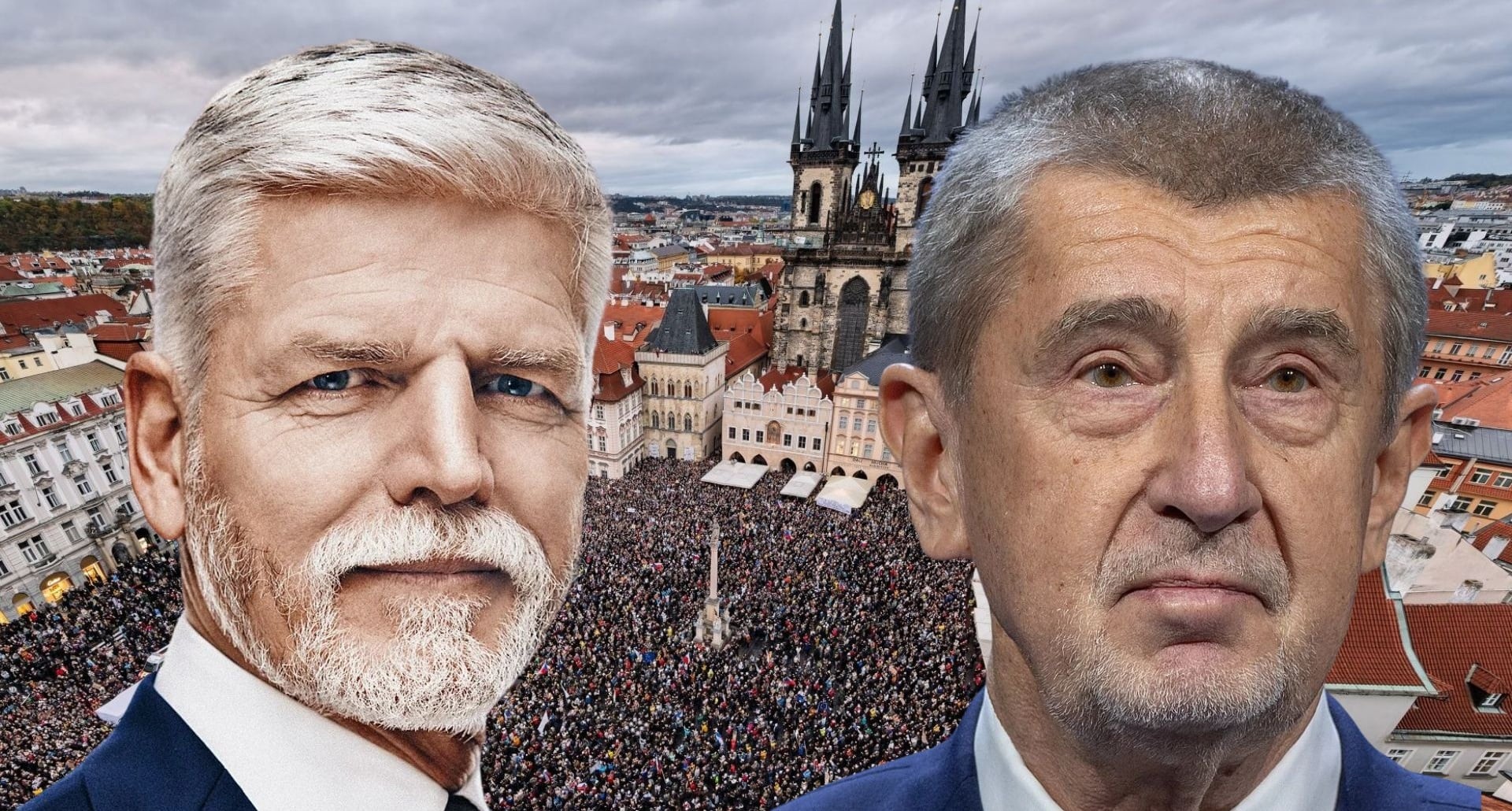
Andrej Babiš’s government’s idea for funding public media has brought a record number of protesters onto the streets of Prague, but despite this, a political breakthrough is unlikely. The post “Innovative Toast Bread, or the Czech Republic One Year After the Election” first appeared on Krytyka Polityczna.
On Sunday afternoon, November 14, the largest political demonstration in the history of modern Czechia took place on the grounds of Letná Hill, located near Prague Castle. The participants, who according to the organizers may have numbered as many as 450,000, demanded that the government of Andrej Babiš withdraw from plans to abolish the radio and television license fee. At the end of October, the bill introducing these changes was passed in the Chamber of Deputies during a night session that departed considerably from the standards of debate and parliamentary procedure. The vote itself took place at 4:36 a.m., which subsequently became a symbol of the protests against the reform.
Far from the capital’s artisan bakeries
On Sunday, I watched with interest as representatives of Prague’s upper middle class left specialty coffee shops and artisan bakeries in the wealthy district neighboring the demonstration site, and then headed to the event grounds, where designated sectors with large screens awaited them. The image of absolute order was completed by neatly aligned portable toilets and broadcast vans, as well as bored police officers directing traffic. For someone who remembered the KOD demonstrations from the beginning of PiS rule, this display of both justified and harmless liberal outrage must have seemed familiar.
Andrej Babiš is, however, a politician far removed from the world of artisan bakeries—literally and figuratively. The prime minister’s new corruption scandal does not concern an artisan bakery, either. According to the European Public Prosecutor’s Office, the company Penam, belonging to the food holding company Agrofert—the crown jewel of Babiš’s business empire—was allegedly to have fraudulently obtained an EU subsidy for an innovative line producing toast bread. It turned out that although the new production method did indeed improve efficiency, the technical solutions used had been copied from a factory in Germany also belonging to Agrofert, without spending a single penny on the promised research and innovation.
As for the metaphor, there is no indication that bringing even the whole of Prague into the streets could shake the position of the prime minister, whose electorate for the overwhelming majority does not live in the capital and who has a poor opinion of liberal and affluent Prague residents. At first glance, the situation appears different with regard to the local elections held at the beginning of October, which the ruling ANO decisively lost. However, the specifics of the Czech administrative division and electoral system call for caution when approaching these results.
A system of broad coalitions
Although this year’s elections involved choosing municipal councillors and councillors for Prague’s 22 districts, in many places electoral competition was merely a formality. There are as many as 6,254 municipalities in Czechia, almost 400 of which have fewer than 100 inhabitants. In proportion to the country’s size, Czech municipalities therefore correspond more closely to Polish villages, and their small size often makes it impossible to finance basic tasks, let alone foster any kind of political life. As a result, only one list was registered in the elections in as many as one-third of municipalities, while elections did not take place at all in five municipalities due to a lack of candidates.
The second distinctive element is the structure of local government administration inherited from the time of Emperor Franz Joseph, in which only municipal councils (zastupitelstva) are elected, while collegial executive bodies (rady) and mayors are elected indirectly. This system, similar to those in Germany and Austria, encourages the creation of broad coalitions that do not always reflect nationwide divisions or the will of voters. Particularly in large cities, winning or losing the elections themselves need not at all mean gaining or losing power.
At the same time, elections for senators took place in 27 districts, also ending in a resounding defeat for ANO. The idea, transplanted from the United States, of replacing one-third of the Senate every two years is difficult to compare, however, with the thrilling contests known from Texas or Michigan. The main reason is the upper chamber’s limited powers. Suffice it to say that lacking a majority in the Senate did not hinder Babiš from governing either in 2017–2021 or today. The requirement of obtaining an absolute majority in elections for senator means that a second round of voting is usually necessary, held on a date not combined with other elections. In repeat votes, turnout rarely exceeds 20 percent. This was the case, for example, in Karviná, located in the Cieszyn Silesia region and considered an ANO stronghold, where Babiš’s party candidate lost by 700 votes with turnout amounting to just 13.15 percent.
Although the opposition had reasons to celebrate, and the prime minister himself called his party’s result catastrophic, in the final analysis the electoral test changed little, at least at the level of nationwide politics. Given the specifics of local elections and low turnout in Senate elections, it was not a reliable poll of party preferences either. According to the polling average, the prime minister’s party remains the strongest grouping, with a result approaching 30 percent.
At the same time, the entire populist-right-wing governing camp and the liberal-conservative opposition camp enjoy roughly equal support. As usual on the fragmented Czech political scene, ultimate success will therefore depend on how many votes for smaller parties are lost below the electoral threshold. In any case, the elections are still three years away.
Czech politicians admire Polish Television
Let us return for a moment to last week’s protest. Czech public media, known for their independence and a level of substantive quality rarely encountered in this part of Europe, are a thorn in the side of many politicians who would like a model closer to the realities of Poland, Slovakia, or Hungary. In Prague, the changes made two years ago by Robert Fico’s government to Slovakia’s public media, which led to their complete subordination to the government, were followed with attention and concern. In the common view, abolishing the license fee and switching Czech Television and Czech Radio to budgetary funding is intended precisely to limit their autonomy. The government, naturally, denies these accusations.
Nationwide protests against the reform are coordinated by the association Milion chvilek pro demokracii, which has organized mass demonstrations against Babiš since 2018. They are usually a response to some action by the ANO government and focus on pro-European, anti-corruption, or pro-Ukrainian slogans. Although turnout successes such as that of November 14 certainly contribute to mobilizing the liberal electorate, the protest model itself has become a familiar and permanent element of the Czech political scene.
It is also possible that, under the influence of the protests, the prime minister will withdraw his proposal to change media funding or decide to postpone consideration of the bill until a more convenient time. Such a volte-face would not be particularly surprising. For a year now, Andrej Babiš has once again been doing what he does best—changing his views like gloves and cannibalizing his coalition partners. After successfully consuming the left-wing electorate a decade ago, the ANO leader turned his attention to the far right.
Polarized but stable
During the first year of their shared rule, the coalition Civic Democrats and Tomio Okamura’s SPD were permanently marginalized. While the Motorists had to give up the ministerial appointment of their MEP Filip Turek, who had a considerable trail of scandals behind him, the SPD received the prestigious but largely insignificant position of speaker of the Chamber of Deputies. Most ministerial positions belonging to the coalition partners were taken by nonpartisan experts.
The spectacular announcements therefore ran up against the pragmatism of a prime minister who will not allow the far right to gain too much influence over power or harm Czechia’s position in the EU too much. He made this clear publicly. When the leader of the SPD called Ursula von der Leyen “insane” several months ago, Babiš, asked about it, observed with disarming candor that the president of the European Commission probably did not even know who Okamura was, and that he had no intention of informing her on that matter. The implementation of the coalition partners’ hawkishly anti-Ukrainian agenda looks similar. The SPD’s latest “great success” was blocking the departure of a Czech military orchestra for Ukraine.
Add to this the high and stable approval ratings of President Petr Pavel, widely regarded as Babiš’s main counterweight and a staunch advocate of a pro-Ukrainian course, and an image emerges of a political scene that is as polarized as it is stable, if not downright boring. After the first year of the oligarch prime minister’s second government, everyone is playing their assigned roles—both the liberal “defenders of democracy” and the right-wing “tribunes of the people” can make their mark. It is only a pity that in this performance there is no room for any left wing.
I dedicate this text to the memory of Patrik Eichler (1984–2026)—an insightful expert on Central European politics and the last Czech social democrat.
The post Innovative toast bread, or Czechia a year after the elections first appeared on Krytyka Polityczna.