When Tomorrow May Not Come: How War Accelerates Love and Breakups Among Ukrainian Soldiers
Krytyka Polityczna
For their first date, Bohdan brought a pistol, while Kateryna came with a knife. After a few days, Nastia was already in a relationship; three months later, she became pregnant. A report on love on the front line and how war warps time. The post When There May Be No Tomorrow: How War Accelerates Love and Breakups Among Ukrainian Soldiers first appeared on Krytyka Polityczna.

Wład: On Monday, we were supposed to evacuate people from Kramatorsk. We planned a route through courtyards, along the apartment blocks, because the metal doors to the stairwells can save lives. You can leave the car and run inside. We enter the city. A nine-story building has been burning for many hours. Several firefighters are running around it, but without fire engines, because all around us, incessantly…
Anna: …drones are flying. It’s tense, even by our standards. We stop to listen. We have a radio-signal drone detector that intercepts the image from the drone—we see the same thing as its operator. But it doesn’t detect fiber-optic drones; you have to locate them by sound. Suddenly we hear the whistle of a bomb. We get out of the car and lie down on the ground.
Wład: The bombs are pounding. One, two, three. Immediately afterward, as usual, the drones buzz. I shout: “Ania, let’s run there, between the fence and the building.” We push through the bushes; she cuts her finger. We run through an open metal door and see a sign: “6,000 volts.” We are in a transformer station. There probably isn’t any electricity. Or at least we decide to believe that.
Anna: We have no contact with the people we were supposed to evacuate from the city. They were active on WhatsApp two days earlier. We don’t know whether they’re even alive.
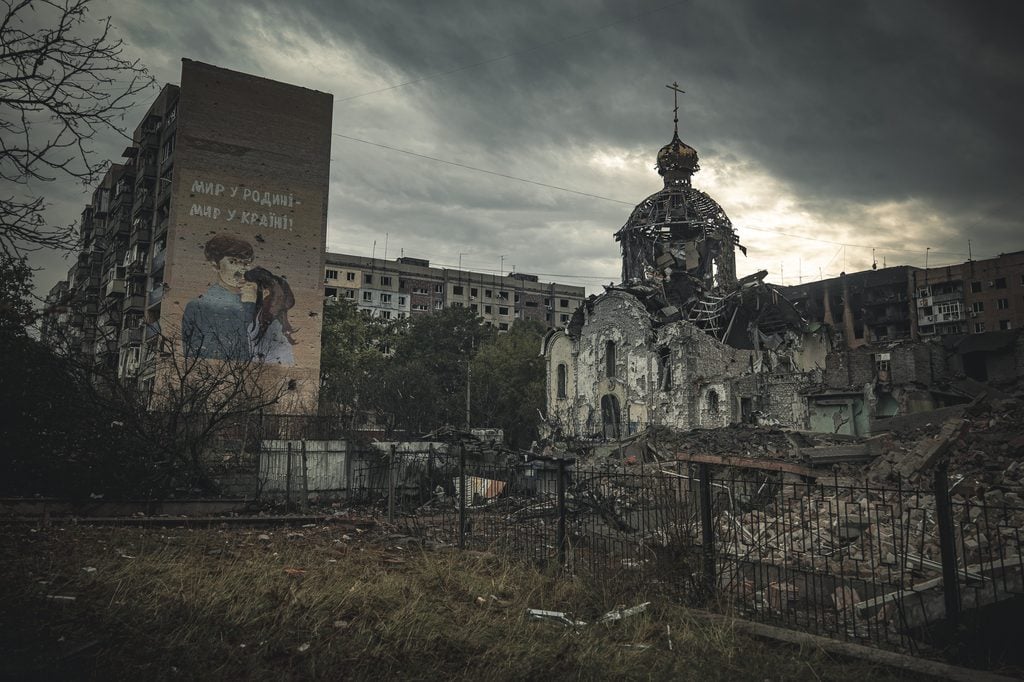
Wład: We drive on. On the map, the courtyard looked different; in reality, it consists of rubble, concrete, and fragments. We get out of the car and run across the open street. We jump through two buildings, from one stairwell to the next. People leave them open, wedging a stone or brick under the doors. But not everyone does. Some are so distrustful that they lock themselves inside.
Anna: We reach the agreed meeting place. We hear drones again, so we hide everyone inside the building. One woman is shaking all over. I take her by the hand.
Wład: She has a cat and a parrot with her.
Anna: The cat is hers, while the parrot belonged to the neighbors. When they left, they said that, if necessary, she could release it. But she decided to take the bird with her. There is also a blind woman. The worst are those who cannot walk. We carry them to the car, knowing that, above all, we ourselves cannot allow ourselves to be killed.
Wład: We load them into the car and drive to pick up more people.
Anna: Drones, bombs, drones, bombs. Both have Down syndrome. The man starts vomiting from stress. They endure the journey bravely, although they are exhausted. Finally, our car breaks down as well. When we deliver them to a safe place, they hug us for a long time and tightly. And we go to the apartment, drink magnesium, and lie down on the sofa. When we hear explosions, we only groan: why?
War is like a glass of cloudy water
Anna and Wład are a couple. They met at the foundation where they both work on evacuations.
Anna: I wanted to join an evacuation team, but I had no experience. It is harder for women to get such a job.
Wład: It involves physical exertion, but Ania is fitter than more than one man in an evacuation jacket.
Anna: Finally, the boss allowed me to work with Wład. We went to the area around Sloviansk. A village of several dozen destroyed houses, beautiful trees with yellow leaves. And a skinny cat. I shared my lunch with it. It smacked loudly. I think it was some kind of sublimation. At times like that, I feel sad. You can take one or two cats, but not all of them.
Wład: We have four now.
Anna: We clicked on our third trip. I can do many more things with Wład. When I want something, he says: “We’ll do it together.” I wouldn’t make such courageous decisions on my own. Sometimes I hesitate and Wład doesn’t. Other times, the opposite. Sometimes we argue. One unnecessary word is enough.
Wład: We are driven by adrenaline, chronic stress, and everything else. It’s important to notice this and communicate.
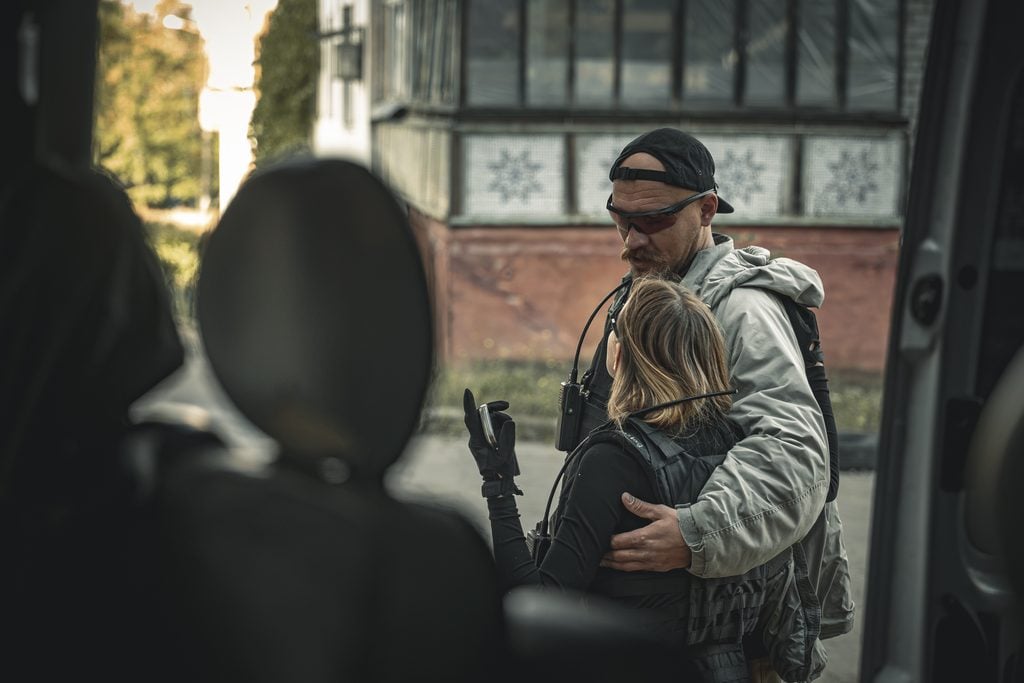
Anna: I know when Wład is stressed. And Wład knows when I am. When we have time off, we go camping. We sunbathe, sit by the campfire, meditate. But there is no such thing as work-life balance.
Wład: War is like a glass of cloudy water. The first weeks are difficult, and over time the sediment begins to settle and everything becomes clear. Who someone is, whether you can count on them, what they stand for.
Anna: In peacetime, you never fully know how your partner will behave in an extreme situation. During war, you find out very quickly.
Wład: We are afraid for each other. But we don’t wind each other up, because it doesn’t help.