“Croatia has benefitted considerably from EU membership”
New Eastern Europe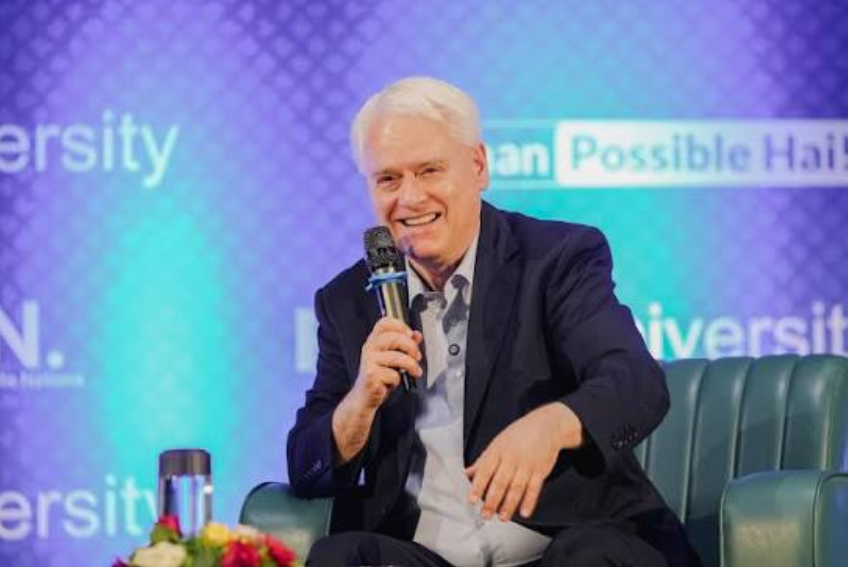
An interview with former Croatian President Ivo Josipović on Yugoslavia, European integration, reconciliation and the role of culture. Interviewer: Tunacan Tuna.
Few political figures have pursued careers as varied as that of Ivo Josipović. President of Croatia from 2010 to 2015, Josipović is also a distinguished legal scholar and composer whose professional life has unfolded at the intersection of law, music and public service.
Having witnessed Yugoslavia’s dissolution and later serving as president during Croatia’s accession to the European Union, Josipović brings a perspective shaped by both personal experience and political responsibility.
In this interview, he reflects on the legacy of Josip Broz Tito, the conflicts and reconciliation efforts of the former Yugoslavia, Croatia’s European integration, and the future of European identity. He also discusses the role of culture in bringing societies together and his continuing commitment to academic and artistic work.
TUNACAN TUNA: You have pursued a career as a composer, a law professor, and a politician. How have these different fields informed and enriched one another?
IVO JOSIPOVIĆ: I am originally a lawyer and a composer. I studied at both the Faculty of Law and the Academy of Music in Zagreb, and for practically my entire life I have pursued two parallel professions. At the Faculty of Law, I taught Criminal Procedure and International Criminal Law, while at the Academy of Music I taught Harmony. My legal expertise also helped me, after Croatia gained independence, to establish a new model for the operation of the copyright collective management system.
The combination of law and music also led me to choose the subject of my first opera. It deals with the murder of the famous musician John Lennon. As a lawyer, I was intrigued by the question of how and why someone like Mark David Chapman, who admired Lennon so deeply, could decide to kill him. I transformed the murder and the relationship between Chapman and Lennon into music, based on an excellent libretto by Professor Marina Biti.
You grew up in Yugoslavia, lived through its dissolution, and later became president of an independent Croatia. You have previously spoken about appreciating the positive aspects of the Tito era in your youth, while coming to understand its undemocratic features more fully later in life. Did serving as head of state yourself change your view of Tito and the system he established? How do your personal memories relate to your historical assessment today?
Yugoslavia was a country which, contrary to what many people claim today, enjoyed the support of a significant majority of its citizens for a long time.
It was destroyed by nationalism and Slobodan Milošević’s project of creating a Greater Serbia, but also by the inability to transform its one-party political system into a western-style democracy in due course.
Tito was a major political figure, the leader of the strongest resistance movement against Nazism and fascism in occupied Europe. He also played an important role in international diplomacy. One of his achievements was raising a country that had been completely devastated by war to a significantly higher level of economic and cultural development. He also protected Yugoslavia from Stalin and his ambitions to subordinate the country as part of his military and political bloc.
Yugoslavia differed considerably from other socialist, or, as some would say, communist countries. However, Tito was not a democrat, either in terms of his model of government or the way he ran the country.
From today's perspective, Tito was a historical figure with significant achievements that deserve recognition and respect. However, he also bears considerable responsibility for serious mistakes in the country's democratic development.
Had he possessed the political will to undertake a democratic transformation towards a multiparty system, perhaps Yugoslavia would not have met the fate we witnessed during and after the wars of the 1990s.
My assessment of Tito has not changed significantly. Even today, I recognize his historical role and achievements, particularly in the struggle against Hitler and Mussolini, but I also recognize the substantial democratic deficit which ultimately became a serious burden for Yugoslavia and the states that emerged from its dissolution.
Yugoslavia was a federal state, whereas the European Union has a different legal and political structure. Bearing that distinction in mind, has living through Yugoslavia’s dissolution influenced your view of Europe’s future? What, in your view, enables different national identities to coexist within a shared political framework, and are there lessons from the Yugoslav experience that the EU should consider?
I would certainly not draw any conclusions about a possible dissolution of the European Union from the breakup of Yugoslavia.
I am a strong supporter of the EU. I believe that its development should gradually move towards a confederal structure resembling a “United States of Europe”.
Without greater unity, while preserving the distinctiveness and national identities of its member states, Europe cannot remain competitive with the United States, China, or even Russia and other major economies.
There is, of course, also the security dimension. Europe must not depend on anyone else for its security, including the United States.
The former Yugoslavia collapsed because of nationalism and Slobodan Milošević's Greater Serbia project. That project provoked justified resistance from the other members of the Yugoslav federation, to which Milošević responded with ruthless military aggression. However, it also generated other nationalisms, which likewise had serious negative consequences.
I do not believe that the scenario of Yugoslavia's dissolution threatens the EU. Despite certain fluctuations and crises, I believe the EU will move towards a model of organization that will enable it to turn all its comparative advantages – its large population, strong industry, science and culture – into the foundation of a genuine European superpower.
In 2010, you joined Muslim and Catholic religious leaders in commemorating the victims of war in Ahmići and Križančevo Selo. During the same visit, your remarks to the parliament of Bosnia and Herzegovina drew criticism from some political quarters in Croatia. Is there a particular encounter or conversation from those days that has stayed with you? Do you believe that a leader’s acknowledgement of past suffering can change the level of trust between communities? In a world where wars continue, what does your own experience suggest are the principal forces that draw societies into conflict, and the greatest obstacles to lasting peace?
I would like to correct one point. I was not someone who joined religious leaders at the sites of mass atrocities in Bosnia and Herzegovina. Rather, I was the one who, for the first time, brought them together, along with politicians representing different ethnic communities, so that we could jointly commemorate the victims – Bosniak, Serb and Croat alike.
In the parliament of Bosnia and Herzegovina, I was critical of Croatia's previous policy towards Bosnia and Herzegovina. That policy, however, was ambivalent.
On the one hand, part of the Croatian political establishment entertained ambitions of annexing certain parts of Bosnia and Herzegovina, and Croatia was also militarily involved in the conflict between Croats and Bosniaks. On the other hand, Croatia provided shelter to an enormous number of refugees from Bosnia and Herzegovina and also supplied substantial quantities of weapons to the army of Bosnia and Herzegovina.
Ultimately, the agreement between Croatia and Bosnia and Herzegovina, reached by presidents Franjo Tuđman and Alija Izetbegović, contributed to victory over Milošević's aggression.
Today, I believe that the problem does not lie in relations between Croatia and Bosnia and Herzegovina, but rather in internal political conflicts within Bosnia and Herzegovina and in the inadequate arrangements established by the Dayton peace agreement.
During my presidential term, Croatia's policy towards Bosnia and Herzegovina changed considerably. Relations between the two countries, as well as relations with Serbia, reached a significantly higher level.
The prevailing position in Croatia had become unequivocally clear: Bosnia and Herzegovina is a sovereign state, and its internal affairs should not be subject to interference.
I should also point out that Croatia has national minority communities, including Bosniaks and Albanians who are mostly Muslims. Their members are strongly integrated into our society and can often be found in highly responsible positions in government, business and cultural life.
I was particularly proud when I heard our mufti state that Muslims in Croatia enjoy one of the best positions compared with Muslims in other European countries.
EU membership is sometimes seen as a “saviour” capable of resolving a country’s problems. To what extent has Croatia’s experience borne out – or challenged – that expectation? What do you see as the main changes in citizens’ everyday lives that can be attributed to membership, and in which areas do a country’s own choices and institutions remain decisive?
I consider December 9th 2011, the day on which I signed the Treaty of Accession of Croatia to the European Union together with Prime Minister Jadranka Kosor, the most important day of my political career.
Naturally, just as we critically examine our own country, Croatia, and its qualities, we do the same when it comes to the European Union.
The EU is not perfect and is frequently the target of extreme criticism, particularly from politicians who are not truly committed to the European idea.
Nevertheless, I believe it is indisputable that, through the reforms undertaken during the accession negotiations and the adoption of European values, Croatia has become not only a better state but also a better society.
There is something else worth emphasizing: Croatia has benefitted considerably from EU membership, both financially and economically.
The fact that our citizens have not regretted joining the EU is best demonstrated by the fact that approximately the same proportion of the population supports our EU membership today as did in the referendum in which we decided to join.
How do you view the relationship between Croatia’s achievement of independence and its subsequent decision to share certain decision-making powers with EU institutions?
I do not believe that Croatia has lost anything by transferring part of its sovereignty to the institutions of the European Union. On the contrary.
We have gained the opportunity to participate in decisions affecting a community of approximately 500 million people. New doors have opened for cooperation with European countries and peoples, and the economic benefits are clearly visible.
After all, if membership of the European Union did not suit us, or if we felt that the EU was harming us, we could easily decide to leave, just as the British did.
The example of the United Kingdom demonstrates that this would be a major mistake. This is now increasingly recognized in Britain itself, where there is growing discussion about the possibility of returning to the EU.
When you consider Europe’s future, do you believe that economic and legal integration are sufficient to create a shared sense of belonging? As a composer, do you see a meaningful role for culture and the arts in this process?
It is true that culture is a powerful bond within the European Union.
Today, through both travel and the media, people are getting to know one another better, particularly younger generations. Furthermore, opportunities for young people to study anywhere in Europe contribute significantly to strengthening their sense of European identity.
I believe that one of the most important responsibilities of the European Commission, as well as national governments, is to strengthen European identity, based on the concept of dual identity.
I will always be a proud Croat, but I am equally proud to be a European. I believe that an increasing number of people, particularly young people, feel the same way today.
What place do composition, academic work, and political activity hold in your life today, and what is the nature of your continuing relationship with the Social Democratic Party of Croatia (SDP)? Now that you look at Croatia from outside the presidency, have your priorities for the country’s future changed?
Today, I am Professor Emeritus at the University of Zagreb, and I continue to teach at the Faculty of Law as part of its doctoral programme.
I travel extensively and frequently receive invitations from many countries to participate in conferences and various projects. And, of course, I continue to compose music.
I hope that, in the foreseeable future, I will write a new opera commissioned by Baku.
I am no longer politically active, although I remain a member of the Social Democratic Party, primarily because of my family's and my own personal ties to the idea of social democracy. However, I do not participate in party activities.
Naturally, whenever the SDP comes forward with a good initiative, I am happy to support it publicly.
Croatia has made considerable progress in many respects, but in certain areas it has also taken a step backwards compared with the situation ten to fifteen years ago.
Above all, the problem of corruption has resurfaced, along with certain retrograde ideas reminiscent of the period when Croatia, a country with an exceptionally strong anti-fascist movement, was governed by the pro-Nazi Ustaše movement.
Nevertheless, I believe that these are temporary problems and that Croatia, regardless of which political party is in power, has a stable democracy and the strength to address some of the important challenges it faces.
I believe that EU membership offers Croatia significant opportunities for development and that we will know how to make good use of them.
I see my potential contribution to Croatia in using the many contacts I have abroad, as well as within the country itself, to support our economy and, in particular, Croatian culture.
Naturally, I also hope that my professional work in the field of law and my artistic work will leave at least a modest mark.
I sincerely thank President Ivo Josipović for sharing his experiences, reflections and hopes for the future so openly and generously in this conversation.
With a career spanning politics, law and music, Ivo Josipović illustrates how a public figure’s contribution to society can extend beyond the years spent in office.
His continued academic work and musical composition after the presidency also underline the enduring role of knowledge and culture in public life. Taken together, his reflections on historical responsibility, European cooperation and cultural exchange suggest how experience across different disciplines can enrich public dialogue.
Ivo JosipovićIvo Josipović is a Croatian academic, jurist, composer, and politician who served as the president of Croatia from 2010 to 2015.
Tunacan Tuna is an Istanbul-based cultural journalist and researcher focusing on Balkan and Ottoman cultural heritage. His previous essay for New Eastern Europe, “Everything could be shared, except the name of God”, appeared in July 2026.