Women and the climate crisis: an unequal struggle
Kapitál
Women are more vulnerable to the effects of climate change than men. The reasons include economic, social, and structural inequalities. This vulnerability has many consequences—it is reflected in the care of children and families, as well as in the higher incidence of gender-based violence.
Women are more vulnerable to the consequences of climate change than men. The reasons are economic, social, and structural inequalities. This vulnerability has many consequences – it manifests itself in caring for children and families, as well as in the higher incidence of gender-based violence.
Tulsija was mostly quiet during the day. She carried out her work diligently, as if she were not even pregnant. To this day, I do not know how she managed to sit on a low wooden stool about twenty centimetres above the earthen floor and spend an hour preparing chapatis for the whole family. I met Tulsija in an Indian village in the state of Rajasthan when I was working on the book The Women Who Stayed. It happened several years before I became pregnant myself, so I was unable to estimate exactly which month of pregnancy she was in. However, it was clear that she could no longer feel comfortable carrying litres of water on her head from the well to the house or cooking.
Tulsija gave birth two days after our first meeting. The contractions began in the dead of night during a monsoon storm. Since her husband was working in another part of Rajasthan at the time, her husband’s brother drove her to the nearest clinic – on a motorcycle along broken roads. The clinic was without electricity not only during the night but also the following day. She went through the birth and recovery in hot, humid air without air conditioning or a fan.

Pregnant women are among the population groups most at risk from the consequences of the climate crisis. During this year’s floods in Nepal, which also affected clinics and destroyed roads and bridges, thousands of people lost access to healthcare, as well as to safe drinking water and food. For pregnant women, this can lead to complications that may endanger not only their lives but also the lives of their children. Many studies show that high temperatures can increase the risk of premature births and the number of stillbirths.
However, it is not only pregnant women who are disproportionately threatened by the climate crisis, but women in general. The paradox is that, according to several studies, they contribute to the creation of carbon footprints to a lesser extent than men.
Health and deaths
According to experts, extreme weather fluctuations will increasingly threaten regions around the world. This year’s summer is also evidence of this: many European countries faced droughts and heatwaves that the scientific community considered in many places to be the worst so far in the history of measurements. Other locations around the world struggled with torrential storms, devastating floods, and landslides. For example, extreme rainfall in Peru threatened more than 1.2 million people. The flood in Nepal left hundreds dead, and the scientific community attributes its occurrence to climate change. Ten hurricanes formed in the eastern Pacific this year, eight of them major, whereas an average season usually sees four major hurricanes. And these are just a few examples of the effects of the El Niño phenomenon.
The weather extremes mentioned above threaten people’s livelihoods and health around the world. Respiratory problems caused by air pollution from wildfires, diseases transmitted by dirty water, and an increase in mosquito-borne illnesses are common, for example. Dengue fever, which was once considered a seasonal disease in some Latin American countries, is becoming a year-round illness.
In a recently published study, scientists from Imperial College London and the London School of Hygiene and Tropical Medicine estimated that heatwaves in Europe claimed more than 50,000 lives from June to August this year. They attributed two-thirds of these deaths to human-caused climate change. It should be added that, for example, the lack of air conditioning in hospitals was also one of the key issues of the Slovak summer.
The events mentioned and their consequences affect the lives of women and men unequally. Many studies already confirm the long-term effects of the climate crisis on women’s health, lives, and work. Women are more vulnerable because they enter the figurative struggle with the climate crisis biologically differently equipped and disadvantaged by society in many respects.
A woman’s physiology, for example, means that the female body suffers more during heatwaves. The body copes with hot weather by sweating, but women sweat less than men because they have smaller hearts. Hormones also contribute to this, causing changes in women’s body temperature, for example during different phases of the menstrual cycle or during menopause. There are studies demonstrating that women are more susceptible to death during extreme heat. At the same time, it is not only physiology but also socioeconomic status that influences how women cope with heatwaves. For example, data from Barcelona show that the city’s older buildings, which are not adapted to hot days, are most often inhabited by women. A single mother often needs to save money on housing and is less likely to rent an apartment with air conditioning. In addition, women spend more time at home than men, since they still more often take care of the household and children.
Water above gold
The Climate and Care Initiative points out that in Latin America and sub-Saharan Africa, women spend three to five times more time on unpaid work than men. Climate change directly affects how women can, or cannot, perform this work.
Women usually prepare food for the whole family. However, all over the world – from Mexican coffee plantations through Slovak vineyards to Asian rice fields – local farmers are feeling the consequences of the climate crisis. If they cannot rely on a harvest, women in particular may find themselves in a situation where they have nothing from which to prepare food. UN Women estimates that by 2030, more than 1.1 billion women and girls will face food insecurity. This will also be due to the aforementioned El Niño phenomenon and extreme weather fluctuations.
Natural disasters also lead to forced displacement and the movement of people. Women involuntarily leave territories where they know the plants and crops. Forced displacement often affects whether local populations use their original language, which preserves knowledge about the fauna and flora of a given area. With subsequent generations, proven ecological knowledge about plants and their use, for example in traditional medicine, may be lost, potentially affecting not only the health of the population but also the protection of biodiversity.
In many regions of the world, caring for family members is also connected with securing water, which falls on women’s shoulders. Approximately 1.5 billion women and girls live in so-called climate hotspots – areas where droughts or natural disasters are combined with inequality and poor economic conditions.
In the Mexican state of Oaxaca, many regions face droughts from March to June. “Securing water is additional work for women,” warns Beatriz Salinas Avilés, director of the Mexican NGO Flor y Canto. After a seventeen-year struggle for the right of Indigenous communities to manage water resources, she succeeded in having former Mexican president Andrés Manuel López Obrador sign a decree guaranteeing them this right. “Men leave for work and women are responsible for securing water for the family and resolving its shortage,” Salinas Avilés adds. In the rural communities of Oaxaca, this means ordering a water tanker, which is a difficult task during the dry season, since everyone needs water. It also represents an economic burden for families. “Women often ask their daughters for help, and the girls then deal with the water shortage instead of attending to their own duties,” Salinas Avilés explains, describing everyday reality.

Women and girls around the world spend a total of approximately 250 million hours securing water every day. For girls, this often leads to missing school, further deepening their disadvantage. “It is important to point out the connection between water and women, because if women do not have access to water, they remain in poverty,” warned Sareen Malik, executive secretary of the African Civil Society Network for Water and Sanitation.
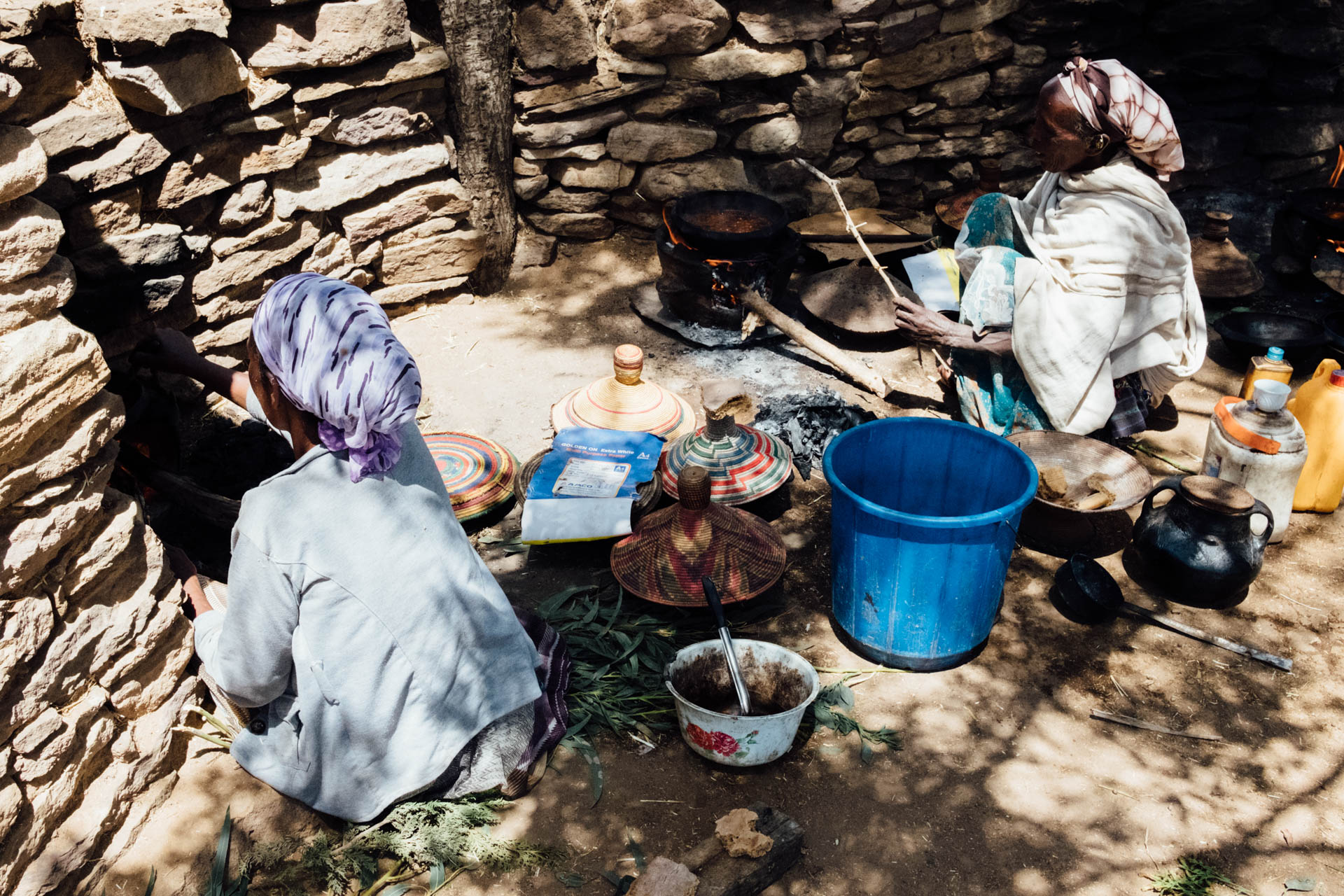
Many years ago, in Senegal and Ethiopia, I met families in which whether the family would have anything to drink or anything to wash with depended on underage girls. For example, the parents had emigrated – sometimes only the father, sometimes both parents – most often as a result of drought. The daughters then had to care for their younger siblings and often walked several kilometres to collect water. In the Tigray region of northern Ethiopia, this is the everyday reality of girls’ lives.
Water shortages also threaten the health of women and girls. Lack of access to water during menstruation can lead to health complications. This is also why girls in many countries do not attend school during their periods. Moreover, the journey to collect water can be dangerous for women and girls – the farther they have to walk for water, the greater the risk that they will become victims of sexual harassment or other forms of violence.
Climate and violence
Many studies show that the climate crisis contributes to an increase in gender-based violence. The Spotlight Initiative, a joint EU and UN initiative focused on eliminating violence against women, warns that by 2090 – if the scenario predicting a two-degree Celsius rise in the planet’s temperature comes true – probably 40 million more women and girls than today will face violence from an intimate partner every year. According to the UN, heatwaves can increase the number of femicides by up to 28 percent. Being confined in an overheated apartment or house during a heatwave often leads to desperation, and in families where violence was already present, it is highly likely to recur under such conditions.
Climate change leads to various forms of violence. The Pacific is among the regions most tested by climate change. Rising sea levels are not merely a bad dream there but an everyday reality – much like the natural disasters that recur every year. Research from Kiribati showed that droughts in 2020 led to the loss of sources of income for men, which subsequently led to increased intimate partner violence.
Another study, this time from the island nation of Samoa, showed that in the event of natural disasters, it is much more complicated for women to leave abusive relationships. The more natural disasters local women had experienced, the more likely they were to have also faced intimate partner violence. Repeated trauma reduced women’s ability to leave such relationships.
In the event of a natural disaster, people must evacuate their homes and spend time in temporary shelters, and these places can also create opportunities for gender-based violence. Too many people stay in one place, they are under stress, no one has privacy, and therefore no one has a safe space either.
With unpredictable weather, there will be fewer and fewer safe places for women. International organisations are calling for gender equality to be part of the solutions to the climate crisis. However, women’s disadvantaged position often prevents them from participating in the creation of meaningful solutions. “It is necessary to ensure women’s participation in places where decisions about climate change are made,” Beatriz Salinas Avilés concludes.

This text was produced with the support of the Rosa Luxemburg Stiftung foundation, represented in the Czech Republic. The publisher is fully responsible for the content; the views presented in the text do not necessarily represent the foundation’s position.