The Feeble Tiger: how Romania keeps squandering its own promise
New Eastern Europe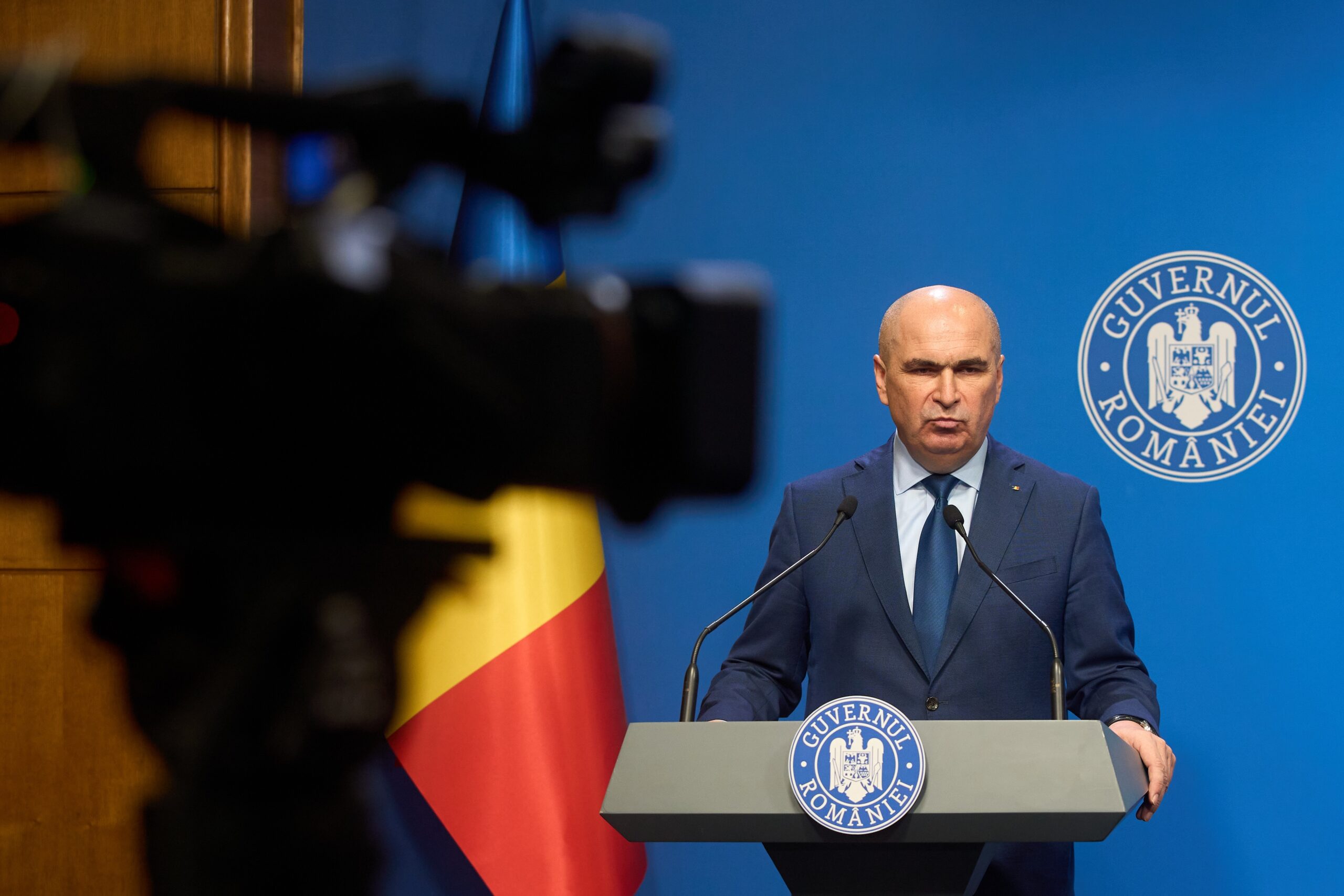
A country with every ingredient for success is trapped in a cycle of structural self-sabotage, and the fall of Ilie Bolojan is only the latest act.
In the canon of European development stories, Romania should be a success. It has fertile agricultural land, a large and relatively young population, a tradition of strong technical education, an IT sector that consistently outperforms the country's economic weight, abundant natural resources, and a diaspora of several million citizens who have built careers and businesses across Europe and beyond. Since joining the European Union in 2007, it has received over 100 billion euros in structural and cohesion funding. Its location on Europe's Eastern Flank has acquired new strategic significance since Russia's full-scale invasion of Ukraine.
It has not been enough.
On May 5th 2026, parliament voted 281 to 4 to remove Prime Minister Ilie Bolojan, a fiscal conservative with a documented record of turning around a previously bankrupt city administration, after less than a year in office. The coalition that brought him down united the left-leaning Social Democrats (PSD) with the far-right Alliance for the Unity of Romanians (AUR). In the days before the vote, the Romanian leu hit a record low against the euro. A downgrade of Romanian sovereign debt to junk status is now a realistic prospect.
The crisis did not come from outside – it was built from within.
Assets that never became foundations
Romania's strengths are not theoretical. The country produces world-class software engineers, surgeons, architects, and mathematicians, the majority of whom work for prestigious firms and institutions in Western Europe and North America. Cluj-Napoca has developed a genuine tech ecosystem; UiPath, one of the world's leading robotic process automation companies, was founded by Romanians. Timișoara and Iași host growing clusters of IT and manufacturing investment. Agricultural land in the Danube plain ranks among the most productive in Europe.
The EU funding pipeline compounded all this opportunity. Romania was allocated a total of 21.41 billion euros under the Recovery and Resilience Facility alone, on top of cohesion funds that smaller economies could only dream of. In February 2026, the finance ministry was reporting preparations for the "record absorption" of resilience facility funds, with budget allocations for EU-funded projects up 70 per cent year-on-year. As recently as May 2026, the European Commission issued a positive preliminary assessment for a further 2.62-billion-euro disbursement.
The gap between available resources and their effective use has been the defining feature of Romanian governance for two decades.
The patronage economy
Romania holds approximately 1,400 active state-owned enterprises, more than any other EU member state, yet has produced only a handful of internationally significant ones, almost all of them in the energy sector, and almost all requiring sustained state support to remain viable. According to a 2025 government report based on 2024 data, seven state-owned companies, including the national railway operator CFR and energy firms Electrocentrale Craiova and Valea Jiului, generated combined losses of two billion leu despite receiving state subsidies. Across the broader SOE sector, total subsidies of 14 billion nearly wiped out aggregate profits of 15 billion. The private sector, largely foreign-owned, consistently outperforms them.
A European Commission analysis published a decade ago found that, compared to the private sector, Romania's state-owned businesses showed lower profitability, weaker governance, and accelerating debt accumulation. The pattern persists because it is functional, for those who benefit from it. These enterprises operate as patronage networks, providing jobs, contracts, and income streams to the political structures that depend on them.
Bolojan said as much before his removal: "Romania is losing billions in euros in wasted profit from state-owned companies, which artificially increase their expenses, mostly on wages. We can no longer tolerate this situation." His attempt to list state energy and transport companies on the stock exchange, to subject them to transparency and market discipline, was among the reforms that made him a political liability.
EU fund absorption has followed the same logic. The OECD attributes persistent delays to "weak administrative procedures and insufficient local capacity to plan and implement projects". A May 2026 government analysis identified large disparities in absorption capacity across regions, with chronic implementation gaps at local level. The regions that need EU money most are frequently the least equipped to process it.
The demographic drain
Between Romania's political transition and 2021, the country lost 17 per cent of its population, an average of 130,000 people per year, the equivalent of a medium-sized Romanian city, every single year. More than four million Romanians now live and work abroad, primarily in Italy, Spain, Germany and the United Kingdom.
The consequences are structural. Labour shortages in construction, healthcare, and agriculture coexist with high unemployment in depressed rural regions, a mismatch that reflects where workers left and where new economic activity is located. The doctors, engineers and IT professionals whose talents are celebrated in Vienna, London and Amsterdam are largely absent from the Romanian institutions that most need them.
Since 2022, an influx of Ukrainian refugees has provided a temporary boost to the labour force in lower-skilled sectors. Academic modelling suggests this cannot compensate for the cumulative skilled-worker deficit. "If emigration persists," one Eurostat-based demographic study concludes, "Romania may struggle to sustain economic growth despite temporary boosts from refugee inflows." A small but growing cohort of diaspora Romanians returns with capital and skills. They encounter an institutional environment with unpredictable fiscal rules, politicized courts, and opaque contracting that frequently drives them back out, or into the shadow economy.
Spending what has not been earned
Romania has been under the EU's Excessive Deficit Procedure since 2020. Its 2024 deficit approached 9.3 per cent of GDP, three times the EU reference value of three per cent. The European Commission has demanded a reduction to 2.8 per cent by 2030, with EU funding flows at risk if the correction does not materialize.
The structural cause is political, not circumstantial. After EU accession, successive governments, PSD-led ones especially, expanded public sector wages, pensions, and social transfers well ahead of the revenue base that could finance them. Pension increases were legislated as electoral instruments. Public sector employment was used as a patronage mechanism, not a service delivery strategy.
These decisions were popular. They were also, as Bolojan discovered, effectively irreversible without triggering the exact political response that ended his government. The PSD's stated rationale for withdrawing from his coalition was opposition to austerity. The European Council on Foreign Relations was more direct: the party moved to protect its grip on state patronage networks.
Romania's VAT gap, the difference between theoretical and actual tax collection, remains among the highest in the EU. Bolojan had initiated reforms to address tax fraud and strengthen the revenue authority. Whether those reforms survive his removal is an open question.
The referee problem
Underlying the governance and fiscal failures is a deeper institutional dysfunction: the systematic politicization of the bodies designed to enforce rules impartially. Romania's judiciary has been subject to sustained political pressure for decades. A documentary series released in late 2025 exposed how sensitive corruption cases were manipulated, judges reassigned away from high-profile dossiers, and investigations slowed through procedural manoeuvring.
Transparency International's 2025 Corruption Perceptions Index rated Romania at 45 out of 100, stagnant rather than improving. A March 2026 Liberties report, drawing on 43 human rights organizations, classified Romania as a country that "intentionally undermines almost all aspects of the rule of law", including through the misuse of emergency ordinances, suppression of protest rights, and the use of state advertising to control media coverage.
For investors, the practical consequence is the need to price in not merely market risk but what analysts describe as regime risk: the possibility that contracts go unenforced, that public procurement is manipulated, that a well-connected competitor can weaponize judicial channels against a rival. Romania's formal corporate tax rates, a one per cent micro-enterprise regime, competitive corporate taxes, are attractive on paper. Legal uncertainty erodes those advantages in practice.
A mirror, not an anomaly
The fall of Bolojan was not primarily a policy dispute. It was a contest over who controls the patronage networks that sustain Romania's political class. The reformist prime minister lost because reform, by definition, threatens those networks.
The European Council on Foreign Relations is unambiguous: "Whoever leads Romania's next government will inherit a punishing fiscal situation... the prospect of a sovereign credit downgrade to junk is real. EU funding benchmarks are at risk." Romania's constitution limits what a caretaker government can do: it cannot push through meaningful reform, negotiate new international commitments, or present a revised budget framework. The country is, for now, institutionally frozen.
AUR is using the crisis to build its profile as a governing alternative, positioning itself as the voice of anti-Brussels patriotism. Its polling figures, around 36 per cent, reflect a deep disillusionment with mainstream parties, the same parties that constructed the fiscal and governance trap AUR now campaigns against. Its growth is a direct consequence of PSD's failure to deliver genuine development. The PSD's response to that growth has been to remove the government that was attempting to address the underlying causes.
President Nicușor Dan, who narrowly defeated George Simion in the May 2025 presidential runoff, retains the power to name a new prime minister and is unlikely to endorse a PSD-AUR government. What he can actually do with that power, in a parliament dominated by parties with little appetite for the medicine the country needs, is a different question.
Romania has the land, the talent, the diaspora, and the EU funding. What it continues to lack is a political class willing to govern in the national interest rather than its own.
Björn Anseeuw is a strategic consultant specializing in energy markets, investment analysis and political-economic risk in Europe. He is a former member of the Flemish and Belgian federal parliament (2014–2024) and is based in Brașov, Romania.