Roma are holding ground for Ukraine. Will the recovery hold ground for them?
New Eastern Europe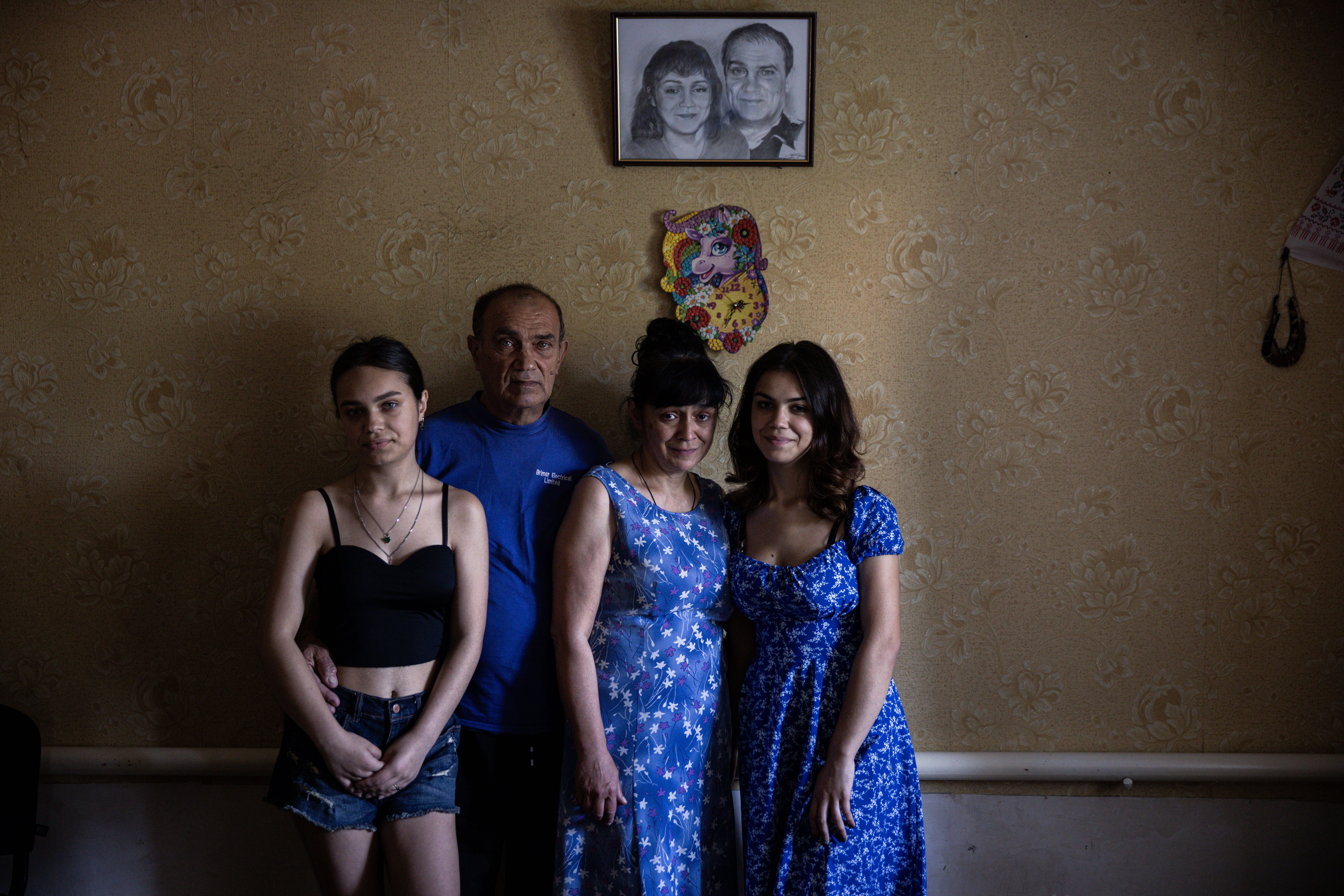
The contribution of Ukraine’s Roma community to defence asks questions as to the country’s post-war future. A truly inclusive recovery cannot afford to overlook this group, which has shown that its future lies with wider Ukrainian society.
On February 23th 2025, Lyalya Kuzmenko, a Ukrainian Roma, was awake before dawn, getting ready for her shift at the market, when a blast wave blew in through the window above her kitchen table and scattered glass across the floor. She grabbed her dogs and ran into the street. When an official came to record the damage, he glanced at her papers and told her not to bother filing a report, as she did not belong to the groups the system prioritizes — people with disabilities, large families and veterans.
She is still living in that apartment, its windows taped over and boarded up, the wooden frames still warped from the blast. Her decision to stay — despite the repeated shelling the nearby factory draws to the area — is the part of this story that matters most.
Russia's war has never been confined to the front line. It deliberately targets the places where civilians live, destroying homes in an effort to break the will of the people who remain. In response, many Roma — like their fellow Ukrainians — have chosen not to leave because of their deep ties to home, community and neighbourhood. In Zaporizhzhia, Roma families continue to live in houses hit repeatedly by shelling, covering shattered windows with plastic, boarding them with plywood, and patching roofs with whatever they can find. In the Kharkiv region, neighbours locate discarded doors to replace those blown apart. When the sirens sound at night, families move to the interior walls and wait. Some sleep on the floor. They hold their position on streets that locals call the "Road of Death" because of the constant shelling the nearby factory continues to draw.
This is a form of civic defence. It keeps communities alive and maintains a Ukrainian presence in places Russia seeks to depopulate through fear and destruction. The same dedication runs deeper. A Roma Foundation for Europe report from 2024 found that roughly one in four Roma had a family member serving in the armed forces, many of them volunteers. This is despite a cultural tradition against bearing arms and the discrimination many experience. Roma are fighting in Ukraine's armed forces. They are also defending Ukraine by refusing to abandon the communities they call home.
The question for the governments and donors gathered in Gdańsk in late June 2026 for the Ukraine Recovery Conference was whether the reconstruction they designed would protect them in return. Right now, it largely does not.
In January 2026, the Roma Foundation for Europe documented 103 Roma families whose homes were damaged by Russian attacks in Zaporizhzhia, Kryvyi Rih, Odesa and Kharkiv. Only four per cent had received any compensation — against a national rate already below ten per cent. Eighty-eight per cent had never filed a claim, as they could not meet the formal requirements. Nearly half lacked the property documents required by the Register of Damage. A third of the homes have never been entered into the state property register. Many families were unaware of a 2014 law requiring the re-registration of ownership; others simply could not afford the notary and inheritance fees, which can reach 20,000 to 30,000 hryvnias.
Consider the Fursenko family, who have lived in Zaporizhzhia for generations. Shelling in 2024 cracked their walls and damaged the roof and chimney. But an inheritance dispute dating back to a 1980 court ruling, involving sixteen heirs, means all of them must take part in any claim. "We've lived here for years," Albina Fursenko told our researchers. "Our ancestors are buried nearby. But without updated documents, we can't claim anything." The repairs would cost approximately 160,000 hryvnias (around 3,200 euros). This is close to the average damage documented in the report, but an impossible sum for a family surviving, as many Roma do, on irregular and low-paid work.
When money and attention are limited, the people who fall outside formal systems are often the first to be overlooked, not through malice but by the design of procedures. None of this is difficult to fix, and full compensation need not come first. What these families need now is to be counted. Counting them is also the only way for the government to understand the true scale of what has been lost and what rebuilding will actually cost.
There are ways to address this. The Register of Damage could accept alternative proof of ownership, including technical passports, household registers, utility records and statements from local officials. Registration and inheritance fees could be waived for war-affected households. Properties in active combat zones require tailored procedures rather than being excluded by default. Even modest support — the materials to seal a roof before winter or replace shattered windows — can keep a home standing and a family in place.
There is a larger reason to get this right.
Over the past four years, Ukraine has shown remarkable ingenuity in defending itself, adapting its institutions to wartime conditions, documenting losses under fire, and keeping the government running under conditions that would have seemed impossible only a few years ago. The challenge now is to bring that same determination to the recovery. Ukraine adopted a Roma inclusion action plan in the middle of the war — a signal that the political will exists. The human dimension was already on the agenda in Gdańsk. Roma are not yet fully part of that conversation.
Some may ask why Roma deserve special attention when millions of Ukrainians have lost their homes, livelihoods and family members. They do not. The question is not whether Roma should receive more than others, but whether recovery mechanisms can reach every Ukrainian who has suffered the consequences of Russia's war. This includes those whose lives were shaped by administrative barriers that predate it by years.
The consequences of getting this wrong are not hypothetical. Before the Kosovo conflict, Roma numbered between 100,000 and 150,000 in the disputed area. Today, fewer than 20,000 remain — displaced by a war they had no part in causing, and then forgotten by the reconstruction that followed. That is the precedent Ukraine's recovery has the chance to break. Across Europe, Roma communities have long been treated as a permanent social problem: too difficult to reach, too far behind to catch up. The result is a quiet resignation to the belief that their exclusion is inevitable. Ukraine has a chance to prove otherwise, and it is the families living under shelling who have already made the harder choice. They have stayed, repaired what they could, kept communities alive and, in many cases, sent sons, husbands and fathers to fight. They have acted on the belief that this country is their home, and many have invested far more in it than the cost of a damaged roof.
If reconstruction reaches families whose homes are damaged but whose documents are incomplete, it will do more than rebuild houses. It will show that citizenship in modern Ukraine is not constrained by the bureaucratic barriers it inherited from the Soviet past, and that those who contribute to the country's defence and future belong fully within the state.
The war will end. When it does, the question will not only be how much Ukraine has rebuilt, but also what kind of country it has become in the process. Roma have already placed their faith in that future. The recovery is a chance to show that the future has a place for them.
Neda Korunovska is Vice President for Analytics and Results at the Roma Foundation for Europe, a Brussels-based foundation working to strengthen Roma agency and build a resilient Europe.